THE ADVENTURE COLLECTIVE® · Independent discovery and booking for outdoor travel

Spend two days crossing the Middle Atlas to Erg Chebbi, ride camels at sunset, and sleep in a traditional Berber camp under vast Saharan skies. Practical tips and local context prepare you for dune climbs, long drives, and sunrise views.
Spend two days crossing the Middle Atlas to Erg Chebbi, ride camels at sunset, and sleep in a traditional Berber camp under vast Saharan skies. Practical tips and local context prepare you for dune climbs, long drives, and sunrise views.
Dawn light softens the ridges of Erg Chebbi before you even see them: a low rumble of engines through cedar forests, then a long ribbon of road cutting across the Ziz Valley toward dunes that grow taller by the hour. By late afternoon the Land Cruiser slows, camels wait, and the desert’s scale becomes immediate — wind-sculpted ridges that demand a climb and a quiet seat to watch the sun sink behind them.
Verified experiences and guided adventures in the surrounding area.
Operated by Merzouga Desert · Merzouga, Fès-Meknès
Dawn light softens the ridges of Erg Chebbi before you even see them: a low rumble of engines through cedar forests, then a long ribbon of road cutting across the Ziz Valley toward dunes that grow taller by the hour. By late afternoon the Land Cruiser slows, camels wait, and the desert’s scale becomes immediate — wind-sculpted ridges that demand a climb and a quiet seat to watch the sun sink behind them.
This short loop follows routes used for centuries by Saharan caravans and modern travelers alike. The Middle Atlas gives way to palm-filled oases in Tafilalt and the broad, fossil-rich expanses around Erfoud; Merzouga’s dunes are the largest on Morocco’s eastern flank and part of the greater Sahara system shaped by eolian (wind) processes.
Cultural notes: Berber (Amazigh) hospitality anchors the night — tents, tagine, and communal music — while towns like Rissani carry legacies of the Alaouite dynasty and trans-Saharan trade.
Practical guidance: expect two long driving days with a night in a traditional desert camp; camel rides at sunset and sunrise are included, and camps typically offer basic showers and dinner. Pack layered clothing for sharp diurnal temperature swings, a headlamp, sunscreen, and broken-in footwear for dune climbs. Hydrate before and during the camel excursions, and confirm passport details at booking.
Timing matters: sunrise from a dune is the highlight — arrive early and leave time to walk. The experience is low-technical but high-sensory: open sky, shifting sand, and the steady sway of a camel ride that frames the Sahara in a single, unforgettable evening.
easy.
2 days (approx. 48 hours).
Suitable for most fitness levels; participants should be able to mount camels and walk short stretches on sand.
Camel rides are typically short transfers at sunset and sunrise (30–60 minutes each); they’re low-impact but require balance to mount and dismount.
Camps are traditional Berber-style tents offering basic comfort—mattresses, blankets, communal dining, and often a simple shower depending on camp standards.
A valid passport is required at booking; check current visa requirements for Morocco and consult health guidance for routine vaccinations before travel.
The tour is described as suitable for all fitness levels; families and older travelers should note the long drives and consider mobility for mounting camels and walking on sand.
The route traces corridors of historic trans-Saharan trade and the Alaouite dynasty’s influence; many settlements grew as caravan service points and oases communities.
Dune ecosystems are fragile — stick to marked camel routes and camps that follow low-impact practices; limit single-use plastics and avoid disturbing vegetation.
Merzouga Desert operates guided outdoor trips and adventures with an emphasis on safety, stewardship, and memorable experiences.
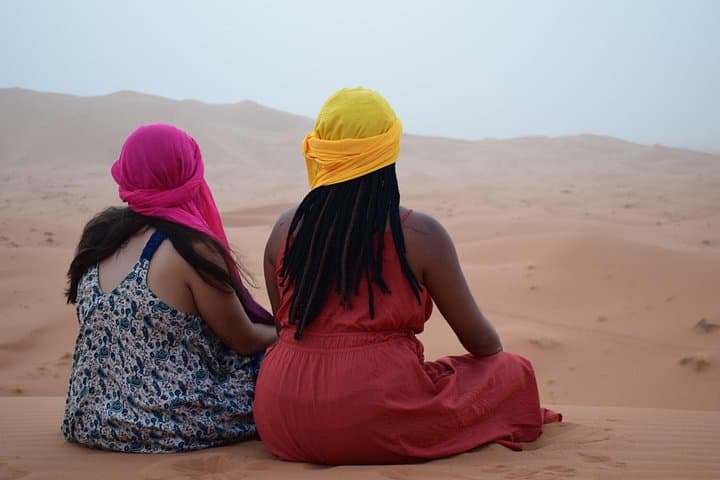
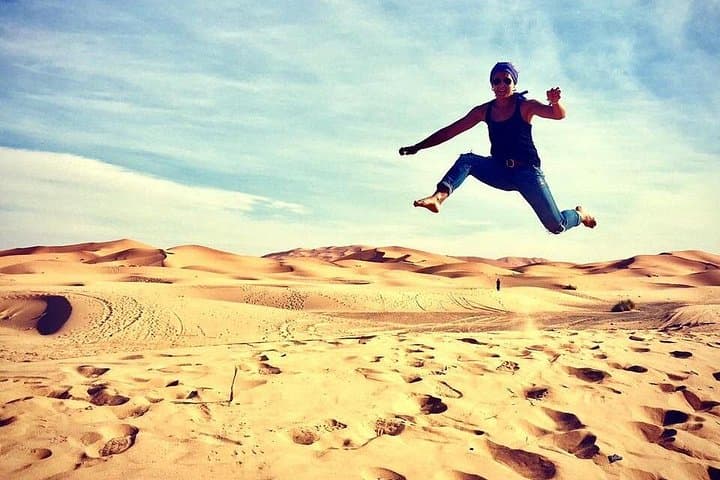
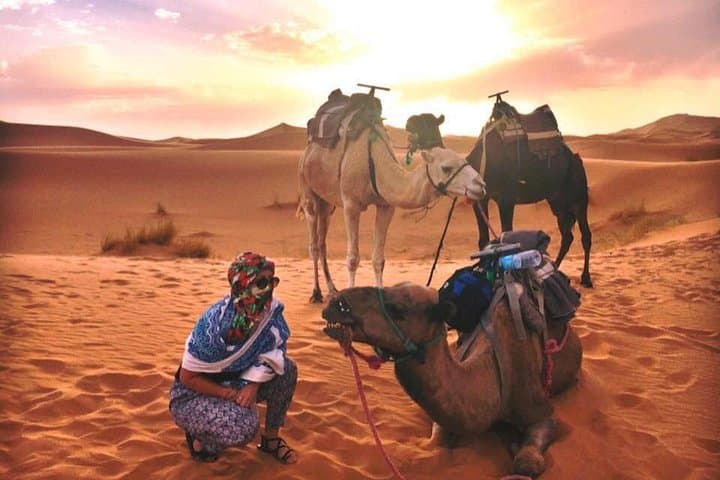
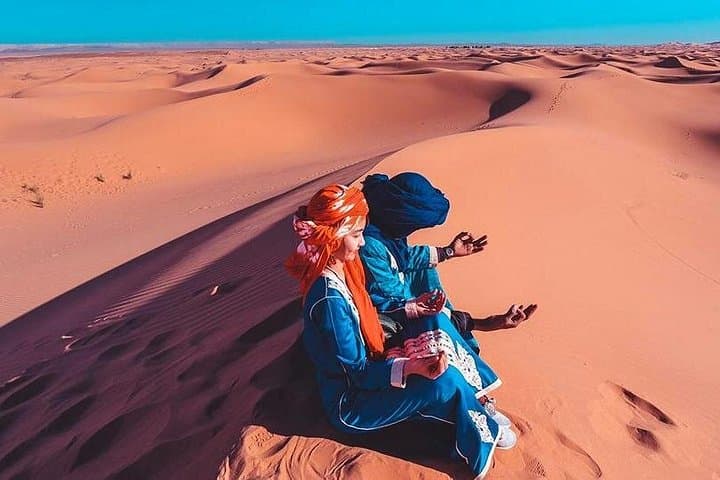
Dawn light softens the ridges of Erg Chebbi before you even see them: a low rumble of engines through cedar forests, then a long ribbon of road cutting across the Ziz Valley toward dunes that grow taller by the hour. By late afternoon the Land Cruiser slows, camels wait, and the desert’s scale becomes immediate — wind-sculpted ridges that demand a climb and a quiet seat to watch the sun sink behind them.
Dawn light softens the ridges of Erg Chebbi before you even see them: a low rumble of engines through cedar forests, then a long ribbon of road cutting across the Ziz Valley toward dunes that grow taller by the hour. By late afternoon the Land Cruiser slows, camels wait, and the desert’s scale becomes immediate — wind-sculpted ridges that demand a climb and a quiet seat to watch the sun sink behind them.
This short loop follows routes used for centuries by Saharan caravans and modern travelers alike. The Middle Atlas gives way to palm-filled oases in Tafilalt and the broad, fossil-rich expanses around Erfoud; Merzouga’s dunes are the largest on Morocco’s eastern flank and part of the greater Sahara system shaped by eolian (wind) processes.
Cultural notes: Berber (Amazigh) hospitality anchors the night — tents, tagine, and communal music — while towns like Rissani carry legacies of the Alaouite dynasty and trans-Saharan trade.
Practical guidance: expect two long driving days with a night in a traditional desert camp; camel rides at sunset and sunrise are included, and camps typically offer basic showers and dinner. Pack layered clothing for sharp diurnal temperature swings, a headlamp, sunscreen, and broken-in footwear for dune climbs. Hydrate before and during the camel excursions, and confirm passport details at booking.
Timing matters: sunrise from a dune is the highlight — arrive early and leave time to walk. The experience is low-technical but high-sensory: open sky, shifting sand, and the steady sway of a camel ride that frames the Sahara in a single, unforgettable evening.