THE ADVENTURE COLLECTIVE® · Independent discovery and booking for outdoor travel

Swap Fes’s cedar woods for Erg Chebbi’s sand ridges on a compact 2-day desert escape. Ride camels at sunset, sleep under a Berber-made camp, and return to town by breakfast—an efficient way to experience Morocco’s Sahara.
Swap Fes’s cedar woods for Erg Chebbi’s sand ridges on a compact 2-day desert escape. Ride camels at sunset, sleep under a Berber-made camp, and return to town by breakfast—an efficient way to experience Morocco’s Sahara.
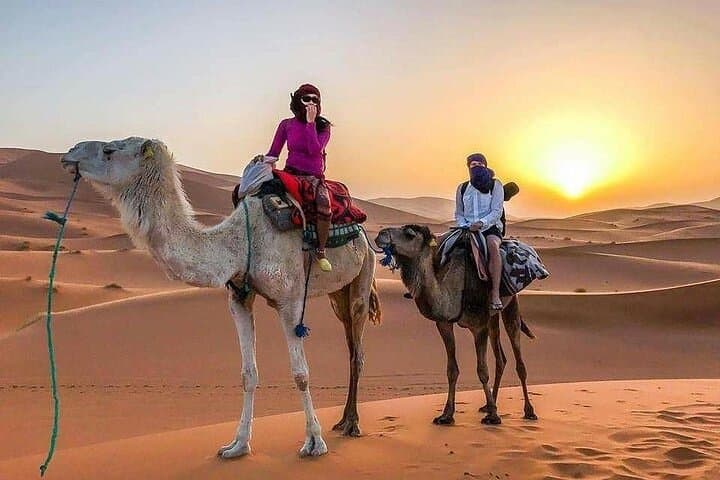
Morning light breaks over cedar-scented passes as a minibus threads from Fes into the Middle Atlas; by afternoon the road flattens and the horizon becomes a ripple of sand. Travelers find themselves trading alpine pines for the wind-sculpted ridges of Erg Chebbi, where a single camel column carves a path toward a camp under a vast, clear sky.
Verified experiences and guided adventures in the surrounding area.
Operated by Fes Desert Trips · Merzouga, Errachidia Province
Morning light breaks over cedar-scented passes as a minibus threads from Fes into the Middle Atlas; by afternoon the road flattens and the horizon becomes a ripple of sand. Travelers find themselves trading alpine pines for the wind-sculpted ridges of Erg Chebbi, where a single camel column carves a path toward a camp under a vast, clear sky.
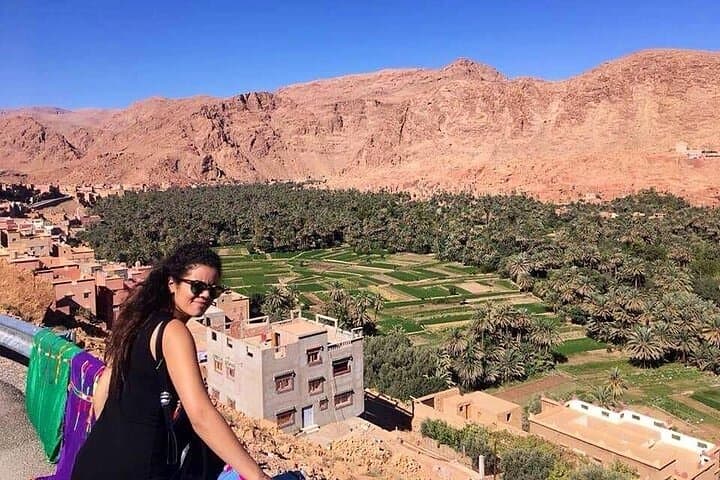
The route stitches together modern and older histories: French-era Ifrane’s chalet architecture gives way to Berber villages and cedar forests where Barbary macaques forage. Geologically, the dunes are grains of Sahara history—wind-eroded Miocene sediments pushed into towering crests. Culture here is present and hospitable: nomadic traditions, Berber tents, evening Gnawa rhythms in nearby villages, and communal meals served around lantern light.
Expect a compact 48-hour loop: an early pickup from Fes, roadside stops in Ifrane and Azrou, and a late-afternoon arrival at Merzouga. The camel ride to camp is intentionally unhurried—roughly a short 30–90 minute crossing—timed for sunset; dawn returns riders to a hotel for breakfast before the drive back. Nights are cold even after hot days, and the desert wind shapes your comfort as much as your itinerary.
Practical guidance: carry layered clothing, ample water, sun protection, and small bills for local purchases and tipping. Plan early starts to avoid midday heat, and respect local customs—ask before photographing people. This trip is ideal for travelers seeking a concise, low-impact Sahara experience that balances immersion with accessible logistics.
easy.
2 days (≈48 hours).
Suitable for most fitness levels; requires short periods of walking and a gentle camel ride.
The camel transfer to the camp is typically a short, unhurried ride—usually around 30–90 minutes—timed to catch sunset and tailored to group pace.
Yes—this tour is marketed as physically easy; camels are steady and staff assist with mounting, but notify operators about mobility needs when booking.
Overnight is in traditional-style Berber luxury tents with basic bedding; facilities are rustic but include dinner and breakfast as stated in the itinerary.
Travel insurance that covers evacuation is recommended for remote areas; check routine vaccinations and consult a travel clinic for country-specific advice.
The route links French-era mountain towns like Ifrane with centuries-old Berber settlements and the caravan routes that once crossed the Sahara.
Water is scarce—minimize use, pack out waste, and support local providers who employ sustainable camping practices and limit dune disturbance.
Fes Desert Trips operates guided outdoor trips and adventures with an emphasis on safety, stewardship, and memorable experiences.
Morning light breaks over cedar-scented passes as a minibus threads from Fes into the Middle Atlas; by afternoon the road flattens and the horizon becomes a ripple of sand. Travelers find themselves trading alpine pines for the wind-sculpted ridges of Erg Chebbi, where a single camel column carves a path toward a camp under a vast, clear sky.
Morning light breaks over cedar-scented passes as a minibus threads from Fes into the Middle Atlas; by afternoon the road flattens and the horizon becomes a ripple of sand. Travelers find themselves trading alpine pines for the wind-sculpted ridges of Erg Chebbi, where a single camel column carves a path toward a camp under a vast, clear sky.
The route stitches together modern and older histories: French-era Ifrane’s chalet architecture gives way to Berber villages and cedar forests where Barbary macaques forage. Geologically, the dunes are grains of Sahara history—wind-eroded Miocene sediments pushed into towering crests. Culture here is present and hospitable: nomadic traditions, Berber tents, evening Gnawa rhythms in nearby villages, and communal meals served around lantern light.
Expect a compact 48-hour loop: an early pickup from Fes, roadside stops in Ifrane and Azrou, and a late-afternoon arrival at Merzouga. The camel ride to camp is intentionally unhurried—roughly a short 30–90 minute crossing—timed for sunset; dawn returns riders to a hotel for breakfast before the drive back. Nights are cold even after hot days, and the desert wind shapes your comfort as much as your itinerary.
Practical guidance: carry layered clothing, ample water, sun protection, and small bills for local purchases and tipping. Plan early starts to avoid midday heat, and respect local customs—ask before photographing people. This trip is ideal for travelers seeking a concise, low-impact Sahara experience that balances immersion with accessible logistics.