THE ADVENTURE COLLECTIVE® · Independent discovery and booking for outdoor travel

Cross the High Atlas at dawn and arrive at the sweeping Erg Chebbi dunes by sunset on this paced 2-day private tour from Marrakech. Expect kasbahs, palm valleys, a camel trek and an overnight under desert stars.
Cross the High Atlas at dawn and arrive at the sweeping Erg Chebbi dunes by sunset on this paced 2-day private tour from Marrakech. Expect kasbahs, palm valleys, a camel trek and an overnight under desert stars.
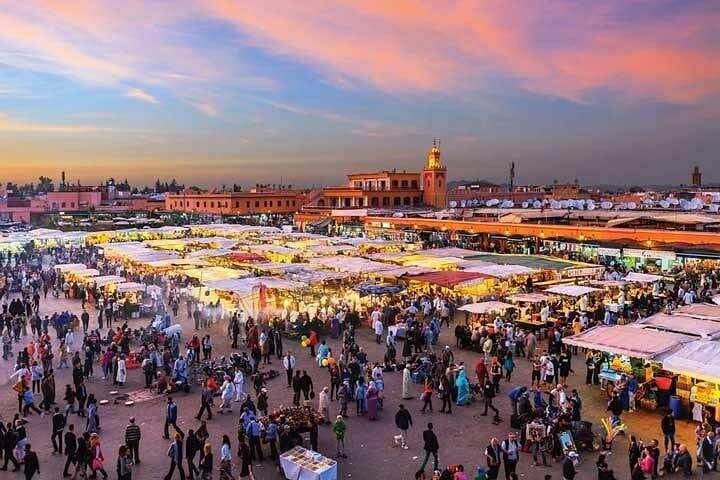
You leave Marrakech before dawn, the city lights shrinking as the road climbs the High Atlas. The air sharpens at the Tizi n’Tichka pass (around 2,260 m), then softens into ochre valleys, palm-filled riverbeds and the first sights of earthen kasbahs.
Verified experiences and guided adventures in the surrounding area.
Operated by Dahhani Signature Golf · Merzouga, Drâa-Tafilalet
You leave Marrakech before dawn, the city lights shrinking as the road climbs the High Atlas. The air sharpens at the Tizi n’Tichka pass (around 2,260 m), then softens into ochre valleys, palm-filled riverbeds and the first sights of earthen kasbahs.
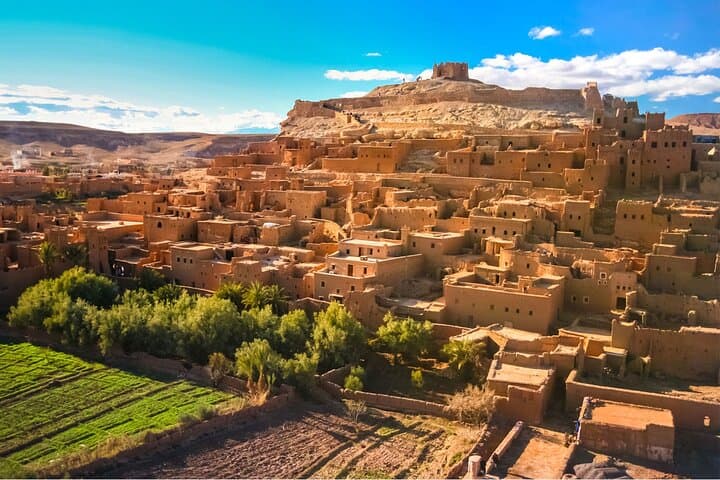
This two-day route threads Morocco’s layered history: fortified ksars like Ait Ben Haddou—an old caravan stop on trans-Saharan trade routes—give way to the Draa Valley’s date palm oases and the sculpted canyons near Todgha. Geologically the journey traces a descent from metamorphic and volcanic highlands into Mesozoic basins, finally hitting Erg Chebbi, a sea of wind-built dunes that rise up to roughly 150 meters.
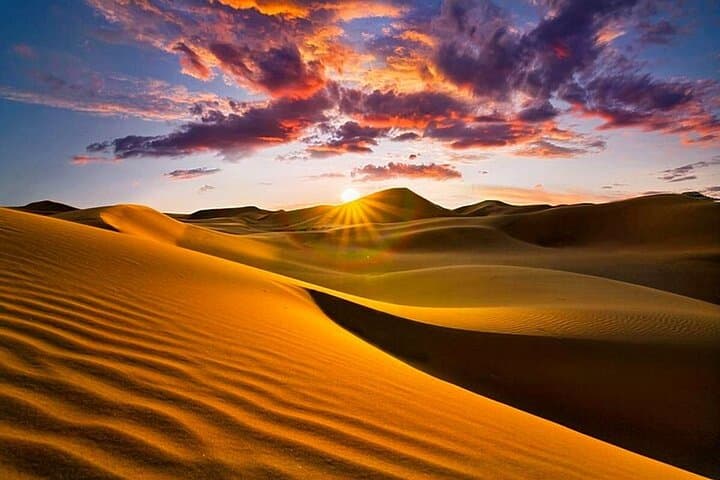
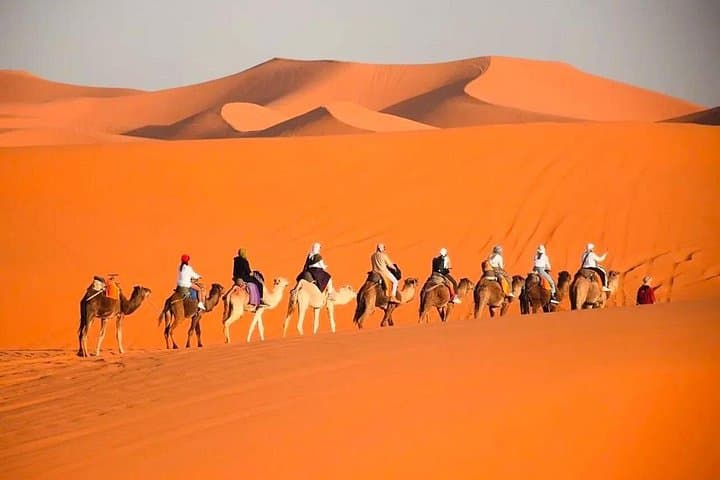
In Merzouga expect a quietly intense sensory change—sand, silence, and wide skies. A late-afternoon camel trek deposits you on a dune ridge for sunset; the following morning you’ll watch sunrise bleed across ripples of sand. Nights are for a desert camp, simple meals, and clear stars—local Berber hosts often share mint tea and music.
Practicalities: the drive each way is long—plan for 8–10 hours with stops—so bring layered clothing for 20–30°C daytime highs and near-freezing nights in shoulder seasons. Wear sturdy shoes for rocky stops, pack sun protection and at least 2–3 liters of water, and be prepared for vehicle motion and sand on clothing. If you prefer less walking, the camel trek is moderate; the camp stay is comfortable but rustic. Time your trip for spring or fall for the most comfortable temperatures, and book a private vehicle if you want flexible photo stops and a faster pace.
easy.
2 days (approx. 48 hours).
Suitable for average fitness; long drives and a moderate camel trek require basic mobility and balance.
Plan for roughly 8–10 hours of driving each way with scenic stops (Ait Ben Haddou, Ouarzazate, Draa Valley), depending on traffic and road conditions.
The camel trek to the camp typically lasts 45–90 minutes depending on the chosen route; it’s a gentle, swaying ride suitable for most people.
Camps are traditional-style but comfortable—private or shared tents with basic bedding, dinner and breakfast provided; expect rustic facilities.
The tour notes wheelchair accessibility for vehicles and minimal walking required, but camel transfers and tent accommodation may not be fully accessible—check with your operator for specific needs.
The route follows old caravan and trade corridors—Ait Ben Haddou is a UNESCO-listed ksar that once serviced trans-Saharan routes and later film crews.
Dune ecosystems are fragile—avoid disturbing vegetation, stay on established camel routes, and support local guides and camps that use low-impact practices.
Dahhani Signature Golf operates guided outdoor trips and adventures with an emphasis on safety, stewardship, and memorable experiences.
You leave Marrakech before dawn, the city lights shrinking as the road climbs the High Atlas. The air sharpens at the Tizi n’Tichka pass (around 2,260 m), then softens into ochre valleys, palm-filled riverbeds and the first sights of earthen kasbahs.
You leave Marrakech before dawn, the city lights shrinking as the road climbs the High Atlas. The air sharpens at the Tizi n’Tichka pass (around 2,260 m), then softens into ochre valleys, palm-filled riverbeds and the first sights of earthen kasbahs.
This two-day route threads Morocco’s layered history: fortified ksars like Ait Ben Haddou—an old caravan stop on trans-Saharan trade routes—give way to the Draa Valley’s date palm oases and the sculpted canyons near Todgha. Geologically the journey traces a descent from metamorphic and volcanic highlands into Mesozoic basins, finally hitting Erg Chebbi, a sea of wind-built dunes that rise up to roughly 150 meters.
In Merzouga expect a quietly intense sensory change—sand, silence, and wide skies. A late-afternoon camel trek deposits you on a dune ridge for sunset; the following morning you’ll watch sunrise bleed across ripples of sand. Nights are for a desert camp, simple meals, and clear stars—local Berber hosts often share mint tea and music.
Practicalities: the drive each way is long—plan for 8–10 hours with stops—so bring layered clothing for 20–30°C daytime highs and near-freezing nights in shoulder seasons. Wear sturdy shoes for rocky stops, pack sun protection and at least 2–3 liters of water, and be prepared for vehicle motion and sand on clothing. If you prefer less walking, the camel trek is moderate; the camp stay is comfortable but rustic. Time your trip for spring or fall for the most comfortable temperatures, and book a private vehicle if you want flexible photo stops and a faster pace.