THE ADVENTURE COLLECTIVE® · Independent discovery and booking for outdoor travel

Spend two days moving through the Sacred Valley’s living Inca landscape: textiles and terraces, salt pans and prehistoric laboratories, ending with a guided sunrise at Machu Picchu. Practical tips on altitude, timing, and what to pack ensure you arrive ready for the citadel’s stone stairways.
Spend two days moving through the Sacred Valley’s living Inca landscape: textiles and terraces, salt pans and prehistoric laboratories, ending with a guided sunrise at Machu Picchu. Practical tips on altitude, timing, and what to pack ensure you arrive ready for the citadel’s stone stairways.
Dawn breaks over mist and terraces as your train drops you into the high green bowl of the Sacred Valley. Cold mountain air bites at the face while Andean peaks hold snow above a river that seems determined to cut the valley in two. On this two-day circuit you move from market towns and terraced fields to the stone precision of Inca sites, ending with sunrise at Machu Picchu when light finally tips the citadel’s ramparts.
Verified experiences and guided adventures in the surrounding area.
Operated by Cusco Andean Tours · Aguas Calientes, Cusco Region
Dawn breaks over mist and terraces as your train drops you into the high green bowl of the Sacred Valley. Cold mountain air bites at the face while Andean peaks hold snow above a river that seems determined to cut the valley in two. On this two-day circuit you move from market towns and terraced fields to the stone precision of Inca sites, ending with sunrise at Machu Picchu when light finally tips the citadel’s ramparts.
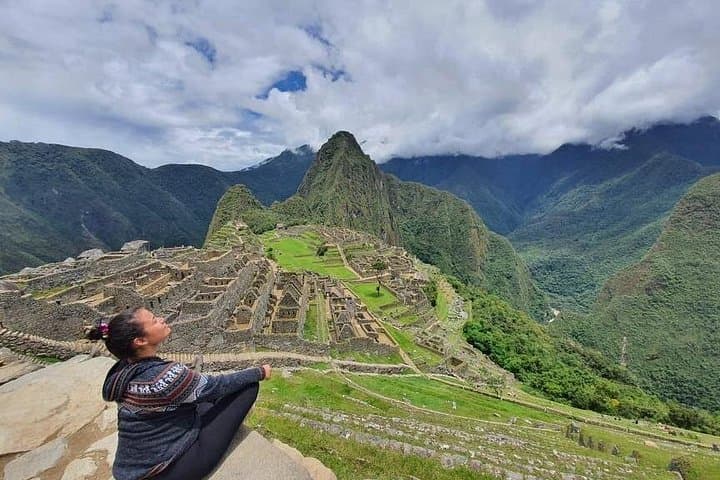
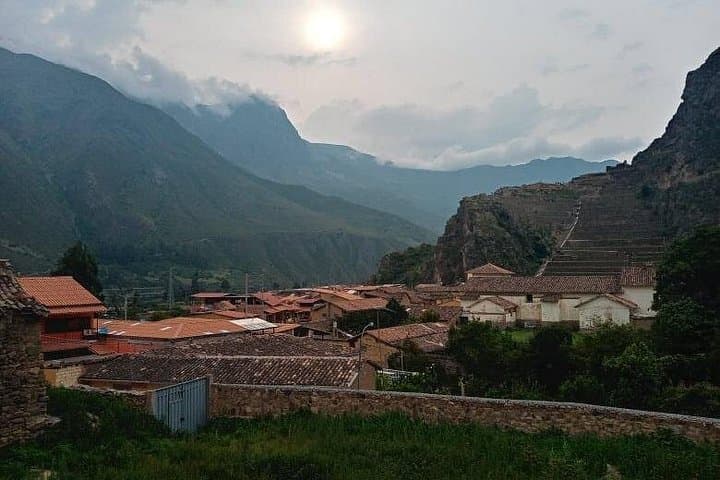
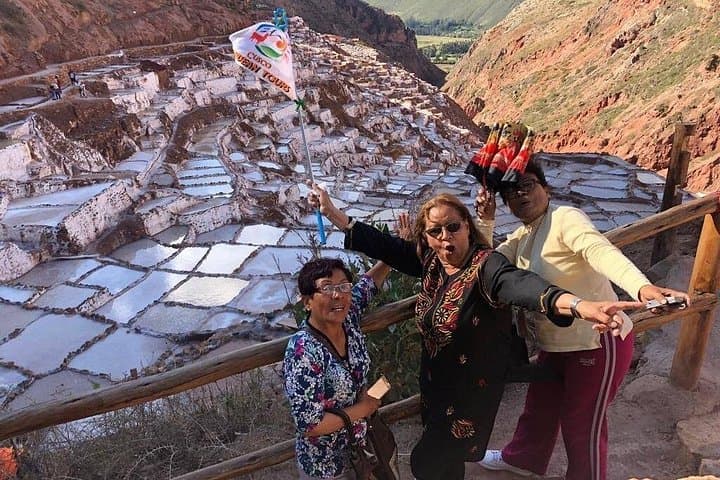
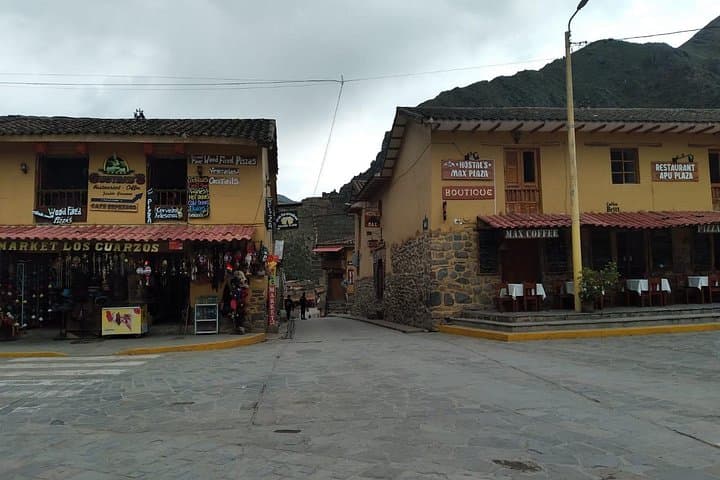
The route threads Chinchero’s textile stands, the circular agricultural experiments at Moray, and the hourglass salt pans of Maras — all places where geology and human ingenuity intersect. Ollantaytambo’s massive terraces and steep streets show a living Inca town built to control river access and crops. The final approach to Machu Picchu follows a narrow valley carved by the Urubamba River; the citadel itself sits at ≈2,430 m with steep stone stairways and uneven paths that reveal urban planning, water channels, and ritual spaces.
Practical guidance: acclimatize in Cusco (≈3,400 m) for 24–48 hours if possible, carry slow and steady pace walking shoes, and expect many stone steps and cobbled surfaces. Train rides to Aguas Calientes take ~2 hours from Ollantaytambo; timing varies by schedule. Entrance tickets and the guided Machu Picchu visit are required — confirm train time and permit windows in advance. Pack layers for cold mornings, a reliable rain shell for sudden showers, and at least 2 liters of water for day hikes.
The experience balances cultural insight with physical presence — you’ll leave with a clearer sense of Inca engineering, high-Andean ecology, and why this ridge still commands the imagination.
moderate.
2 days.
Moderate fitness: ability to walk 4–8 hours over uneven stone steps at altitude and handle short steep sections.
Yes — entry is limited by time slot and tourist numbers; buy tickets and train reservations before your trip to secure sunrise access.
The site involves uneven stone steps, short steep climbs, and several hours on foot; good balance and steady pacing are necessary, but technical climbing isn’t required.
Possibly — Cusco is ~3,400 m and even though Machu Picchu is lower (~2,430 m), spend a day in Cusco to acclimatize, drink water, and avoid alcohol before strenuous activity.
Parts of the Sacred Valley and train travel can accommodate limited mobility, but Machu Picchu’s citadel has many steps and uneven surfaces that make full accessibility challenging; check operator specifics in advance.
The Sacred Valley was the agricultural backbone of the Inca Empire, engineered with terraces, irrigation, and microclimates to grow diverse crops for Cusco and the capital.
Machu Picchu enforces timed entry and visitor limits to protect fragile soils and archaeological features; stick to marked paths, carry out waste, and follow guide instructions to minimize impact.
Cusco Andean Tours operates guided outdoor trips and adventures with an emphasis on safety, stewardship, and memorable experiences.
Dawn breaks over mist and terraces as your train drops you into the high green bowl of the Sacred Valley. Cold mountain air bites at the face while Andean peaks hold snow above a river that seems determined to cut the valley in two. On this two-day circuit you move from market towns and terraced fields to the stone precision of Inca sites, ending with sunrise at Machu Picchu when light finally tips the citadel’s ramparts.
Dawn breaks over mist and terraces as your train drops you into the high green bowl of the Sacred Valley. Cold mountain air bites at the face while Andean peaks hold snow above a river that seems determined to cut the valley in two. On this two-day circuit you move from market towns and terraced fields to the stone precision of Inca sites, ending with sunrise at Machu Picchu when light finally tips the citadel’s ramparts.
The route threads Chinchero’s textile stands, the circular agricultural experiments at Moray, and the hourglass salt pans of Maras — all places where geology and human ingenuity intersect. Ollantaytambo’s massive terraces and steep streets show a living Inca town built to control river access and crops. The final approach to Machu Picchu follows a narrow valley carved by the Urubamba River; the citadel itself sits at ≈2,430 m with steep stone stairways and uneven paths that reveal urban planning, water channels, and ritual spaces.
Practical guidance: acclimatize in Cusco (≈3,400 m) for 24–48 hours if possible, carry slow and steady pace walking shoes, and expect many stone steps and cobbled surfaces. Train rides to Aguas Calientes take ~2 hours from Ollantaytambo; timing varies by schedule. Entrance tickets and the guided Machu Picchu visit are required — confirm train time and permit windows in advance. Pack layers for cold mornings, a reliable rain shell for sudden showers, and at least 2 liters of water for day hikes.
The experience balances cultural insight with physical presence — you’ll leave with a clearer sense of Inca engineering, high-Andean ecology, and why this ridge still commands the imagination.