THE ADVENTURE COLLECTIVE® · Independent discovery and booking for outdoor travel

Combine two Andean highlights in 48 hours: a sunrise visit to Machu Picchu’s terraces and a high-adrenal ATV approach to Vinicunca’s rainbow slopes. Expect early starts, high altitudes, scenic train travel and hands-on guides.
Combine two Andean highlights in 48 hours: a sunrise visit to Machu Picchu’s terraces and a high-adrenal ATV approach to Vinicunca’s rainbow slopes. Expect early starts, high altitudes, scenic train travel and hands-on guides.
Before dawn in Cusco a shuttle peels away from stone streets and climbs toward the Urubamba valley, the train slicing alongside a river that dares you to look away.
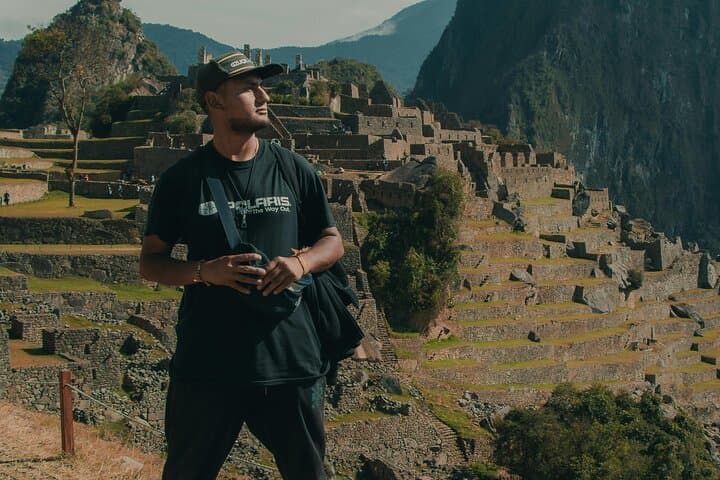
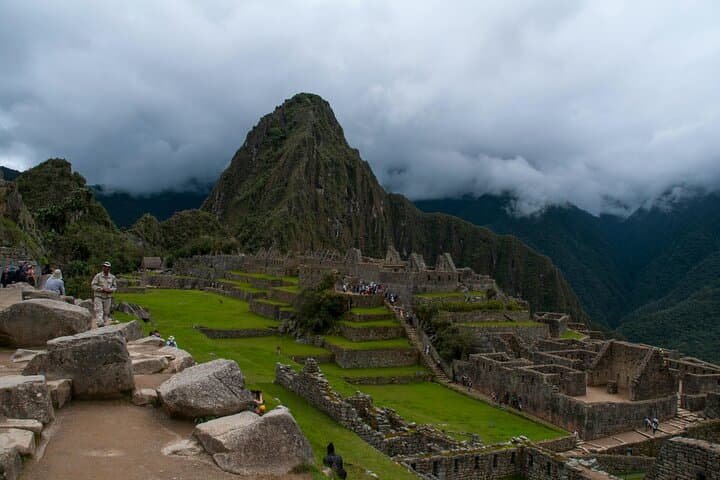
By midmorning the terraces of Machu Picchu open out: precise stone walls, narrow stairways and terraces cut into a ridge that still holds the rhythm of ancient agriculture.
Verified experiences and guided adventures in the surrounding area.
Operated by Cosmo Expeditions · Cusco, Cusco
Before dawn in Cusco a shuttle peels away from stone streets and climbs toward the Urubamba valley, the train slicing alongside a river that dares you to look away.
By midmorning the terraces of Machu Picchu open out: precise stone walls, narrow stairways and terraces cut into a ridge that still holds the rhythm of ancient agriculture.
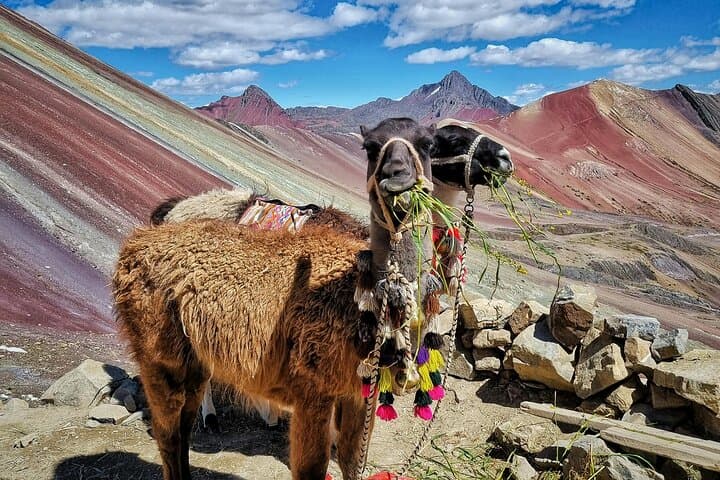
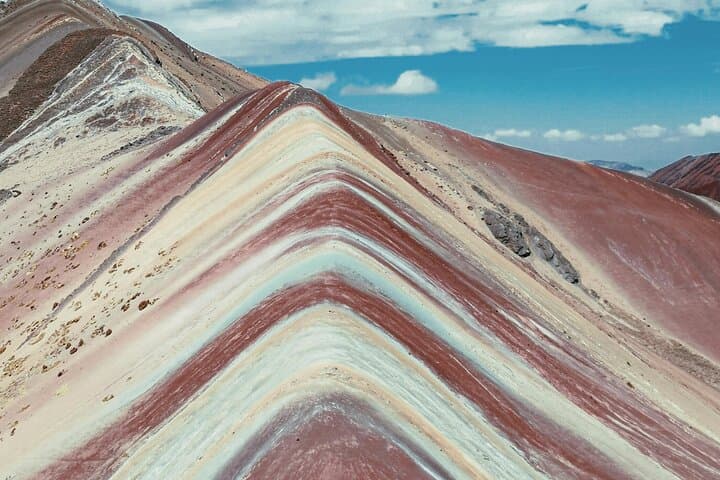
Machu Picchu—constructed by the Inca in the 15th century—perches on a spine of volcanic rock above the Urubamba River. Its irrigation channels, terraces and fine masonry reflect practical engineering as much as ceremonial place. Day two shifts the palette: ATVs carry you across puna grasslands toward Vinicunca (Rainbow Mountain), where bands of oxidized minerals—reds of iron, greens from copper, and pale clays—have been revealed by glacial and erosional forces. The route threads past Quechua villages, grazing llamas and occasional Andean condors circling high, giving cultural context to the terrain.
Practical guidance: this is high-altitude travel—Cusco sits near 3,400 m and Rainbow Mountain reaches roughly 5,000+ m—so plan 24–48 hours to acclimatize, hydrate aggressively, and pace exertion. The Machu Picchu day includes an early transfer to Ollantaytambo, a scenic train to Aguas Calientes and a short bus to the citadel; expect several hours of walking on uneven stone. The ATV portion reduces approach time but still requires a steep walk near the summit and competent balance for rough tracks. Dress in layers, bring a wind- and waterproof shell, sturdy boots, sun protection and a reusable water bottle. Start Rainbow Mountain at first light to avoid afternoon storms and crowds, follow your bilingual guide, and respect fragile puna vegetation by staying on trails.
moderate.
2 days.
Moderate fitness; comfortable walking 2–6 hours per day at altitude and able to handle short, steep sections.
Yes—this tour includes entrance tickets to Machu Picchu and Rainbow Mountain as well as train and local transfers listed in the itinerary.
Arrive in Cusco 24–48 hours before the tour, rest, hydrate, avoid heavy exertion and alcohol; consider coca tea and consult a physician if you have medical concerns.
No formal license is needed; basic balance and comfort on off-road tracks helps—guides provide helmets and instruction and will pair less-experienced riders as needed.
The dry season (May–Sep) offers more stable conditions for both Machu Picchu and Rainbow Mountain; expect more crowds in June–August.
Machu Picchu is a 15th-century Inca site built for administrative and religious purposes; the railway and local villages trace longer Andean trade and agricultural traditions.
The high puna ecosystem is fragile—stick to designated trails, avoid single-use plastics and follow guide instructions to minimize impact on grazing soils and archaeological zones.
Cosmo Expeditions operates guided outdoor trips and adventures with an emphasis on safety, stewardship, and memorable experiences.
Before dawn in Cusco a shuttle peels away from stone streets and climbs toward the Urubamba valley, the train slicing alongside a river that dares you to look away.
By midmorning the terraces of Machu Picchu open out: precise stone walls, narrow stairways and terraces cut into a ridge that still holds the rhythm of ancient agriculture.
Before dawn in Cusco a shuttle peels away from stone streets and climbs toward the Urubamba valley, the train slicing alongside a river that dares you to look away.
By midmorning the terraces of Machu Picchu open out: precise stone walls, narrow stairways and terraces cut into a ridge that still holds the rhythm of ancient agriculture.
Machu Picchu—constructed by the Inca in the 15th century—perches on a spine of volcanic rock above the Urubamba River. Its irrigation channels, terraces and fine masonry reflect practical engineering as much as ceremonial place. Day two shifts the palette: ATVs carry you across puna grasslands toward Vinicunca (Rainbow Mountain), where bands of oxidized minerals—reds of iron, greens from copper, and pale clays—have been revealed by glacial and erosional forces. The route threads past Quechua villages, grazing llamas and occasional Andean condors circling high, giving cultural context to the terrain.
Practical guidance: this is high-altitude travel—Cusco sits near 3,400 m and Rainbow Mountain reaches roughly 5,000+ m—so plan 24–48 hours to acclimatize, hydrate aggressively, and pace exertion. The Machu Picchu day includes an early transfer to Ollantaytambo, a scenic train to Aguas Calientes and a short bus to the citadel; expect several hours of walking on uneven stone. The ATV portion reduces approach time but still requires a steep walk near the summit and competent balance for rough tracks. Dress in layers, bring a wind- and waterproof shell, sturdy boots, sun protection and a reusable water bottle. Start Rainbow Mountain at first light to avoid afternoon storms and crowds, follow your bilingual guide, and respect fragile puna vegetation by staying on trails.