THE ADVENTURE COLLECTIVE® · Independent discovery and booking for outdoor travel

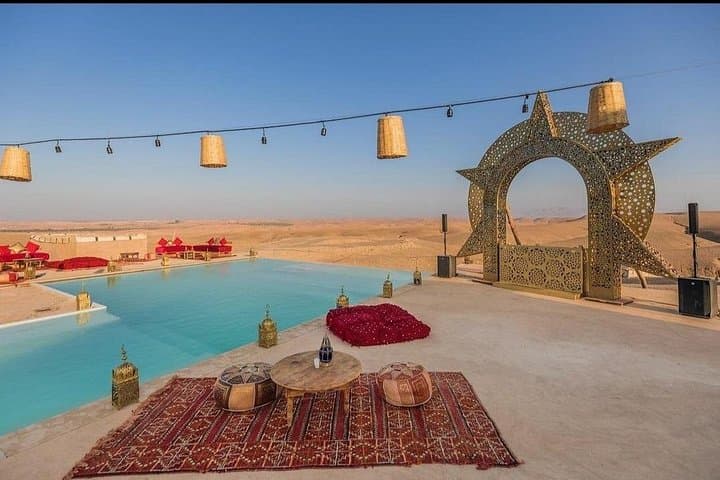
Leave Marrakech for a two-day luxury route through the High Atlas to Zagora: panoramic Tizi n’Tichka, the UNESCO kasbah of Ait Ben Haddou, Draa Valley oases and an overnight Berber camp with camel trekking. Expect long drives, dramatic landscapes, and cold desert nights.
Leave Marrakech for a two-day luxury route through the High Atlas to Zagora: panoramic Tizi n’Tichka, the UNESCO kasbah of Ait Ben Haddou, Draa Valley oases and an overnight Berber camp with camel trekking. Expect long drives, dramatic landscapes, and cold desert nights.
You start before dawn in Marrakech, the city lights fading as the road climbs into the High Atlas. The air thins and the car winds through Tizi n’Tichka at roughly 2,260 m; switchbacks open into ragged plateaus and later the Draa Valley’s green ribbon appears, punctuated by palm clumps and mud-brick ksars.
Verified experiences and guided adventures in the surrounding area.
Operated by RMT Tours · Zagora, Drâa-Tafilalet
You start before dawn in Marrakech, the city lights fading as the road climbs into the High Atlas. The air thins and the car winds through Tizi n’Tichka at roughly 2,260 m; switchbacks open into ragged plateaus and later the Draa Valley’s green ribbon appears, punctuated by palm clumps and mud-brick ksars.
This two-day itinerary threads geology and history: Atlas granites give way to eroded red earth and the river-fed terraces of the Draa, long a caravan corridor between Marrakech and sub-Saharan trade routes. Ait Ben Haddou — a UNESCO ksar of rammed earth and towers — is a concrete example of premodern Saharan town planning and film-worthy façades.
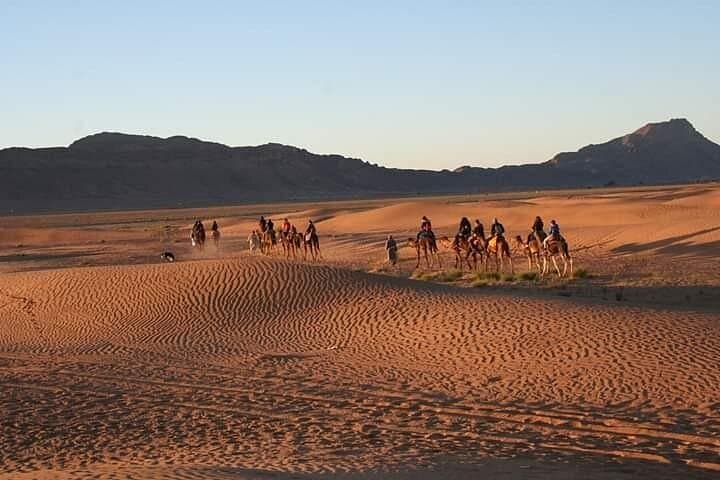
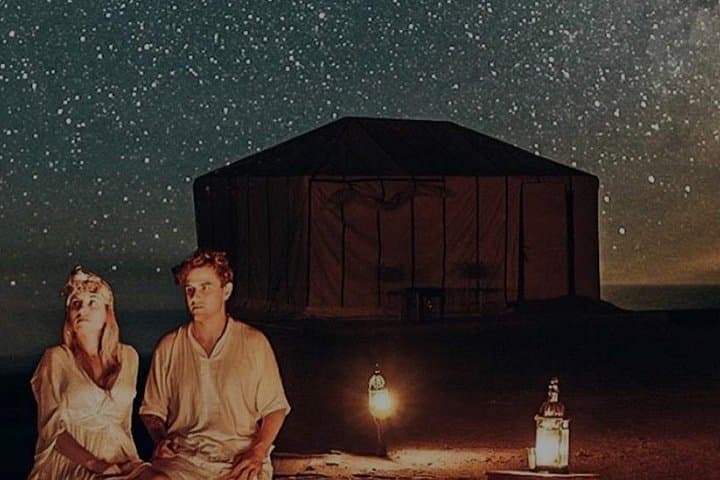
Culture here is Berber and Amazigh in language, agriculture and architecture. Zagora itself sits at the foot of the Anti-Atlas; its oasis farms grow dates and pomegranates watered by traditional seguias and underground khettaras. By late afternoon you trade paved road for sandy tracks, then mount a dromedary for a gentle twilight trek to a private desert camp where nights can drop to near freezing despite daytime heat.
Practical guidance: expect 6–8 hours of driving each direction, vehicle air-conditioning for transfers, and short walks on uneven stone or loose sand. Pack sun protection, layers for cold nights, sturdy shoes for kasbah paths, and a reusable water bottle. Plan camera batteries for harsh light, and schedule the camel sunrise or sunset for the best dune colors.
moderate.
2 days.
Suitable for travelers in regular fitness; involves short walks on uneven terrain and mounted camel rides.
Yes—camel trekking to the desert camp and one night’s accommodation at a luxury or standard Berber camp are included per the itinerary.
Expect roughly 6–8 hours of driving each way depending on stops; route goes over Tizi n’Tichka and through Ouarzazate/Ait Ben Haddou.
The tour notes wheelchair accessibility and suitability for all fitness levels, but camel rides require mounting assistance; check with the operator for mobility accommodations.
Most operators can handle common dietary needs if informed at booking—provide details in the special requirements section ahead of time.
Zagora and the Draa Valley were an important stop on trans-Saharan caravan routes; nearby Ait Ben Haddou is a preserved kasbah complex and UNESCO World Heritage Site frequently used as a film location.
Water is scarce—respect local irrigation channels and avoid single-use plastics; choose camps that practice waste management and support local staff.
RMT Tours operates guided outdoor trips and adventures with an emphasis on safety, stewardship, and memorable experiences.
You start before dawn in Marrakech, the city lights fading as the road climbs into the High Atlas. The air thins and the car winds through Tizi n’Tichka at roughly 2,260 m; switchbacks open into ragged plateaus and later the Draa Valley’s green ribbon appears, punctuated by palm clumps and mud-brick ksars.
You start before dawn in Marrakech, the city lights fading as the road climbs into the High Atlas. The air thins and the car winds through Tizi n’Tichka at roughly 2,260 m; switchbacks open into ragged plateaus and later the Draa Valley’s green ribbon appears, punctuated by palm clumps and mud-brick ksars.
This two-day itinerary threads geology and history: Atlas granites give way to eroded red earth and the river-fed terraces of the Draa, long a caravan corridor between Marrakech and sub-Saharan trade routes. Ait Ben Haddou — a UNESCO ksar of rammed earth and towers — is a concrete example of premodern Saharan town planning and film-worthy façades.
Culture here is Berber and Amazigh in language, agriculture and architecture. Zagora itself sits at the foot of the Anti-Atlas; its oasis farms grow dates and pomegranates watered by traditional seguias and underground khettaras. By late afternoon you trade paved road for sandy tracks, then mount a dromedary for a gentle twilight trek to a private desert camp where nights can drop to near freezing despite daytime heat.
Practical guidance: expect 6–8 hours of driving each direction, vehicle air-conditioning for transfers, and short walks on uneven stone or loose sand. Pack sun protection, layers for cold nights, sturdy shoes for kasbah paths, and a reusable water bottle. Plan camera batteries for harsh light, and schedule the camel sunrise or sunset for the best dune colors.