THE ADVENTURE COLLECTIVE® · Independent discovery and booking for outdoor travel

Cover Luxor’s temples, the Valley of the Kings and Abu Simbel in a concentrated 48 hours from Cairo. This round‑flight package pairs efficient transfers with a guided deep dive into Upper Egypt’s greatest monuments.
Cover Luxor’s temples, the Valley of the Kings and Abu Simbel in a concentrated 48 hours from Cairo. This round‑flight package pairs efficient transfers with a guided deep dive into Upper Egypt’s greatest monuments.
You step off the morning flight and the Nile spreads out below like a slow-moving silver band, heat already rising from the river plain. In two days you’ll move from Luxor’s east bank colonnades to the funerary cliffs on the west bank, then farther south to the chiseled faces of Abu Simbel — all punctuated by a single overnight in Aswan.
Verified experiences and guided adventures in the surrounding area.
Operated by Nile Prince Travel · Cairo, Cairo Governorate
You step off the morning flight and the Nile spreads out below like a slow-moving silver band, heat already rising from the river plain. In two days you’ll move from Luxor’s east bank colonnades to the funerary cliffs on the west bank, then farther south to the chiseled faces of Abu Simbel — all punctuated by a single overnight in Aswan.
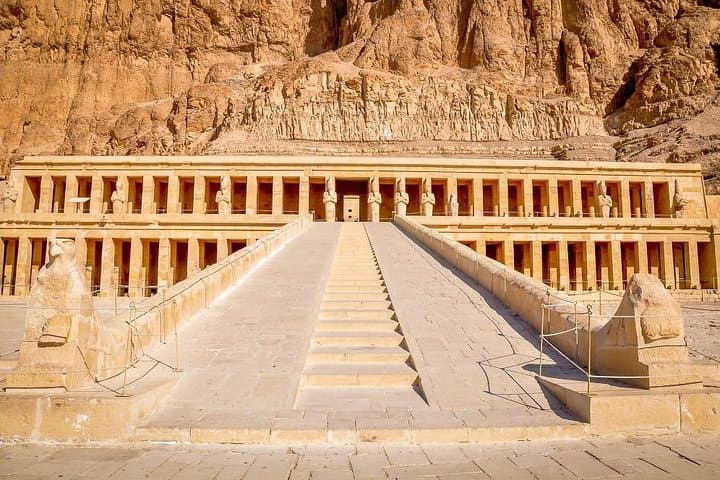
This itinerary strings together three eras of pharaonic ambition: the valley tombs of the New Kingdom where pharaohs like Tutankhamun were buried; Hatshepsut’s terraced mortuary temple carved into limestone; and Ramses II’s colossal Abu Simbel, relocated in the 1960s to escape the rising waters of Lake Nasser. The geology shifts as you travel — soft Nile silt and cultivated banks give way to orange Nubian sandstone and the blasted desert around Abu Simbel.
Expect guided walks across uneven stone, stairways inside temples, brief talks about hieroglyphs and ritual, plus time to watch light hit columns and reliefs. The pace is driven by flights and transfers, so pack for long active days and hot sun.
Practical notes: carry a refillable water bottle, wear closed-toe shoes for steps and tomb descents, and plan early starts to avoid midday heat at open sites. If you want photos without crowds, arrive at Luxor Temple or the Valley of the Kings just after sunrise. The tour balances efficiency with two deep stops — Luxor’s temples and Aswan’s approach to Nubian culture — making it a concentrated, accessible introduction to Upper Egypt.
moderate.
2 days (active sightseeing ~8–10 hours/day).
Light to moderate fitness; able to walk on uneven ground, climb stairs, and handle full days on foot.
Yes — roundtrip flights from Cairo plus private transfers, hotel pickup and drop-off are included in the package.
The operator reports wheelchair-accessible transport, but many ancient sites have steps and uneven surfaces; contact the provider to arrange specific accessibility support.
Yes — the itinerary includes one night’s accommodation in Aswan and luggage is handled by the operator and hotels during transfers.
Most nationalities need an Egyptian entry visa; entrance fees for sites are usually included but confirm specifics with the operator before travel.
The route highlights New Kingdom royal power — Hatshepsut’s temple, tombs in the Valley of the Kings, and Ramses II’s Abu Simbel, the latter famously relocated in the 1960s to save it from Lake Nasser.
Abu Simbel’s relocation is an early large-scale conservation project; visitors are asked to follow site rules, avoid touching reliefs, and limit drone use where prohibited to reduce impact.
Nile Prince Travel operates guided outdoor trips and adventures with an emphasis on safety, stewardship, and memorable experiences.


You step off the morning flight and the Nile spreads out below like a slow-moving silver band, heat already rising from the river plain. In two days you’ll move from Luxor’s east bank colonnades to the funerary cliffs on the west bank, then farther south to the chiseled faces of Abu Simbel — all punctuated by a single overnight in Aswan.
You step off the morning flight and the Nile spreads out below like a slow-moving silver band, heat already rising from the river plain. In two days you’ll move from Luxor’s east bank colonnades to the funerary cliffs on the west bank, then farther south to the chiseled faces of Abu Simbel — all punctuated by a single overnight in Aswan.
This itinerary strings together three eras of pharaonic ambition: the valley tombs of the New Kingdom where pharaohs like Tutankhamun were buried; Hatshepsut’s terraced mortuary temple carved into limestone; and Ramses II’s colossal Abu Simbel, relocated in the 1960s to escape the rising waters of Lake Nasser. The geology shifts as you travel — soft Nile silt and cultivated banks give way to orange Nubian sandstone and the blasted desert around Abu Simbel.
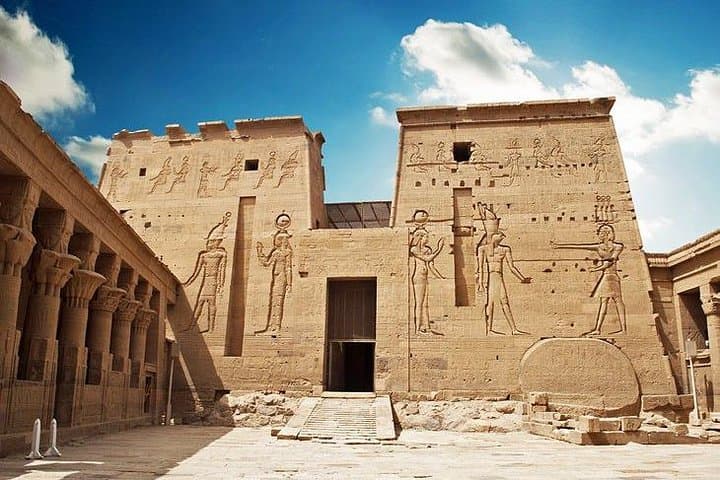
Expect guided walks across uneven stone, stairways inside temples, brief talks about hieroglyphs and ritual, plus time to watch light hit columns and reliefs. The pace is driven by flights and transfers, so pack for long active days and hot sun.
Practical notes: carry a refillable water bottle, wear closed-toe shoes for steps and tomb descents, and plan early starts to avoid midday heat at open sites. If you want photos without crowds, arrive at Luxor Temple or the Valley of the Kings just after sunrise. The tour balances efficiency with two deep stops — Luxor’s temples and Aswan’s approach to Nubian culture — making it a concentrated, accessible introduction to Upper Egypt.