THE ADVENTURE COLLECTIVE® · Independent discovery and booking for outdoor travel

A compact two-day circuit from Ha Giang that hits Ma Pi Leng Pass, Dong Van town, and a boat ride through the Nho Que/Tu San gorge. Expect dramatic karst ridges, village visits with Hmong and Tay communities, and short hikes paired with comfortable roadside lodging.
A compact two-day circuit from Ha Giang that hits Ma Pi Leng Pass, Dong Van town, and a boat ride through the Nho Que/Tu San gorge. Expect dramatic karst ridges, village visits with Hmong and Tay communities, and short hikes paired with comfortable roadside lodging.
The bus unwinds out of Ha Giang before dawn and the road climbs into limestone ridges that look sculpted rather than grown. Mist slips between jagged spires as the convoy threads Bac Sum’s 8 km slope and passes the Quan Ba Heaven Gate at roughly 1,500 m, where the air tastes like cold tea and the valley below widens into a patchwork of terraces.
Verified experiences and guided adventures in the surrounding area.
Operated by Asia Open Tour · Ha Giang, Ha Giang Province
The bus unwinds out of Ha Giang before dawn and the road climbs into limestone ridges that look sculpted rather than grown. Mist slips between jagged spires as the convoy threads Bac Sum’s 8 km slope and passes the Quan Ba Heaven Gate at roughly 1,500 m, where the air tastes like cold tea and the valley below widens into a patchwork of terraces.
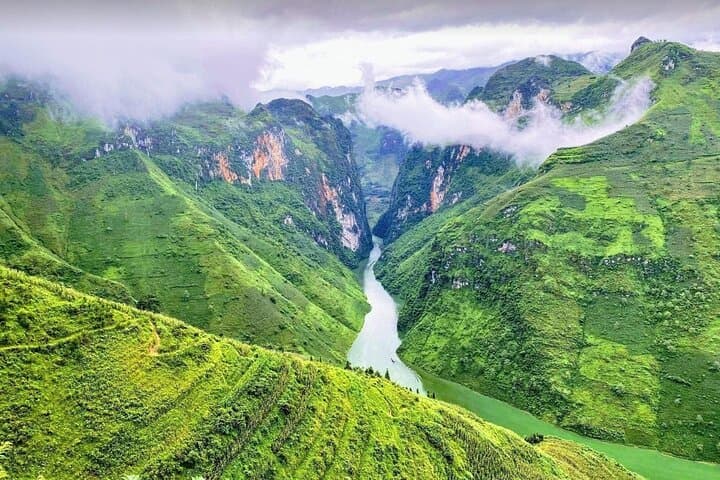
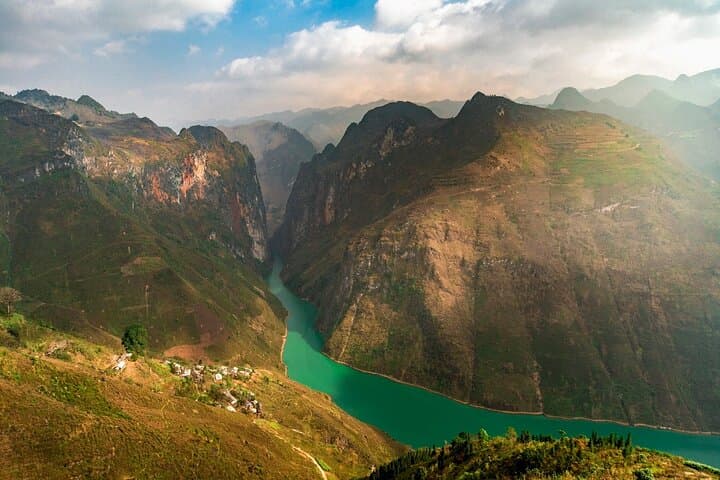
This two-day loop centers on the Dong Van Karst Plateau Geopark, a UNESCO-recognized landscape carved by uplift and deep erosion over millions of years. Travelers cross the 21 km Ma Pi Leng Pass—one of Vietnam’s most dramatic roads—then slide down toward the Tu San gorge and the Nho Que river, whose current dares you to look over the canyon’s 700–900 m drops. Along the route are living histories: Hmong and Tay communities, brocade workshops in Lung Tam, and the Vuong family’s H’Mong King Palace, reminders of local governance and cultural resilience.
Expect a mix of paved mountain roads, short walking stops in villages, and a sheltered boat ride through Tu San canyon. Practicalities matter: early starts, sudden temperature swings, and narrow passes mean layered clothing, sturdy shoes, and cash for small purchases. The itinerary includes one night in Dong Van, meals, a local guide, and round-trip bus seats to Hà Giang, making it accessible for travelers in average fitness.
This trip delivers geology, culture, and river drama in compact form—ideal for people who want an immersive two-day portrait of northern Vietnam without camping gear or technical skills.
easy.
2 days.
Suitable for travelers in average physical condition—short walks and standing at viewpoints; no sustained hiking required
The tour is classified as easy: most travel is by minibus with short village walks and boat time; no technical hiking is required.
Yes—one night of accommodation in Dong Van is included in the package as stated in the itinerary.
Yes—operators can accommodate vegetarian, vegan, and gluten-free diets if notified at booking.
The guided boat on the Nho Que river is generally safe; life jackets are provided but passengers should notify the guide of any concerns.
The Dong Van Karst Plateau has long been a crossroads for ethnic groups (Hmong, Tay, Dao) and played roles in regional defense; Lung Cu Flag Tower marks Vietnam’s northern border.
The Geopark designation promotes protection of fragile karst formations and supports community-based tourism—stay on official routes, minimize plastic waste, and buy local handicrafts to support livelihoods.
Asia Open Tour operates guided outdoor trips and adventures with an emphasis on safety, stewardship, and memorable experiences.

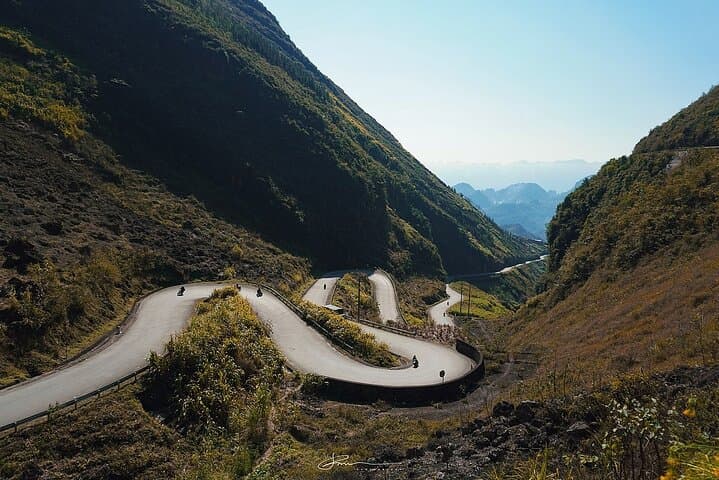
The bus unwinds out of Ha Giang before dawn and the road climbs into limestone ridges that look sculpted rather than grown. Mist slips between jagged spires as the convoy threads Bac Sum’s 8 km slope and passes the Quan Ba Heaven Gate at roughly 1,500 m, where the air tastes like cold tea and the valley below widens into a patchwork of terraces.
The bus unwinds out of Ha Giang before dawn and the road climbs into limestone ridges that look sculpted rather than grown. Mist slips between jagged spires as the convoy threads Bac Sum’s 8 km slope and passes the Quan Ba Heaven Gate at roughly 1,500 m, where the air tastes like cold tea and the valley below widens into a patchwork of terraces.
This two-day loop centers on the Dong Van Karst Plateau Geopark, a UNESCO-recognized landscape carved by uplift and deep erosion over millions of years. Travelers cross the 21 km Ma Pi Leng Pass—one of Vietnam’s most dramatic roads—then slide down toward the Tu San gorge and the Nho Que river, whose current dares you to look over the canyon’s 700–900 m drops. Along the route are living histories: Hmong and Tay communities, brocade workshops in Lung Tam, and the Vuong family’s H’Mong King Palace, reminders of local governance and cultural resilience.
Expect a mix of paved mountain roads, short walking stops in villages, and a sheltered boat ride through Tu San canyon. Practicalities matter: early starts, sudden temperature swings, and narrow passes mean layered clothing, sturdy shoes, and cash for small purchases. The itinerary includes one night in Dong Van, meals, a local guide, and round-trip bus seats to Hà Giang, making it accessible for travelers in average fitness.
This trip delivers geology, culture, and river drama in compact form—ideal for people who want an immersive two-day portrait of northern Vietnam without camping gear or technical skills.