THE ADVENTURE COLLECTIVE® · Independent discovery and booking for outdoor travel

A two-day wildlife loop from Jaipur that pairs open-jeep safaris in Ranthambore with a tranquil Chambal River boat trip. Expect early mornings, close tiger-country views, and riverbank wildlife sightings.
A two-day wildlife loop from Jaipur that pairs open-jeep safaris in Ranthambore with a tranquil Chambal River boat trip. Expect early mornings, close tiger-country views, and riverbank wildlife sightings.
You step out of the car and the air changes — dryer, dust-laced, threaded with calls of bulbuls and the distant rumble of an open jeep. Ranthambore’s scrubland stretches in broken lines of acacia and sal trees, punctuated by boulder-strewn ridges and the stone silhouette of Ranthambore Fort watching over the park.
Verified experiences and guided adventures in the surrounding area.
Operated by Jaipur City Tour Travels · Sawai Madhopur, Rajasthan
You step out of the car and the air changes — dryer, dust-laced, threaded with calls of bulbuls and the distant rumble of an open jeep. Ranthambore’s scrubland stretches in broken lines of acacia and sal trees, punctuated by boulder-strewn ridges and the stone silhouette of Ranthambore Fort watching over the park.
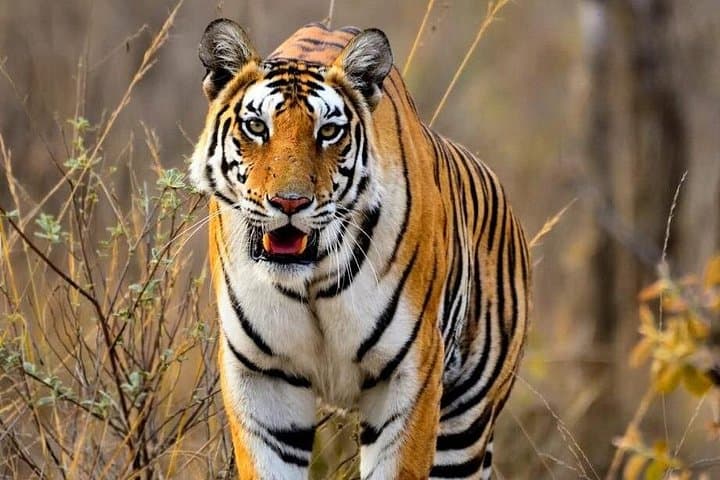
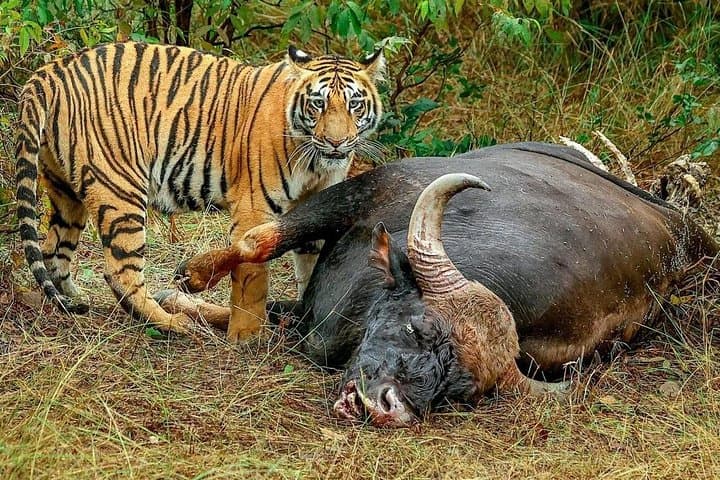
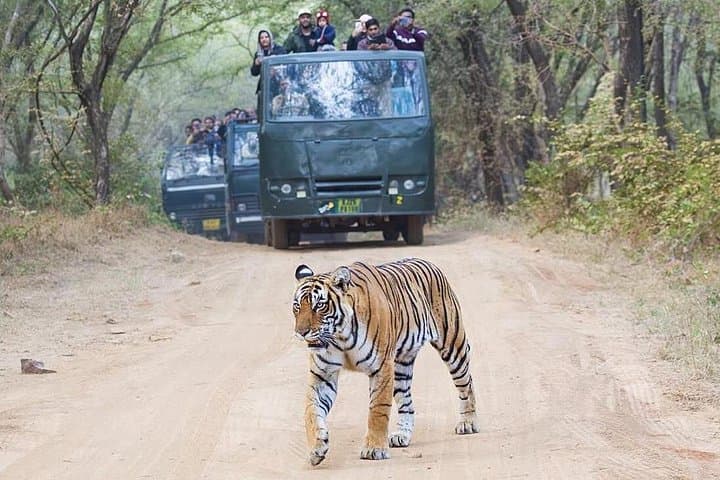
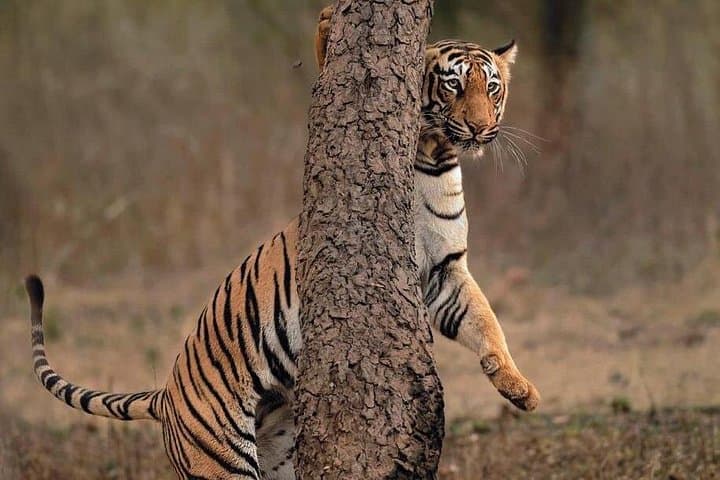
Ranthambore National Park was once the royal hunting reserve of the Jaipur Maharajas and today protects one of India’s most accessible populations of Bengal tigers. Geologically the park sits on Vindhyan sandstone and ancient outcrops that form the cliffs and small plateaus where big cats lounge and sambar deer feed. A morning jeep glides across dry riverbeds and meadows; a local naturalist points out pugmarks, scrapes and the telltale scratch marks on tree trunks.
On day two the rhythm shifts to water: the Chambal River cuts a slower, deep channel carved over millennia, where gharials bask on sandbanks and painted storks wheel overhead. The boat safari reveals different wildlife rhythms — riverine birds, turtles, and crocodilians arranged against a quiet horizon.
Practicalities: this is a short, low-exertion trip best booked in advance (passport copy required for Ranthambore permits). Expect early starts for the best light and wildlife activity, dusty roads between Jaipur and Sawai Madhopur, and guided safaris in open jeeps or canters plus a 45–60 minute guided boat ride on the Chambal. Bring binoculars, layered clothing for cool mornings, sun protection, and a camera with a tele lens. Respect park rules, stay with your guide, and be prepared for zone allocations made by forest officials at entry.
easy.
2 days (approx. 48 hours).
Low-moderate; suitable for travelers who can climb into a jeep and tolerate short walks at viewing points
Yes — a passport copy and photo are required in advance to secure Ranthambore safari permits.
No — sightings are possible but not guaranteed; Ranthambore has a healthy tiger population but encounters depend on animal movement and zone allocation.
Private round-trip transportation is included, typically a car transfer of about 3 hours (≈184 km) each way.
Yes, guided boat safaris are conducted from secure boats and commonly reveal gharials, mugger crocodiles, river turtles, and numerous waterbirds.
Ranthambore was a medieval stronghold with a 10th–15th century fort and later served as a princely hunting reserve before becoming a national park.
Tiger protection and river conservation shape visitation—stay on authorized safaris, avoid single-use plastic, and follow guide instructions to minimize disturbance.
Jaipur City Tour Travels operates guided outdoor trips and adventures with an emphasis on safety, stewardship, and memorable experiences.
You step out of the car and the air changes — dryer, dust-laced, threaded with calls of bulbuls and the distant rumble of an open jeep. Ranthambore’s scrubland stretches in broken lines of acacia and sal trees, punctuated by boulder-strewn ridges and the stone silhouette of Ranthambore Fort watching over the park.
You step out of the car and the air changes — dryer, dust-laced, threaded with calls of bulbuls and the distant rumble of an open jeep. Ranthambore’s scrubland stretches in broken lines of acacia and sal trees, punctuated by boulder-strewn ridges and the stone silhouette of Ranthambore Fort watching over the park.
Ranthambore National Park was once the royal hunting reserve of the Jaipur Maharajas and today protects one of India’s most accessible populations of Bengal tigers. Geologically the park sits on Vindhyan sandstone and ancient outcrops that form the cliffs and small plateaus where big cats lounge and sambar deer feed. A morning jeep glides across dry riverbeds and meadows; a local naturalist points out pugmarks, scrapes and the telltale scratch marks on tree trunks.
On day two the rhythm shifts to water: the Chambal River cuts a slower, deep channel carved over millennia, where gharials bask on sandbanks and painted storks wheel overhead. The boat safari reveals different wildlife rhythms — riverine birds, turtles, and crocodilians arranged against a quiet horizon.
Practicalities: this is a short, low-exertion trip best booked in advance (passport copy required for Ranthambore permits). Expect early starts for the best light and wildlife activity, dusty roads between Jaipur and Sawai Madhopur, and guided safaris in open jeeps or canters plus a 45–60 minute guided boat ride on the Chambal. Bring binoculars, layered clothing for cool mornings, sun protection, and a camera with a tele lens. Respect park rules, stay with your guide, and be prepared for zone allocations made by forest officials at entry.