THE ADVENTURE COLLECTIVE® · Independent discovery and booking for outdoor travel

A two-day guided trek from Senaru to the Pelawangan Senaru crater rim takes you up through coffee groves and rainforest to sweeping rim views over Segara Anak. Expect steep climbs, cultural encounters with the Sasak, and camping under a wide tropical sky.
A two-day guided trek from Senaru to the Pelawangan Senaru crater rim takes you up through coffee groves and rainforest to sweeping rim views over Segara Anak. Expect steep climbs, cultural encounters with the Sasak, and camping under a wide tropical sky.
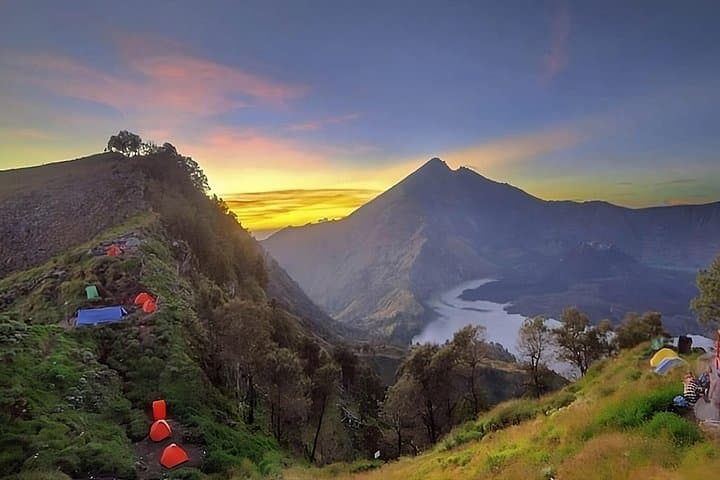
Morning mist lifts from the coffee terraces as you step away from Senaru village and the trail tightens into the rainforest. The ascent begins quietly—ferns brushing your calves, birds calling overhead—then opens into a steep, sun-steepened climb that pushes you toward the Pelawangan Senaru crater rim. At the rim, the volcanic bowl falls away to Segara Anak, a blue-green lake that seems to inhale the landscape; the wind along the ridge feels alive, driving your attention to the sweep of the valley below.
Verified experiences and guided adventures in the surrounding area.
Operated by Tour and Travel · Senaru, West Nusa Tenggara
Morning mist lifts from the coffee terraces as you step away from Senaru village and the trail tightens into the rainforest. The ascent begins quietly—ferns brushing your calves, birds calling overhead—then opens into a steep, sun-steepened climb that pushes you toward the Pelawangan Senaru crater rim. At the rim, the volcanic bowl falls away to Segara Anak, a blue-green lake that seems to inhale the landscape; the wind along the ridge feels alive, driving your attention to the sweep of the valley below.
Geologically, Rinjani is a young, active stratovolcano whose 1250 AD flank collapse formed the present crater and the crater lake. The Sasak people regard Rinjani and Segara Anak as sacred; villages around Senaru still maintain ritual ties to the mountain and offer simple cultural exchanges for trekkers. You’ll pass waterfalls, coffee plots, and stunted montane forest, with terrain switching from rooty jungle to grassy savanna as elevation climbs.
Practically, this is a guided two-day trek: a long first-day ascent to camp at Pelawangan Senaru (about 2,641 m) and a descent to Senaru village the next day. Expect steep switchbacks, variable footing, and large temperature swings between dawn and midday. Follow your guide’s pacing, carry layered clothing, a headlamp, and at least 2–3 liters of water. Permit and park fees are handled locally; camping gear and meals are typically provided. Plan for early starts to catch sunset and sunrise from the rim—the views reward the work, but so does sensible pacing and respect for the mountain.
challenging.
2 days (8–10 hours hiking total).
Good cardiovascular fitness with experience on sustained uphill hiking; be comfortable with long days and steep gradients.
Yes—treks require park permits and are arranged through licensed guides or trekking operators; fees are typically included in guided tour pricing.
This route is challenging due to substantial elevation gain in one day and varied terrain, but it is guide-supported and achievable for fit hikers.
Symptoms can occur above 2,000 m; follow your guide, hydrate, rest if needed, and descend if severe symptoms appear.
Guided tours generally provide camping equipment (tents, sleeping mats) and meals—confirm specifics with your operator before booking.
Mount Rinjani’s present crater and Segara Anak lake formed through powerful volcanic activity; the mountain has spiritual importance to the local Sasak communities.
Park permits and guide fees support conservation; stick to trails, pack out waste, and use locally provided toilet facilities to minimize impact.
Tour and Travel operates guided outdoor trips and adventures with an emphasis on safety, stewardship, and memorable experiences.
Morning mist lifts from the coffee terraces as you step away from Senaru village and the trail tightens into the rainforest. The ascent begins quietly—ferns brushing your calves, birds calling overhead—then opens into a steep, sun-steepened climb that pushes you toward the Pelawangan Senaru crater rim. At the rim, the volcanic bowl falls away to Segara Anak, a blue-green lake that seems to inhale the landscape; the wind along the ridge feels alive, driving your attention to the sweep of the valley below.
Morning mist lifts from the coffee terraces as you step away from Senaru village and the trail tightens into the rainforest. The ascent begins quietly—ferns brushing your calves, birds calling overhead—then opens into a steep, sun-steepened climb that pushes you toward the Pelawangan Senaru crater rim. At the rim, the volcanic bowl falls away to Segara Anak, a blue-green lake that seems to inhale the landscape; the wind along the ridge feels alive, driving your attention to the sweep of the valley below.
Geologically, Rinjani is a young, active stratovolcano whose 1250 AD flank collapse formed the present crater and the crater lake. The Sasak people regard Rinjani and Segara Anak as sacred; villages around Senaru still maintain ritual ties to the mountain and offer simple cultural exchanges for trekkers. You’ll pass waterfalls, coffee plots, and stunted montane forest, with terrain switching from rooty jungle to grassy savanna as elevation climbs.
Practically, this is a guided two-day trek: a long first-day ascent to camp at Pelawangan Senaru (about 2,641 m) and a descent to Senaru village the next day. Expect steep switchbacks, variable footing, and large temperature swings between dawn and midday. Follow your guide’s pacing, carry layered clothing, a headlamp, and at least 2–3 liters of water. Permit and park fees are handled locally; camping gear and meals are typically provided. Plan for early starts to catch sunset and sunrise from the rim—the views reward the work, but so does sensible pacing and respect for the mountain.