THE ADVENTURE COLLECTIVE® · Independent discovery and booking for outdoor travel

Swap the Mediterranean for an otherworldly inland horizon on a 2-day guided trip from Alanya to Cappadocia. Explore underground cities, hike sculpted valleys and opt for a cave-hotel stay with an unforgettable sunrise balloon flight.
Swap the Mediterranean for an otherworldly inland horizon on a 2-day guided trip from Alanya to Cappadocia. Explore underground cities, hike sculpted valleys and opt for a cave-hotel stay with an unforgettable sunrise balloon flight.
The minibus eases out of Alanya before dawn, headlights cutting through a chill that the Taurus Mountains have left clinging to the windshield. For the next 48 hours you trade the Mediterranean’s blue glare for an inland horizon of ragged spires and soft volcanic ridges—Cappadocia’s moonscape that seems to have been shaped by wind and time with intention.
Verified experiences and guided adventures in the surrounding area.
Operated by tourbookinturkey · Göreme, Nevşehir
The minibus eases out of Alanya before dawn, headlights cutting through a chill that the Taurus Mountains have left clinging to the windshield. For the next 48 hours you trade the Mediterranean’s blue glare for an inland horizon of ragged spires and soft volcanic ridges—Cappadocia’s moonscape that seems to have been shaped by wind and time with intention.
By mid-morning you’re walking into Devrent Valley, where hoodoos stand like characters in a paused play: some blunt, some elongated, their curves licking the sky. The coach drops you at Kayasehir Underground City later that day. Carved over centuries as a refuge from invaders, the city's tunnels and chambers reveal a subterranean life—stairwells that tighten like a throat, storage rooms that smell faintly of earth and history.
Cappadocia’s geology is simple and dramatic. Millennia of volcanic ash (tuff) compacted and then eroded, leaving soft, sculptable rock that locals carved into homes, chapels and dovecotes. The Göreme Open Air Museum preserves Byzantine frescoes painted directly onto these cave walls; alliances of faith and stone that survive in ochre and ultramarine. Trade history lingers too—the caravanserai you visit on day two is a reminder that this was once a waypoint on routes that stitched Anatolia to the Silk Road.
Culture here is tactile. Potters in Avanos pull red clay from the Kızılırmak River. Shadowed cafés serve black tea, and meals—like the lunch at Uranos Sarıkaya—are generous, stewed in slow, rural patience.
Practical matters: the tour is two days (about 48 hours) with hotel pickup from Alanya; expect 6–7 hours of road travel each way by air-conditioned coach. Walking segments are short: valley strolls of 1–3 km and stair-climbs in underground sites. Elevation in the region sits near 1,000–1,250 m, so mornings are crisp and wind can be brisk.
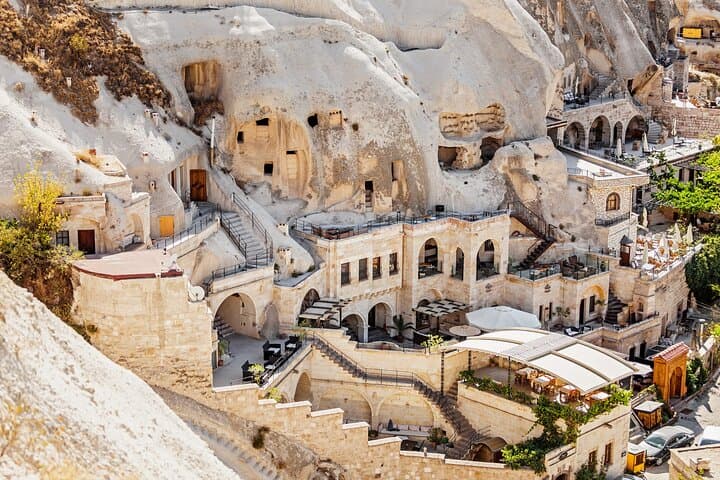
If you opt for the cave-hotel upgrade, nights are spent in rooms hollowed from the tuff—warm in winter, cool in summer. The hot air balloon experience (often scheduled at sunrise on day two) is weather-dependent and may be managed as an add-on; operators enforce safety and sometimes weight limits—book early.
Packing should prioritize layers, sturdy shoes with grip for rocky terrain, and a small daypack for water and camera gear. Bring cash for local markets and tipping; mobile signal drops in some valleys, so download maps or rely on the guide.
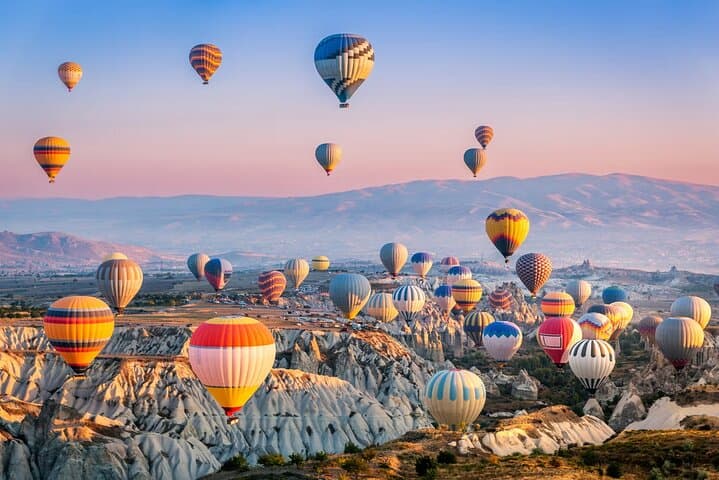
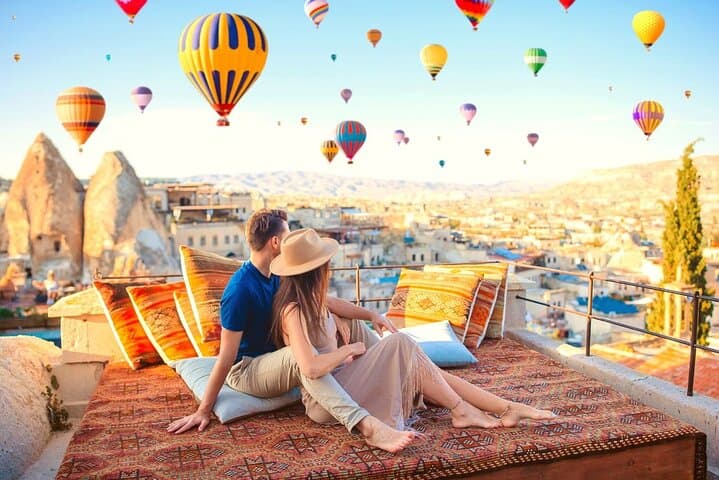
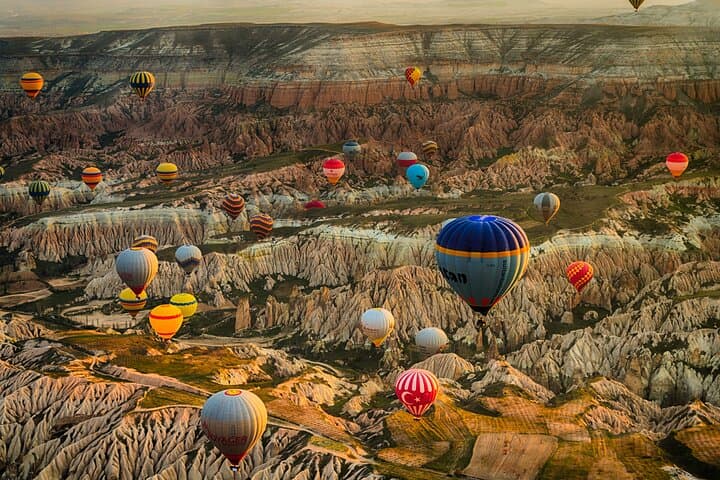
Cappadocia rewards patience and curiosity: the land shapes your itinerary rather than the other way around. When a balloon lifts at dawn, the valley seems to exhale and the chimneys lean in to watch.
moderate.
2 days (approx. 48 hours).
Comfortable with short hikes and stairs; light–moderate cardio fitness recommended for walking and standing during site visits.
The coach transfer typically takes about 6–7 hours each way depending on traffic and scheduled stops.
The itinerary lists a balloon experience but availability is weather-dependent—confirm whether it’s included or offered as an optional add-on when booking.
Yes—the tour offers a cave-hotel accommodation option; confirm at booking to secure a cave room.
Breakfast and dinner at the hotel and a traditional lunch at Uranos Sarıkaya are included as noted in the tour inclusions.
Underground cities have narrow corridors and stairs; people with claustrophobia or severe mobility limits should consult the operator beforehand.
Many nationalities require an e-visa—check Turkey’s official e-visa website before travel and carry a printed or digital copy.
Cappadocia’s cave dwellings and underground cities were developed over centuries as shelter from invasions; Byzantine churches here preserve frescoes from early Christian monastic life.
Erosion of soft tuff is natural but increased foot traffic damages fragile formations—stick to marked paths, avoid climbing on chimneys and support local guides who practice low-impact tourism.
tourbookinturkey operates guided outdoor trips and adventures with an emphasis on safety, stewardship, and memorable experiences.
The minibus eases out of Alanya before dawn, headlights cutting through a chill that the Taurus Mountains have left clinging to the windshield. For the next 48 hours you trade the Mediterranean’s blue glare for an inland horizon of ragged spires and soft volcanic ridges—Cappadocia’s moonscape that seems to have been shaped by wind and time with intention.
The minibus eases out of Alanya before dawn, headlights cutting through a chill that the Taurus Mountains have left clinging to the windshield. For the next 48 hours you trade the Mediterranean’s blue glare for an inland horizon of ragged spires and soft volcanic ridges—Cappadocia’s moonscape that seems to have been shaped by wind and time with intention.
By mid-morning you’re walking into Devrent Valley, where hoodoos stand like characters in a paused play: some blunt, some elongated, their curves licking the sky. The coach drops you at Kayasehir Underground City later that day. Carved over centuries as a refuge from invaders, the city's tunnels and chambers reveal a subterranean life—stairwells that tighten like a throat, storage rooms that smell faintly of earth and history.
Cappadocia’s geology is simple and dramatic. Millennia of volcanic ash (tuff) compacted and then eroded, leaving soft, sculptable rock that locals carved into homes, chapels and dovecotes. The Göreme Open Air Museum preserves Byzantine frescoes painted directly onto these cave walls; alliances of faith and stone that survive in ochre and ultramarine. Trade history lingers too—the caravanserai you visit on day two is a reminder that this was once a waypoint on routes that stitched Anatolia to the Silk Road.
Culture here is tactile. Potters in Avanos pull red clay from the Kızılırmak River. Shadowed cafés serve black tea, and meals—like the lunch at Uranos Sarıkaya—are generous, stewed in slow, rural patience.
Practical matters: the tour is two days (about 48 hours) with hotel pickup from Alanya; expect 6–7 hours of road travel each way by air-conditioned coach. Walking segments are short: valley strolls of 1–3 km and stair-climbs in underground sites. Elevation in the region sits near 1,000–1,250 m, so mornings are crisp and wind can be brisk.
If you opt for the cave-hotel upgrade, nights are spent in rooms hollowed from the tuff—warm in winter, cool in summer. The hot air balloon experience (often scheduled at sunrise on day two) is weather-dependent and may be managed as an add-on; operators enforce safety and sometimes weight limits—book early.
Packing should prioritize layers, sturdy shoes with grip for rocky terrain, and a small daypack for water and camera gear. Bring cash for local markets and tipping; mobile signal drops in some valleys, so download maps or rely on the guide.
Cappadocia rewards patience and curiosity: the land shapes your itinerary rather than the other way around. When a balloon lifts at dawn, the valley seems to exhale and the chimneys lean in to watch.