THE ADVENTURE COLLECTIVE® · Independent discovery and booking for outdoor travel

Cover the essentials of ancient Egypt and Mediterranean Alexandria in two compact days. Visit the Great Pyramid and Sphinx, the Egyptian Museum, Coptic Cairo, and Alexandria’s catacombs and citadel with private transport and guided entry.
Cover the essentials of ancient Egypt and Mediterranean Alexandria in two compact days. Visit the Great Pyramid and Sphinx, the Egyptian Museum, Coptic Cairo, and Alexandria’s catacombs and citadel with private transport and guided entry.
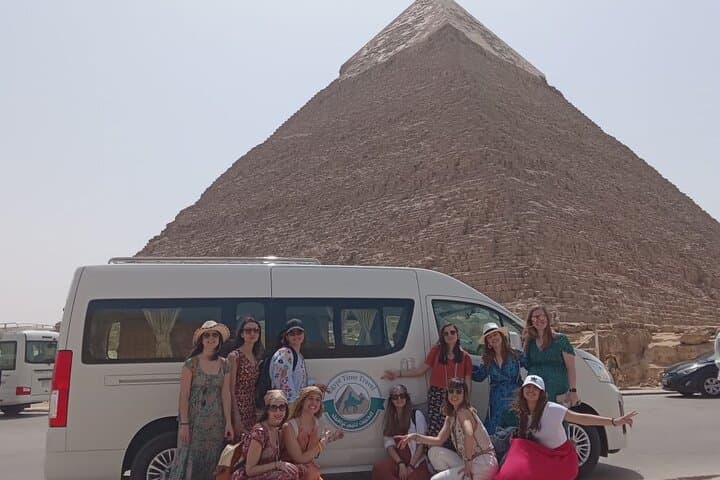
Dust from the plateau lifts as the bus pulls up to the Great Pyramid; wind and sun give the stone a slow, weathered shrug. On this two-day sweep you move from the raw geometry of Giza to the museum-filled streets of central Cairo and then the salt-bright air of Alexandria, where limestone citadels keep watch over the Mediterranean.
Verified experiences and guided adventures in the surrounding area.
Operated by Egypt Time Travel · Cairo, Cairo Governorate
Dust from the plateau lifts as the bus pulls up to the Great Pyramid; wind and sun give the stone a slow, weathered shrug. On this two-day sweep you move from the raw geometry of Giza to the museum-filled streets of central Cairo and then the salt-bright air of Alexandria, where limestone citadels keep watch over the Mediterranean.
The route stitches together three layers of Egyptian history: the Old Kingdom's funerary landscape at Giza, centuries of Cairo’s Islamic and Coptic developments, and Hellenistic-Roman Alexandria with its coastal forts and catacombs. Geology is obvious beneath your feet — Tura limestone in the pyramids, Nile silt in the delta plain; the cityscapes sit atop millennia of human modification.
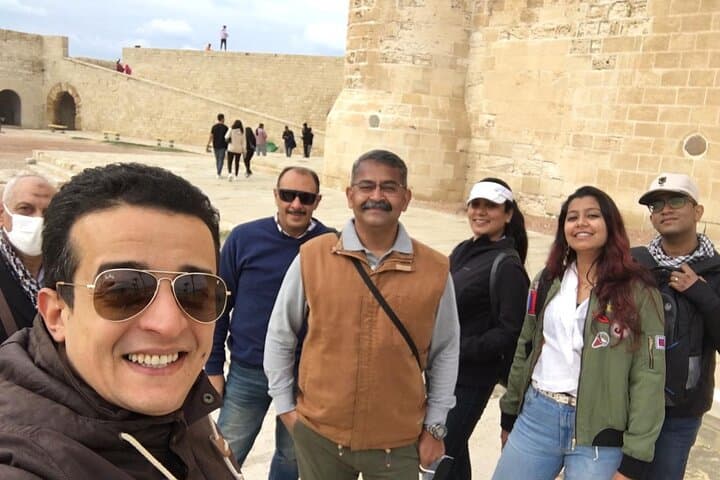
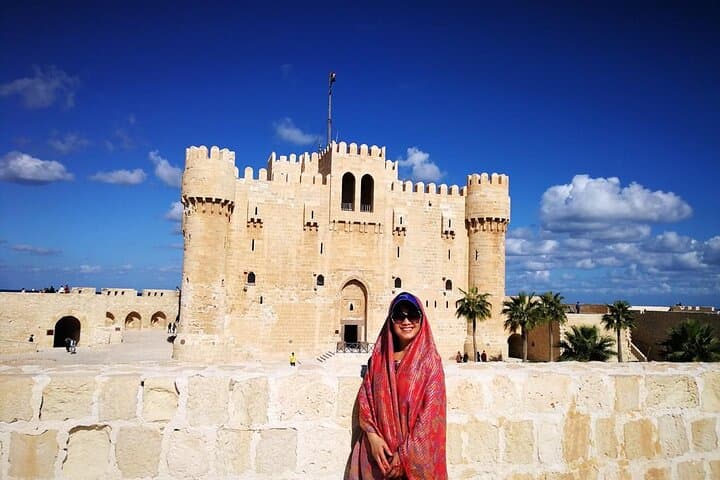
Expect guided stops at the Great Pyramid and Sphinx, the Egyptian Museum’s pharaonic collections, Coptic Cairo’s churches, and Alexandria’s Kom el Shoqafa catacombs, Qaytbay Citadel and a Roman theater. Local guides will orient you to bargaining customs, prayer times, and how to read the city’s layered street plan.
Practical guidance: travel light for stairways and uneven stone floors, use breathable sun protection and a daypack for water, and plan for early starts to avoid midday heat in summer. Bring copies of travel documents for rapid museum entry and leave time for short, deliberate walks rather than rushing between sights — the best discoveries happen when you slow to look at the stonework and the city beyond.
easy.
2 days.
Suitable for travelers with basic mobility; involves several short walks and some stair climbing
Yes—admissions for sites listed in the itinerary (Giza, Egyptian Museum, Kom el Shoqafa, Qaytbay Citadel, Roman Theater) are included as specified in the tour details.
Private air-conditioned vehicle transfers are provided across the two days, including pickup and drop-off as arranged at booking.
The operator lists wheelchair-accessible vehicles and surfaces; however, some archaeological sites have uneven terrain or steps—check specific mobility needs with the supplier before booking.
The tour includes breakfast at the hotel and two lunches in local restaurants as described in the itinerary.
This route moves from Egypt’s Old Kingdom funerary monuments through Cairo’s medieval Islamic and Coptic quarters to Alexandria, founded in the Hellenistic era and long a Mediterranean crossroads.
Visitor pressure is a concern at major monuments—stay on marked paths, avoid touching fragile stone, and support local conservation by following guide instructions.
Egypt Time Travel operates guided outdoor trips and adventures with an emphasis on safety, stewardship, and memorable experiences.
Dust from the plateau lifts as the bus pulls up to the Great Pyramid; wind and sun give the stone a slow, weathered shrug. On this two-day sweep you move from the raw geometry of Giza to the museum-filled streets of central Cairo and then the salt-bright air of Alexandria, where limestone citadels keep watch over the Mediterranean.
Dust from the plateau lifts as the bus pulls up to the Great Pyramid; wind and sun give the stone a slow, weathered shrug. On this two-day sweep you move from the raw geometry of Giza to the museum-filled streets of central Cairo and then the salt-bright air of Alexandria, where limestone citadels keep watch over the Mediterranean.
The route stitches together three layers of Egyptian history: the Old Kingdom's funerary landscape at Giza, centuries of Cairo’s Islamic and Coptic developments, and Hellenistic-Roman Alexandria with its coastal forts and catacombs. Geology is obvious beneath your feet — Tura limestone in the pyramids, Nile silt in the delta plain; the cityscapes sit atop millennia of human modification.
Expect guided stops at the Great Pyramid and Sphinx, the Egyptian Museum’s pharaonic collections, Coptic Cairo’s churches, and Alexandria’s Kom el Shoqafa catacombs, Qaytbay Citadel and a Roman theater. Local guides will orient you to bargaining customs, prayer times, and how to read the city’s layered street plan.
Practical guidance: travel light for stairways and uneven stone floors, use breathable sun protection and a daypack for water, and plan for early starts to avoid midday heat in summer. Bring copies of travel documents for rapid museum entry and leave time for short, deliberate walks rather than rushing between sights — the best discoveries happen when you slow to look at the stonework and the city beyond.