THE ADVENTURE COLLECTIVE® · Independent discovery and booking for outdoor travel

Swap Fez’s medina lanes for the orange folds of Erg Chebbi on a compact two-day trip that pairs long scenic drives with a camel trek and an overnight Berber camp. Expect cedar forests, the Ziz Valley, fossil towns and the hush of desert dunes at sunrise.
Swap Fez’s medina lanes for the orange folds of Erg Chebbi on a compact two-day trip that pairs long scenic drives with a camel trek and an overnight Berber camp. Expect cedar forests, the Ziz Valley, fossil towns and the hush of desert dunes at sunrise.
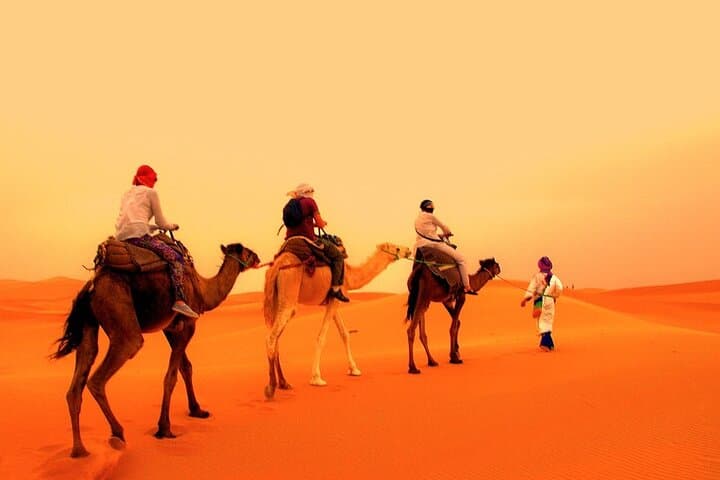
Morning light spills across rippled sand and the first camel silhouettes appear against the horizon — this is Erg Chebbi waking up. On a two-day sweep from Fez you trade tiled medina alleys for road cuts through cedar forests, the Ziz Valley palm groves, and the High Atlas passes before the landscape opens to the orange waves of Merzouga.
Verified experiences and guided adventures in the surrounding area.
Operated by Mbarek Ait Khouya · Merzouga, Drâa-Tafilalet
Morning light spills across rippled sand and the first camel silhouettes appear against the horizon — this is Erg Chebbi waking up. On a two-day sweep from Fez you trade tiled medina alleys for road cuts through cedar forests, the Ziz Valley palm groves, and the High Atlas passes before the landscape opens to the orange waves of Merzouga.
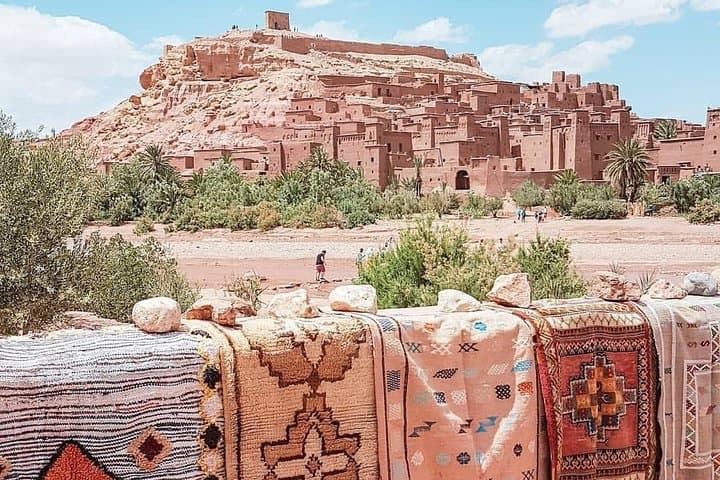
The route follows centuries-old lines: Tafilalet’s oases were once caravan stops linking sub-Saharan trade routes to northern markets. Geologically, Erg Chebbi is a large sand sea shaped by persistent winds; individual dunes can reach roughly 100–150 meters above the surrounding plain. Culture here is living: Berber families host nights in traditional desert tents, and small villages like Rissani and Erfoud keep old trading rhythms and fossil-working crafts.
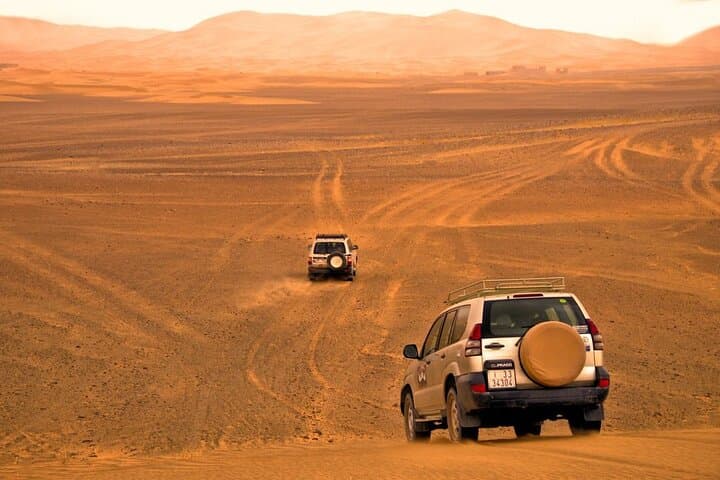
Practically, expect long drives (roughly 8–10 hours each way from Fez with stops), short hikes of soft sand, a sunset or sunrise camel trek and an overnight in a desert camp. Sandboarding and simple walks on dune ridges are the main activities; nights can be cold so layers matter. Carry at least 2–3 liters of water per person for the desert day, a wide-brim hat and sturdy closed shoes for walking on hot sand. Bring cash — small vendors and tipping are cash-based — and a headlamp for camp.
This itinerary is accessible for most fitness levels but involves extended vehicle time; it’s an efficient two-day immersion into Morocco’s desert edge, combining visual drama with tangible local culture.
moderate.
2 days (approx. 48 hours).
Suitable for travelers in average fitness; involves long vehicle transfers and walking on sand which is more aerobic than flat terrain.
Typical camel treks around Merzouga last 1–2 hours and are timed for sunset or sunrise to maximize light and comfort.
Camps provide Berber-style tents with bedding; expect basic but warm accommodations—bring a warm layer for cold nights.
The tour notes physical easy and wheelchair-accessible transport options in parts, but camel riding and dune walking require mobility; confirm special needs at booking.
Some camps provide charging on request but it’s intermittent — bring a power bank if you need reliable power.
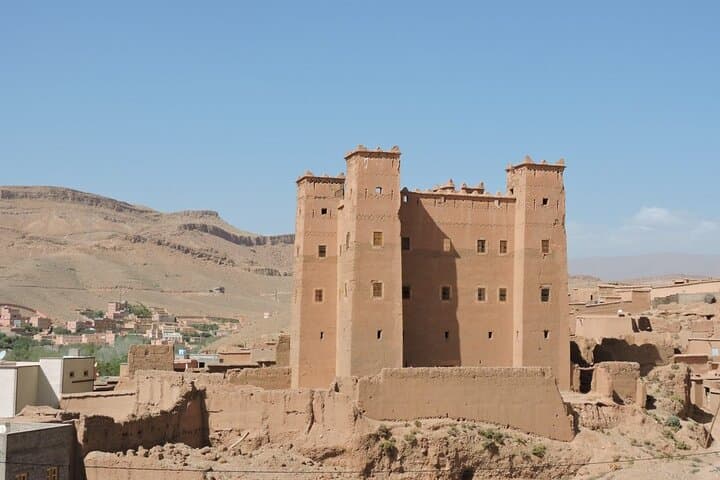
This route crosses the Tafilalet region, historically a caravan corridor and an agricultural oases system that fed trade between the Sahara and Morocco’s cities.
Dune ecosystems are fragile; avoid driving on vegetated areas, pack out all waste, and follow guide instructions to minimize impact.
Mbarek Ait Khouya operates guided outdoor trips and adventures with an emphasis on safety, stewardship, and memorable experiences.
Morning light spills across rippled sand and the first camel silhouettes appear against the horizon — this is Erg Chebbi waking up. On a two-day sweep from Fez you trade tiled medina alleys for road cuts through cedar forests, the Ziz Valley palm groves, and the High Atlas passes before the landscape opens to the orange waves of Merzouga.
Morning light spills across rippled sand and the first camel silhouettes appear against the horizon — this is Erg Chebbi waking up. On a two-day sweep from Fez you trade tiled medina alleys for road cuts through cedar forests, the Ziz Valley palm groves, and the High Atlas passes before the landscape opens to the orange waves of Merzouga.
The route follows centuries-old lines: Tafilalet’s oases were once caravan stops linking sub-Saharan trade routes to northern markets. Geologically, Erg Chebbi is a large sand sea shaped by persistent winds; individual dunes can reach roughly 100–150 meters above the surrounding plain. Culture here is living: Berber families host nights in traditional desert tents, and small villages like Rissani and Erfoud keep old trading rhythms and fossil-working crafts.
Practically, expect long drives (roughly 8–10 hours each way from Fez with stops), short hikes of soft sand, a sunset or sunrise camel trek and an overnight in a desert camp. Sandboarding and simple walks on dune ridges are the main activities; nights can be cold so layers matter. Carry at least 2–3 liters of water per person for the desert day, a wide-brim hat and sturdy closed shoes for walking on hot sand. Bring cash — small vendors and tipping are cash-based — and a headlamp for camp.
This itinerary is accessible for most fitness levels but involves extended vehicle time; it’s an efficient two-day immersion into Morocco’s desert edge, combining visual drama with tangible local culture.