THE ADVENTURE COLLECTIVE® · Independent discovery and booking for outdoor travel

Drive south from Ouarzazate into the hamada and reach Erg Chegaga for an overnight in a Berber tent. This compact 2-day trip combines dune camel treks at sunrise or sunset with visits to kasbahs, Tamegroute’s library, and the Draa Valley.
Drive south from Ouarzazate into the hamada and reach Erg Chegaga for an overnight in a Berber tent. This compact 2-day trip combines dune camel treks at sunrise or sunset with visits to kasbahs, Tamegroute’s library, and the Draa Valley.
Morning light hits the kasbah-lined highway outside Ouarzazate and the SUV rumbles south, the Atlas foothills giving way to hamada plateaus and a widening horizon of ochre. By midday the group pauses at Foum Zguid for lunch; beyond it, the road meets the dry salt plain of Lake Iriqui and the first sweep of dunes that announce Erg Chegaga.
Verified experiences and guided adventures in the surrounding area.
Operated by Caravane Du Grand Erg · Ouarzazate, Drâa-Tafilalet
Morning light hits the kasbah-lined highway outside Ouarzazate and the SUV rumbles south, the Atlas foothills giving way to hamada plateaus and a widening horizon of ochre. By midday the group pauses at Foum Zguid for lunch; beyond it, the road meets the dry salt plain of Lake Iriqui and the first sweep of dunes that announce Erg Chegaga.
Erg Chegaga is part of Morocco’s Saharan fringe—large crescent dunes rising a few hundred meters above a flat desert floor, formed by persistent southerly winds. The route threads historic sites: fortified kasbahs like Amezrou, the palm-lined Draa Valley and the Koranic library at Tamegroute, reflecting a mix of Amazigh and Arab desert cultures shaped by centuries of caravan traffic.
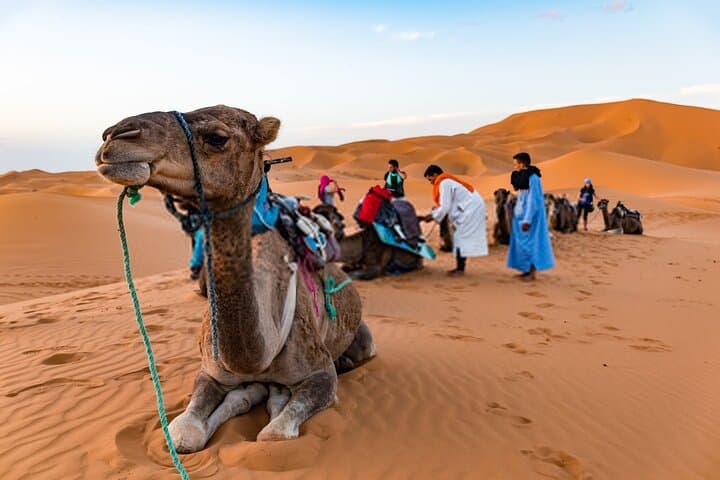
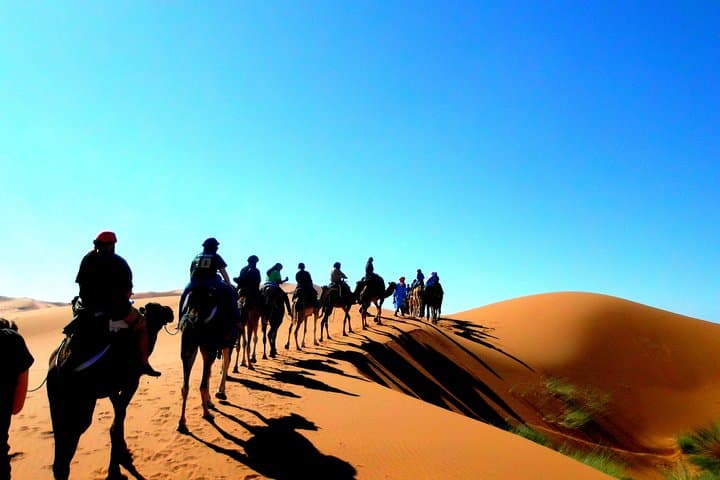
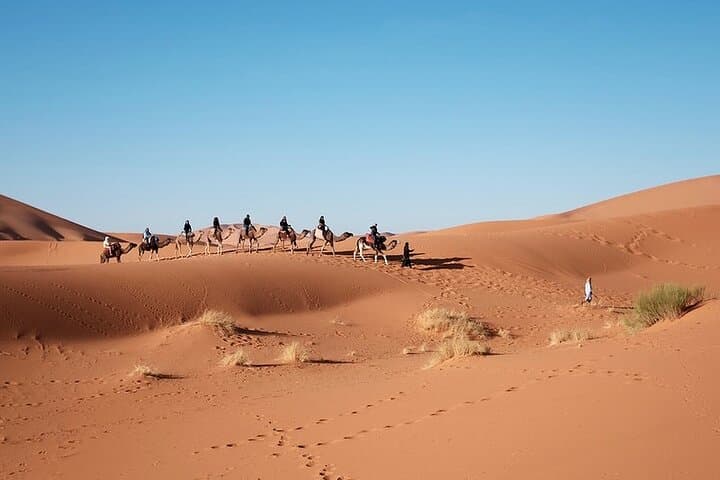
Day one ends at a traditional desert camp where tents share the edge of the dunes; sunset camel treks are typically 30–60 minutes along soft sand, and sunrise treks offer cooler light and clearer tracks. Expect long drives (day one ~6 hours), a 64 km dune crossing toward M’Hamid on day two, soft sand underfoot, and temperatures that swing from hot daytime to chilly nights.
Practical guidance: carry at least 2–3 liters of water per person, sun protection, and layered clothing for cold nights. Wear sturdy boots for rocky approaches and closed shoes for camel saddles. Timing matters—travel in spring or autumn for milder days, avoid extended midday exertion in summer, and allow extra time for sand driving. Camps are basic but warm; book pickups from Ouarzazate and confirm camel-ride timing to catch sunrise or sunset.
moderate.
2 days (approx. 48 hours).
Suitable for travelers in average fitness who can handle short camel rides and brief dune walks; long vehicle drives require patience.
Sunset and sunrise camel treks on this itinerary are typically 30–60 minutes to a nearby dune ridge and back, suitable for first-time riders.
The tour includes one night in a traditional desert camp with standard Berber-style tents; facilities are basic but include bedding and shared ablutions.
Children can join but must be accompanied by an adult; infant seats and stroller access are noted, and camel rides may have age or weight limits—check with the operator.
Overall the tour is rated easy to moderate: driving dominates the itinerary, with short walks and camel rides rather than long hikes.
The route follows historic caravan corridors connecting oases and kasbahs; villages like Tamegroute preserve centuries-old religious schools and manuscript collections.
Travelers should avoid disturbing fragile dune vegetation and campfires; carry out all waste and use existing camp facilities to reduce impact.
Caravane Du Grand Erg operates guided outdoor trips and adventures with an emphasis on safety, stewardship, and memorable experiences.
Morning light hits the kasbah-lined highway outside Ouarzazate and the SUV rumbles south, the Atlas foothills giving way to hamada plateaus and a widening horizon of ochre. By midday the group pauses at Foum Zguid for lunch; beyond it, the road meets the dry salt plain of Lake Iriqui and the first sweep of dunes that announce Erg Chegaga.
Morning light hits the kasbah-lined highway outside Ouarzazate and the SUV rumbles south, the Atlas foothills giving way to hamada plateaus and a widening horizon of ochre. By midday the group pauses at Foum Zguid for lunch; beyond it, the road meets the dry salt plain of Lake Iriqui and the first sweep of dunes that announce Erg Chegaga.
Erg Chegaga is part of Morocco’s Saharan fringe—large crescent dunes rising a few hundred meters above a flat desert floor, formed by persistent southerly winds. The route threads historic sites: fortified kasbahs like Amezrou, the palm-lined Draa Valley and the Koranic library at Tamegroute, reflecting a mix of Amazigh and Arab desert cultures shaped by centuries of caravan traffic.
Day one ends at a traditional desert camp where tents share the edge of the dunes; sunset camel treks are typically 30–60 minutes along soft sand, and sunrise treks offer cooler light and clearer tracks. Expect long drives (day one ~6 hours), a 64 km dune crossing toward M’Hamid on day two, soft sand underfoot, and temperatures that swing from hot daytime to chilly nights.
Practical guidance: carry at least 2–3 liters of water per person, sun protection, and layered clothing for cold nights. Wear sturdy boots for rocky approaches and closed shoes for camel saddles. Timing matters—travel in spring or autumn for milder days, avoid extended midday exertion in summer, and allow extra time for sand driving. Camps are basic but warm; book pickups from Ouarzazate and confirm camel-ride timing to catch sunrise or sunset.