THE ADVENTURE COLLECTIVE® · Independent discovery and booking for outdoor travel

A compact two-day itinerary that pairs Ephesus’s marble avenues with Pamukkale’s luminous travertines. This private tour includes domestic flights, guided visits to ancient sites, and an overnight in Kusadasi.
A compact two-day itinerary that pairs Ephesus’s marble avenues with Pamukkale’s luminous travertines. This private tour includes domestic flights, guided visits to ancient sites, and an overnight in Kusadasi.
Before dawn you’re on a shuttle toward the airport, leaving Istanbul’s skyline behind for the slow stones of western Anatolia. By midday you step into Ephesus: marble streets slope past carved facades, the Library of Celsus watching like a patient guardian while the amphitheater swallows sound. The next morning Pamukkale’s white travertine steps glow under thermal steam, water pooling like molten glass that dares you to dip a toe.
Verified experiences and guided adventures in the surrounding area.
Operated by Turkey Tours Company · Selçuk, Izmir Province
Before dawn you’re on a shuttle toward the airport, leaving Istanbul’s skyline behind for the slow stones of western Anatolia. By midday you step into Ephesus: marble streets slope past carved facades, the Library of Celsus watching like a patient guardian while the amphitheater swallows sound. The next morning Pamukkale’s white travertine steps glow under thermal steam, water pooling like molten glass that dares you to dip a toe.
Ephesus rose to prominence as a major Roman port and cultural hub; Hierapolis (near Pamukkale) grew as a thermal city whose necropolis records centuries of pilgrim traffic. Geologically, Pamukkale is formed by calcium-rich springs depositing terraces over millennia — the “cotton castle” is living geology, slowly building and eroding with each season. The region bears layers of Greek, Roman, Byzantine and Ottoman imprint: mosques, theaters and Christian shrines sit within the same landscape.
Practical guidance: tours are private and include domestic flights, most meals and transfers; expect guided walks on uneven marble, short stair climbs and some barefoot walking at Pamukkale. Entrance fees may be handled separately for special sites (e.g., Cleopatra’s Pool). Temperatures swing widely—pack sun protection and a light layer for evenings. Carry euros or Turkish lira for market stops (carpet and leather workshops are common) and leave time to move deliberately through both ruins and terraces so you can read the place, not just photograph it.
easy.
2 days (approx. 8–10 hours touring).
Suitable for travelers in general good health; involves low-impact walking, standing, and short stair climbs.
The tour description notes lunches and breakfasts are included and domestic flights and transfers are provided; certain site-specific fees (e.g., Cleopatra’s Pool or special museum exhibits) may require extra payment—confirm with your guide.
Yes, the round-trip domestic flight between Istanbul and Izmir (and later from Denizli/Cardak back to Istanbul) is included in the itinerary.
The tour is listed as physically easy, but many sites have uneven stone, steps and areas without ramps; travelers with mobility limitations should contact the operator to confirm accessibility options.
Walking barefoot on designated travertine pools is permitted in many areas for conservation reasons; swimming in some terraces is restricted and Cleopatra’s Pool is a paid option—follow onsite rules to protect the deposits.
Ephesus was a major Roman metropolis and port, home to the Library of Celsus and a large theater; Hierapolis developed around thermal springs and became an important Roman spa and burial center.
Pamukkale’s travertines are fragile; authorities control access and encourage barefoot walking only in designated areas to prevent damage. Follow guide directions and avoid soaps or sunscreens in thermal waters.
Turkey Tours Company operates guided outdoor trips and adventures with an emphasis on safety, stewardship, and memorable experiences.
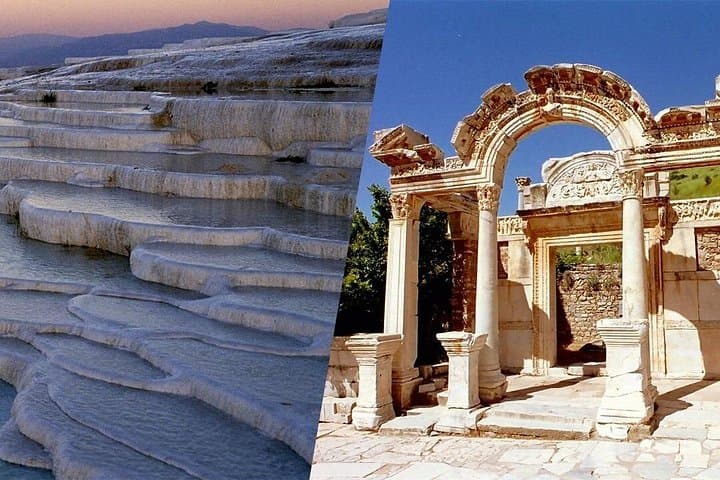
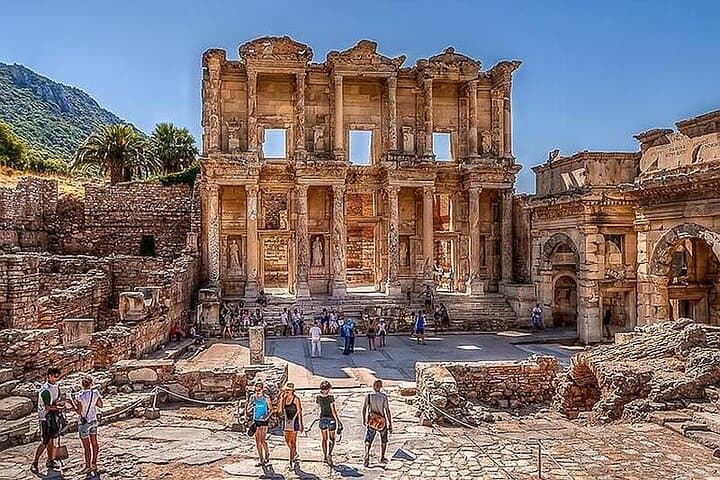
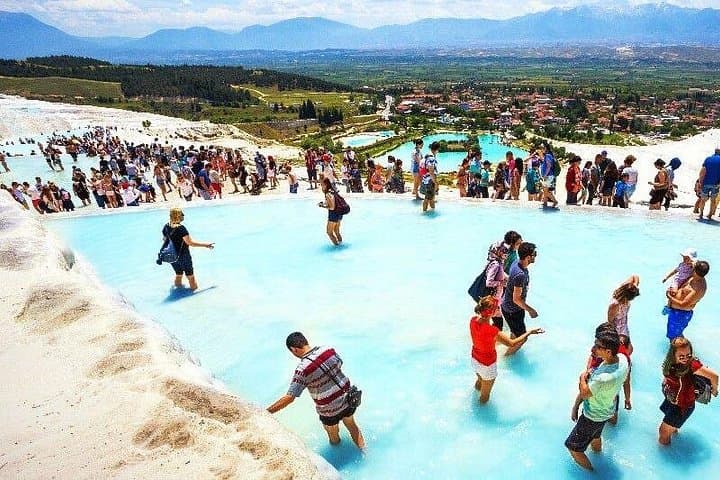
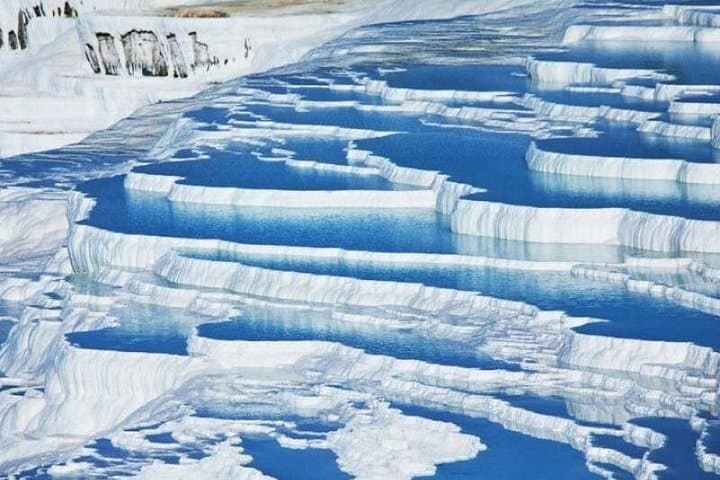
Before dawn you’re on a shuttle toward the airport, leaving Istanbul’s skyline behind for the slow stones of western Anatolia. By midday you step into Ephesus: marble streets slope past carved facades, the Library of Celsus watching like a patient guardian while the amphitheater swallows sound. The next morning Pamukkale’s white travertine steps glow under thermal steam, water pooling like molten glass that dares you to dip a toe.
Before dawn you’re on a shuttle toward the airport, leaving Istanbul’s skyline behind for the slow stones of western Anatolia. By midday you step into Ephesus: marble streets slope past carved facades, the Library of Celsus watching like a patient guardian while the amphitheater swallows sound. The next morning Pamukkale’s white travertine steps glow under thermal steam, water pooling like molten glass that dares you to dip a toe.
Ephesus rose to prominence as a major Roman port and cultural hub; Hierapolis (near Pamukkale) grew as a thermal city whose necropolis records centuries of pilgrim traffic. Geologically, Pamukkale is formed by calcium-rich springs depositing terraces over millennia — the “cotton castle” is living geology, slowly building and eroding with each season. The region bears layers of Greek, Roman, Byzantine and Ottoman imprint: mosques, theaters and Christian shrines sit within the same landscape.
Practical guidance: tours are private and include domestic flights, most meals and transfers; expect guided walks on uneven marble, short stair climbs and some barefoot walking at Pamukkale. Entrance fees may be handled separately for special sites (e.g., Cleopatra’s Pool). Temperatures swing widely—pack sun protection and a light layer for evenings. Carry euros or Turkish lira for market stops (carpet and leather workshops are common) and leave time to move deliberately through both ruins and terraces so you can read the place, not just photograph it.