THE ADVENTURE COLLECTIVE® · Independent discovery and booking for outdoor travel

Short flights and long history: this two-day tour pairs the marble streets of Ephesus with the bright white travertines of Pamukkale. Expect guided ruins walks, a barefoot stroll across mineral terraces and a swim in ancient thermal baths.
Short flights and long history: this two-day tour pairs the marble streets of Ephesus with the bright white travertines of Pamukkale. Expect guided ruins walks, a barefoot stroll across mineral terraces and a swim in ancient thermal baths.
You step off a short domestic flight and the air changes: sea-scent near Kuşadası, mineral heat at Pamukkale. Day one unfolds on paved marble avenues where Ephesus still speaks in stone—the Celsus Library’s carved facade fills your view, the Great Theater’s tiered seats descend like an amphitheater of time.
Verified experiences and guided adventures in the surrounding area.
Operated by Tours Flame · Pamukkale, Denizli
You step off a short domestic flight and the air changes: sea-scent near Kuşadası, mineral heat at Pamukkale. Day one unfolds on paved marble avenues where Ephesus still speaks in stone—the Celsus Library’s carved facade fills your view, the Great Theater’s tiered seats descend like an amphitheater of time.
Ephesus grew from Greek port to Roman metropolis; its streets hold public baths, fountains and the Odeon where civic life once pulsed. Nearby the shallow ruins of the Temple of Artemis mark one of the ancient world’s lost wonders—columns reduced to fragments but not to story.
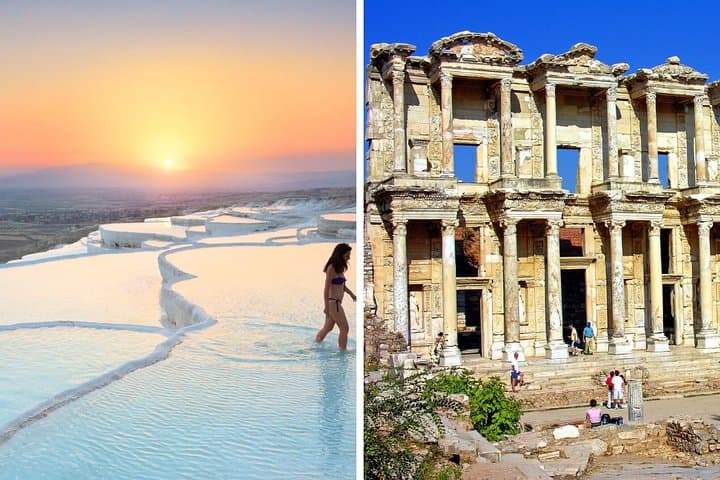
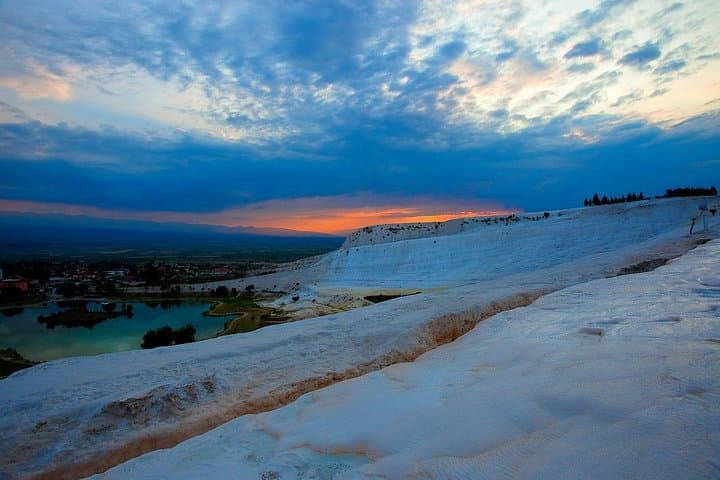
On day two the landscape shifts. Hierapolis rides a ridge above white travertine shelves formed by calcium-rich thermal spring water; terraces gleam and flow like frozen surf. The thermal pools, cooled and warmed by mineral currents, invite barefoot walking and the chance to swim in Cleopatra’s Pool among submerged ruins.
Local culture interleaves with history: Selçuk and Sirince offer small-town markets, grilled seafood on the Aegean, and village fruit wines. Geology here is literal: travertines form as mineral-saturated springs deposit calcium carbonate, building the staircases you’ll cross.
Practical edge: expect early hotel pickups, around 0.5 miles of barefoot walking on travertines, and uphill sections in Hierapolis; bring layered clothes for coastal winds and hot inland afternoons, sunscreen, and a swimsuit. Shoes are often removed at protected terraces—pack a dry bag and quick-dry towel. With modest fitness and sensible gear you’ll move easily from Roman streets to thermal pools across two full days.
moderate.
2 days.
Suitable for travelers in average physical condition who can walk several short to moderate stretches (0.5–2 miles) and manage stairs and uneven surfaces.
Yes—visitors are required to remove shoes to protect the mineral formations; bring a small bag to carry them and a towel to dry feet if needed.
Yes—you can swim in designated thermal pools and Cleopatra’s Pool (fees may apply); swimsuits and quick-dry towels are recommended.
Expect several short guided walks: downhill routes through Ephesus and about 0.5 miles barefoot on Pamukkale terraces, plus stairs in Hierapolis.
The tour is family-friendly but some sites have uneven surfaces and stairs; those with limited mobility should check accessibility and inform the operator in advance.
Ephesus was a major Greek and Roman port and trade center; nearby Hierapolis developed as a Roman spa town centered on thermal springs used since antiquity.
Pamukkale’s terraces are protected; barefoot access and controlled routes reduce erosion—follow signage and avoid stepping on wet or closed areas to protect deposits.
Tours Flame operates guided outdoor trips and adventures with an emphasis on safety, stewardship, and memorable experiences.
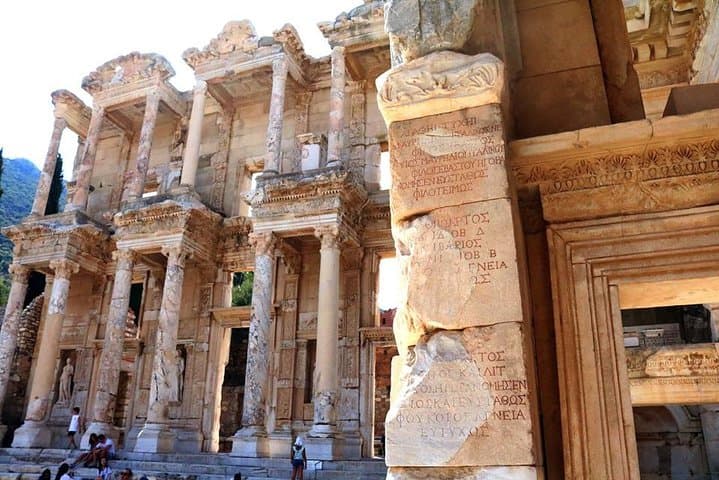
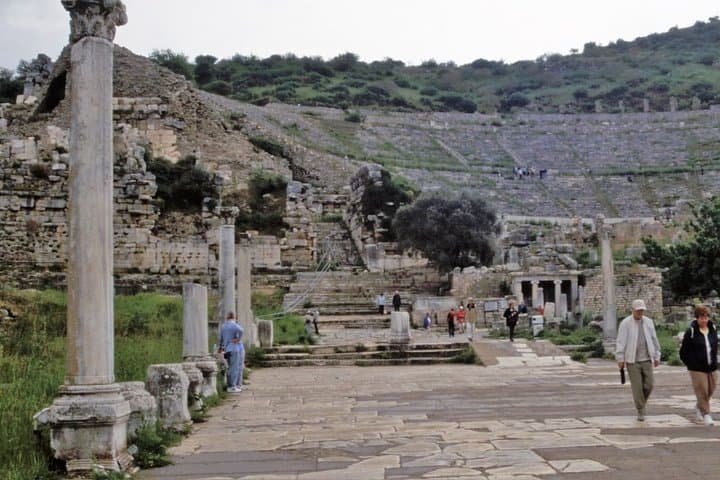
You step off a short domestic flight and the air changes: sea-scent near Kuşadası, mineral heat at Pamukkale. Day one unfolds on paved marble avenues where Ephesus still speaks in stone—the Celsus Library’s carved facade fills your view, the Great Theater’s tiered seats descend like an amphitheater of time.
You step off a short domestic flight and the air changes: sea-scent near Kuşadası, mineral heat at Pamukkale. Day one unfolds on paved marble avenues where Ephesus still speaks in stone—the Celsus Library’s carved facade fills your view, the Great Theater’s tiered seats descend like an amphitheater of time.
Ephesus grew from Greek port to Roman metropolis; its streets hold public baths, fountains and the Odeon where civic life once pulsed. Nearby the shallow ruins of the Temple of Artemis mark one of the ancient world’s lost wonders—columns reduced to fragments but not to story.
On day two the landscape shifts. Hierapolis rides a ridge above white travertine shelves formed by calcium-rich thermal spring water; terraces gleam and flow like frozen surf. The thermal pools, cooled and warmed by mineral currents, invite barefoot walking and the chance to swim in Cleopatra’s Pool among submerged ruins.
Local culture interleaves with history: Selçuk and Sirince offer small-town markets, grilled seafood on the Aegean, and village fruit wines. Geology here is literal: travertines form as mineral-saturated springs deposit calcium carbonate, building the staircases you’ll cross.
Practical edge: expect early hotel pickups, around 0.5 miles of barefoot walking on travertines, and uphill sections in Hierapolis; bring layered clothes for coastal winds and hot inland afternoons, sunscreen, and a swimsuit. Shoes are often removed at protected terraces—pack a dry bag and quick-dry towel. With modest fitness and sensible gear you’ll move easily from Roman streets to thermal pools across two full days.