THE ADVENTURE COLLECTIVE® · Independent discovery and booking for outdoor travel

Two days, one Aegean flight and a compact immersion in antiquity and travertine: explore Ephesus’s marble streets and Pamukkale’s white terraces with guided transfers, entrance fees and one night in Kuşadası included.
Two days, one Aegean flight and a compact immersion in antiquity and travertine: explore Ephesus’s marble streets and Pamukkale’s white terraces with guided transfers, entrance fees and one night in Kuşadası included.
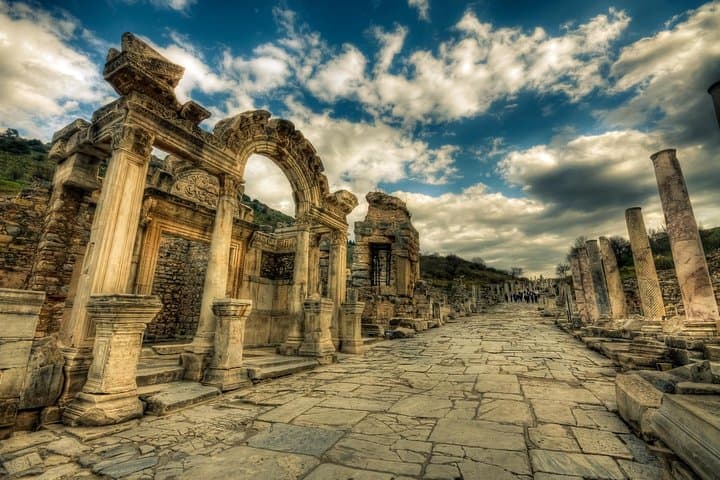
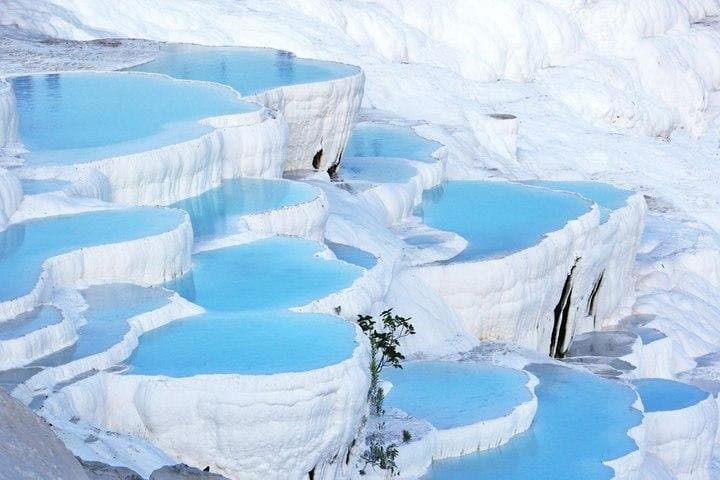
You step off the morning flight into Aegean light and the bus hums toward two of Turkey’s most cinematic places: the marble avenues of Ephesus and the white terraces of Pamukkale. In Ephesus the air smells faintly of sun-warmed stone as you walk the Library of Celsus’ façade and climb the Great Theatre’s tiers; later the hills above Hierapolis open into surreal, calcium-coated pools.
Verified experiences and guided adventures in the surrounding area.
Operated by Travel Store Turkey · Selçuk, İzmir
You step off the morning flight into Aegean light and the bus hums toward two of Turkey’s most cinematic places: the marble avenues of Ephesus and the white terraces of Pamukkale. In Ephesus the air smells faintly of sun-warmed stone as you walk the Library of Celsus’ façade and climb the Great Theatre’s tiers; later the hills above Hierapolis open into surreal, calcium-coated pools.
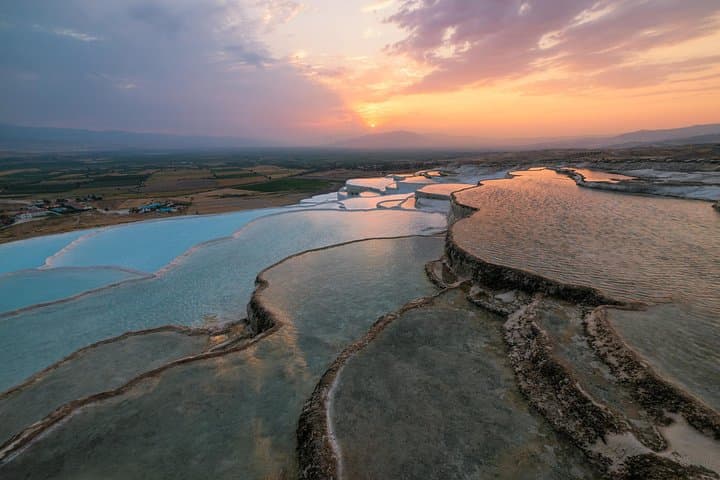
Ephesus grew from an Ionian port into a major Roman metropolis; its marble streets, public latrines and monumental façades speak to commerce and imperial patronage. Pamukkale’s travertines are geological records—hot, mineral-rich springs depositing calcite over millennia—and the adjacent Greco-Roman spa city of Hierapolis thrived around those same waters.
Culturally you’ll pass Byzantine churches, Seljuk mosques and a living rural rhythm in villages like Şirince, where fruit wines and narrow lanes offer a quieter counterpoint to ruin-watching. Geologically the travertines are fragile: soft, wet surfaces and thermal channels demand barefoot etiquette on the terraces and respect for protected areas.
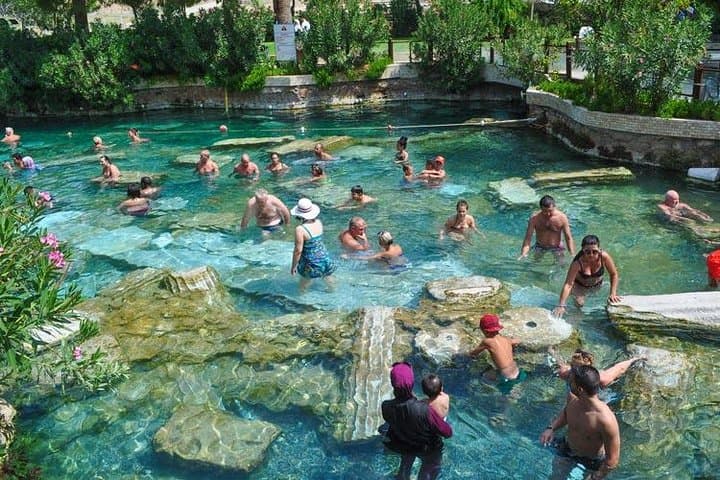
Practical guidance: expect two full days of walking—roughly 3–6 km per site across uneven marble and stone steps, with modest elevation change (up to ~150 m at Pamukkale). Arrive early to avoid crowds and heat; bring sturdy closed-toe shoes for Ephesus and a towel/swimwear if you plan to pay extra for Cleopatra’s Pool (approx. USD 10). Hydrate often; sun protection is essential in summer. The tour includes flights, transfers, entrance fees, two lunches and one overnight stay in Kuşadası—ideal for travelers seeking a tight, curated introduction to Turkey’s ancient and natural highlights.
moderate.
2 days.
Comfortable walking ability for multiple 2–6 km site walks with stairs and uneven surfaces; able to stand and climb for several hours each day.
Yes — this tour includes round-trip domestic flights, ground transfers between sites and all entrance fees as described.
Direct access to the travertine pools is restricted to protect the formations; a paid option exists to swim in Cleopatra’s Pool with submerged columns.
Both sites have uneven surfaces and steps; parts of Ephesus and Hierapolis may be difficult for those with limited mobility—check ahead for specific assistance options.
Local currency is the Turkish lira, though many tourist services accept cards; Turkish is the primary language, and guides typically speak English on this tour.
Ephesus was a major Roman and earlier Greek center with ties to early Christianity; Hierapolis developed as a Roman spa city built around thermal springs.
Pamukkale’s travertines are protected by UNESCO; visitors must follow barefoot trails and stay on designated paths to prevent erosion and damage.
Travel Store Turkey operates guided outdoor trips and adventures with an emphasis on safety, stewardship, and memorable experiences.
You step off the morning flight into Aegean light and the bus hums toward two of Turkey’s most cinematic places: the marble avenues of Ephesus and the white terraces of Pamukkale. In Ephesus the air smells faintly of sun-warmed stone as you walk the Library of Celsus’ façade and climb the Great Theatre’s tiers; later the hills above Hierapolis open into surreal, calcium-coated pools.
You step off the morning flight into Aegean light and the bus hums toward two of Turkey’s most cinematic places: the marble avenues of Ephesus and the white terraces of Pamukkale. In Ephesus the air smells faintly of sun-warmed stone as you walk the Library of Celsus’ façade and climb the Great Theatre’s tiers; later the hills above Hierapolis open into surreal, calcium-coated pools.
Ephesus grew from an Ionian port into a major Roman metropolis; its marble streets, public latrines and monumental façades speak to commerce and imperial patronage. Pamukkale’s travertines are geological records—hot, mineral-rich springs depositing calcite over millennia—and the adjacent Greco-Roman spa city of Hierapolis thrived around those same waters.
Culturally you’ll pass Byzantine churches, Seljuk mosques and a living rural rhythm in villages like Şirince, where fruit wines and narrow lanes offer a quieter counterpoint to ruin-watching. Geologically the travertines are fragile: soft, wet surfaces and thermal channels demand barefoot etiquette on the terraces and respect for protected areas.
Practical guidance: expect two full days of walking—roughly 3–6 km per site across uneven marble and stone steps, with modest elevation change (up to ~150 m at Pamukkale). Arrive early to avoid crowds and heat; bring sturdy closed-toe shoes for Ephesus and a towel/swimwear if you plan to pay extra for Cleopatra’s Pool (approx. USD 10). Hydrate often; sun protection is essential in summer. The tour includes flights, transfers, entrance fees, two lunches and one overnight stay in Kuşadası—ideal for travelers seeking a tight, curated introduction to Turkey’s ancient and natural highlights.