THE ADVENTURE COLLECTIVE® · Independent discovery and booking for outdoor travel

A packed two-day circuit around Rapa Nui that links quarry pits, ceremonial ahu and crater rims with a native guide. Expect long walking days, exposed volcanic terrain, and unforgettable moai encounters.
A packed two-day circuit around Rapa Nui that links quarry pits, ceremonial ahu and crater rims with a native guide. Expect long walking days, exposed volcanic terrain, and unforgettable moai encounters.
You step off the small plane and the Pacific wind greets you like an old friend — salt carrying the island's basalt breath as low ridges and scattered moai come into view. Over two days the landscape alternates between crater rims that loom like sleeping giants and coastal ahu where stone faces stare inland, as if keeping watch over the island’s stories.
Verified experiences and guided adventures in the surrounding area.
Operated by Hotumatur RapaNui · Hanga Roa, Valparaíso Region
You step off the small plane and the Pacific wind greets you like an old friend — salt carrying the island's basalt breath as low ridges and scattered moai come into view. Over two days the landscape alternates between crater rims that loom like sleeping giants and coastal ahu where stone faces stare inland, as if keeping watch over the island’s stories.
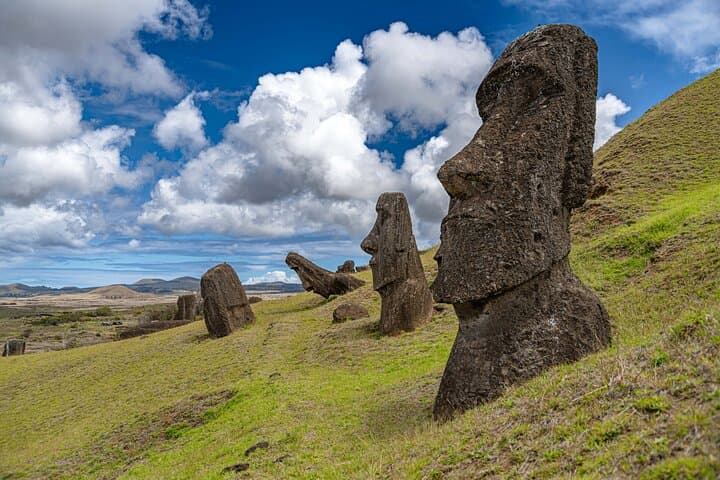
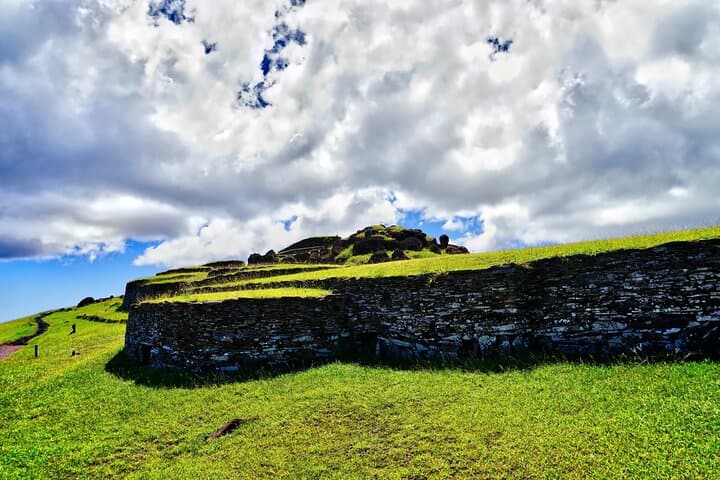
Easter Island (Rapa Nui) is volcanic young Earth: tuff, basalt quarries and crater lakes such as Rano Raraku and Rano Kau explain how the moai were carved, moved and sometimes left unfinished. The island’s cultural layers are visible in petroglyphs, the Birdman (Tangata Manu) ritual center at Orongo, and the Puna Pau red scoria quarry where pukao were shaped. Native guides translate oral history into precise gestures — pointing out transport routes, ceremonial platforms, and the fragile relationship between people and these windswept plains.
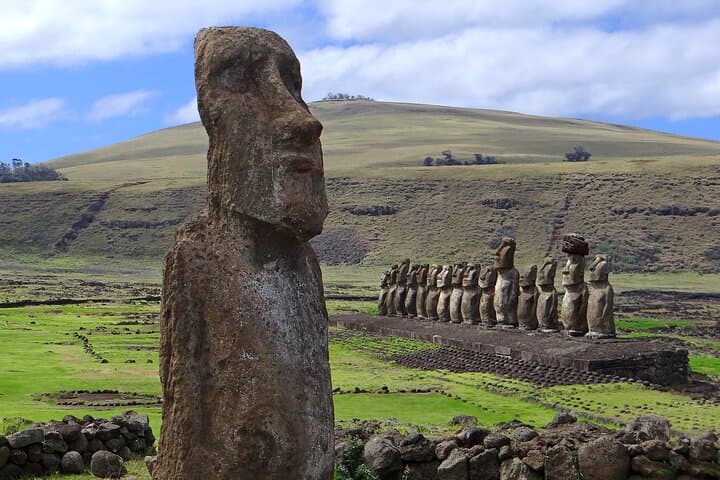
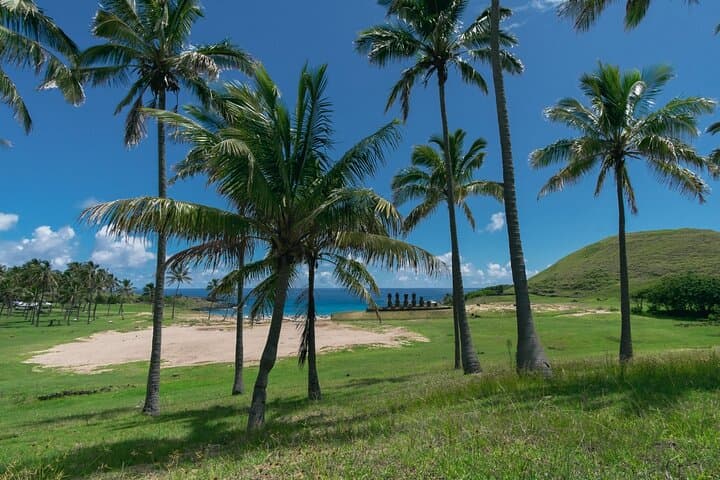
Practically, expect long days of guided walking between short hikes, uneven volcanic paths, and open exposures to sun and wind. Mornings are best for crater rims and Ahu Tongariki light; afternoons suit Anakena beach and quieter sites like Akahanga. Bring sturdy footwear for loose rock, sun protection, ample water, and a light rain layer — weather shifts quickly on the island.
Respect roped-off ahu, follow your guide’s route, and keep cameras ready: the island rewards patient observation. Whether you’re there for archaeology, geology, or cinematic coastal vistas, this two-day circuit concentrates Rapa Nui’s essential experiences into an efficient, interpretive itinerary.
moderate.
2 days (approx. 8–10 hours of touring per day).
Moderate fitness; able to walk on uneven ground, handle short hikes and stand for long interpretation sessions
Yes — the tour includes transportation between scheduled sites; exact pickup point is confirmed at booking.
Some areas, like parts of Anakena and select viewpoints, are accessible, but many archaeological sites have uneven ground and limited access.
Meals are not listed as included; expect short stops where you can purchase food or bring snacks, and an opportunity to try local dishes at Anakena.
Guides will bring you near restored ahu, but climbing or touching moai is prohibited to protect the stone and respect cultural protocols.
Rapa Nui’s moai and ahu reflect a complex island society with ritual leaders and the later Birdman competition centered at Orongo.
The island’s fragile soils and archaeological sites are vulnerable to foot traffic; stay on trails, heed guides, and avoid touching stonework to minimize impact.
Hotumatur RapaNui operates guided outdoor trips and adventures with an emphasis on safety, stewardship, and memorable experiences.
You step off the small plane and the Pacific wind greets you like an old friend — salt carrying the island's basalt breath as low ridges and scattered moai come into view. Over two days the landscape alternates between crater rims that loom like sleeping giants and coastal ahu where stone faces stare inland, as if keeping watch over the island’s stories.
You step off the small plane and the Pacific wind greets you like an old friend — salt carrying the island's basalt breath as low ridges and scattered moai come into view. Over two days the landscape alternates between crater rims that loom like sleeping giants and coastal ahu where stone faces stare inland, as if keeping watch over the island’s stories.
Easter Island (Rapa Nui) is volcanic young Earth: tuff, basalt quarries and crater lakes such as Rano Raraku and Rano Kau explain how the moai were carved, moved and sometimes left unfinished. The island’s cultural layers are visible in petroglyphs, the Birdman (Tangata Manu) ritual center at Orongo, and the Puna Pau red scoria quarry where pukao were shaped. Native guides translate oral history into precise gestures — pointing out transport routes, ceremonial platforms, and the fragile relationship between people and these windswept plains.
Practically, expect long days of guided walking between short hikes, uneven volcanic paths, and open exposures to sun and wind. Mornings are best for crater rims and Ahu Tongariki light; afternoons suit Anakena beach and quieter sites like Akahanga. Bring sturdy footwear for loose rock, sun protection, ample water, and a light rain layer — weather shifts quickly on the island.
Respect roped-off ahu, follow your guide’s route, and keep cameras ready: the island rewards patient observation. Whether you’re there for archaeology, geology, or cinematic coastal vistas, this two-day circuit concentrates Rapa Nui’s essential experiences into an efficient, interpretive itinerary.