THE ADVENTURE COLLECTIVE® · Independent discovery and booking for outdoor travel

Travel 60 km off-road to Erg Chigaga for sunset dunes, an overnight camp with a nomadic family, and rugged desert landscapes. This two-day itinerary balances easy walks on dunes with a bumpy 4x4 crossing through erg, reg, and hammada terrain.
Travel 60 km off-road to Erg Chigaga for sunset dunes, an overnight camp with a nomadic family, and rugged desert landscapes. This two-day itinerary balances easy walks on dunes with a bumpy 4x4 crossing through erg, reg, and hammada terrain.
A late-afternoon 4x4 grumble fades into the wide silence of the Sahara as the vehicle climbs the first dune ridge. The sun drops orange across rippled sand; the camp is a smudge of canvas and firelight where a nomadic family prepares mint tea. In two days you move through open Erg, stony reg, and flat hammada—desert types that shape how you travel, sleep and read the sky.
Verified experiences and guided adventures in the surrounding area.
Operated by MAROC TREK · M'Hamid, Drâa-Tafilalet
A late-afternoon 4x4 grumble fades into the wide silence of the Sahara as the vehicle climbs the first dune ridge. The sun drops orange across rippled sand; the camp is a smudge of canvas and firelight where a nomadic family prepares mint tea. In two days you move through open Erg, stony reg, and flat hammada—desert types that shape how you travel, sleep and read the sky.
This route follows ancient caravan corridors on the southern edge of Morocco’s Drâa valley. Geologically, Erg Chigaga is a mobile dune field created by wind sorting across Pleistocene sands; nearby regs are hardened desert flats that once carried river sediments. Cultural notes: M’hamid’s villagers are descendants of trans-Saharan traders and oasis farmers—local guides often share stories of camel caravans and seasonal migration while cooking simple tagine meals.
Expect roughly 60 km of off-road driving on day two, short walks up dune faces for views, and one night in a desert camp with basic sleeping arrangements. Terrain shifts quickly—soft sand, compacted flats, and rocky approaches—so pace yourself on hikes and allow extra time for transfers.
Practical guidance: bring layered clothing for warm days and cold nights, sun protection, and at least 3 liters of water per person per day. Footwear should handle hot sand and rocky sections. Phones may lose signal; rely on the guide for navigation and respect local customs—ask before photographing people. Travel here supports local families, and leaving no trace helps preserve fragile dune ecosystems.
moderate.
2 days (overnight).
Suitable for travelers in average fitness; must be able to walk short dune slopes and tolerate bumpy vehicle transfers.
Most travelers reach M'Hamid by road from Zagora or Agdz; operators commonly include pickup from nearby towns—confirm pickup point when booking.
Overnight is in a desert camp run by local families: canvas tents or communal sleeping areas, simple bedding; inform the operator of any special requirements.
The itinerary notes suitability for all fitness levels, but vehicle transfers and sand walking can be challenging—contact the operator about specific needs and available support.
Fall and spring offer milder daytime temperatures and calmer winds; summer is very hot while winter nights can be cold—plan clothing accordingly.
M'Hamid sits at the terminus of historical trans-Saharan caravan routes; local families preserved trade and nomadic traditions for generations.
Dune ecosystems are fragile—stick to established tracks, avoid driving on vegetated crusts, and pack out all waste to reduce impact.
MAROC TREK operates guided outdoor trips and adventures with an emphasis on safety, stewardship, and memorable experiences.
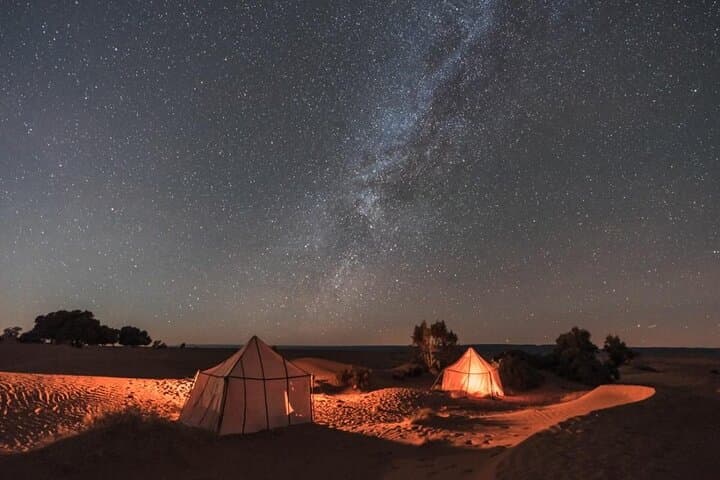
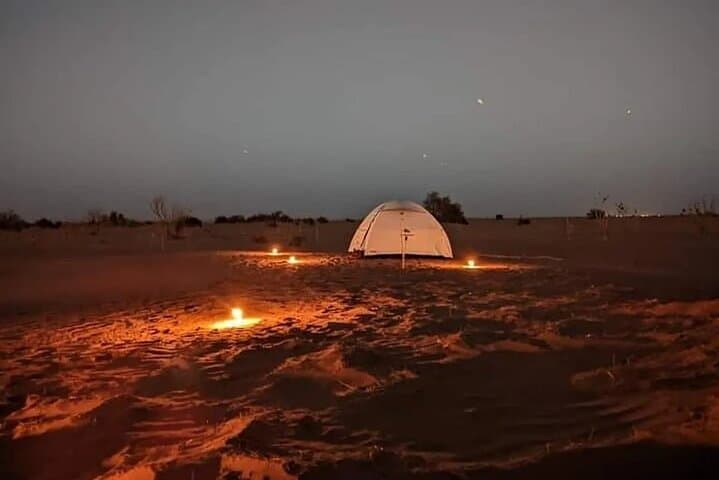
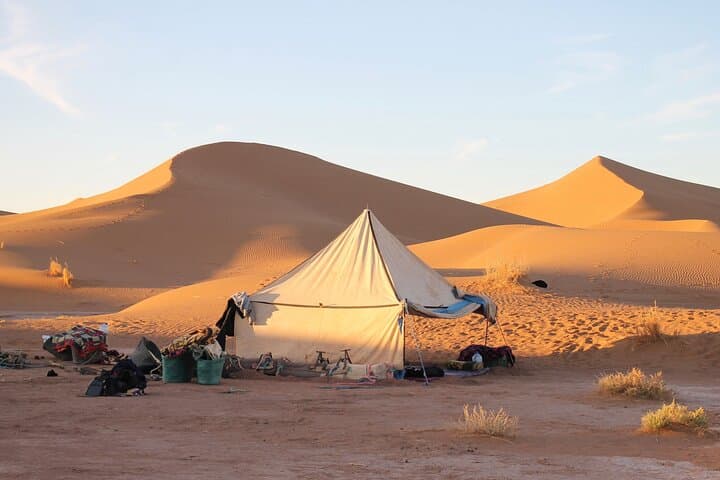
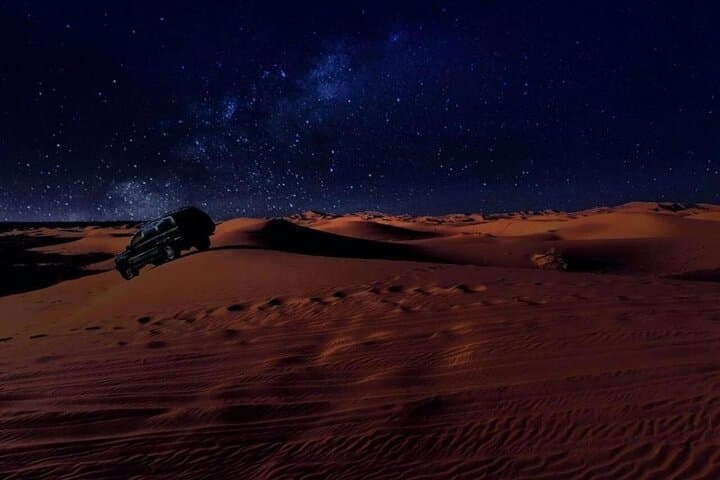
A late-afternoon 4x4 grumble fades into the wide silence of the Sahara as the vehicle climbs the first dune ridge. The sun drops orange across rippled sand; the camp is a smudge of canvas and firelight where a nomadic family prepares mint tea. In two days you move through open Erg, stony reg, and flat hammada—desert types that shape how you travel, sleep and read the sky.
A late-afternoon 4x4 grumble fades into the wide silence of the Sahara as the vehicle climbs the first dune ridge. The sun drops orange across rippled sand; the camp is a smudge of canvas and firelight where a nomadic family prepares mint tea. In two days you move through open Erg, stony reg, and flat hammada—desert types that shape how you travel, sleep and read the sky.
This route follows ancient caravan corridors on the southern edge of Morocco’s Drâa valley. Geologically, Erg Chigaga is a mobile dune field created by wind sorting across Pleistocene sands; nearby regs are hardened desert flats that once carried river sediments. Cultural notes: M’hamid’s villagers are descendants of trans-Saharan traders and oasis farmers—local guides often share stories of camel caravans and seasonal migration while cooking simple tagine meals.
Expect roughly 60 km of off-road driving on day two, short walks up dune faces for views, and one night in a desert camp with basic sleeping arrangements. Terrain shifts quickly—soft sand, compacted flats, and rocky approaches—so pace yourself on hikes and allow extra time for transfers.
Practical guidance: bring layered clothing for warm days and cold nights, sun protection, and at least 3 liters of water per person per day. Footwear should handle hot sand and rocky sections. Phones may lose signal; rely on the guide for navigation and respect local customs—ask before photographing people. Travel here supports local families, and leaving no trace helps preserve fragile dune ecosystems.