THE ADVENTURE COLLECTIVE® · Independent discovery and booking for outdoor travel

Two days is enough to taste Tasmania’s two most famous landscapes: the granite peaks and ancient pines of Cradle Mountain and the pink granite curves and turquoise bays of Freycinet. This fast-paced tour balances short hikes, wildlife spotting, and coastal swims with expert local guides and comfortable transport.
Two days is enough to taste Tasmania’s two most famous landscapes: the granite peaks and ancient pines of Cradle Mountain and the pink granite curves and turquoise bays of Freycinet. This fast-paced tour balances short hikes, wildlife spotting, and coastal swims with expert local guides and comfortable transport.
The bus glides out of Hobart before dawn, headlights cutting through a low Tasmanian mist. Farm fences slide by and the landscape opens into a hard, honest island—rolling hills give way to buttressed mountains and a coastline that seems to have been carved by a very determined sea. By midmorning you’re standing at the edge of Dove Lake, the granite of Cradle Mountain stoic above, and the air tastes like cold rain and eucalyptus: alive and sharp.
Verified experiences and guided adventures in the surrounding area.
Operated by Tassie Tours Tasmania · Hobart, Tasmania
The bus glides out of Hobart before dawn, headlights cutting through a low Tasmanian mist. Farm fences slide by and the landscape opens into a hard, honest island—rolling hills give way to buttressed mountains and a coastline that seems to have been carved by a very determined sea. By midmorning you’re standing at the edge of Dove Lake, the granite of Cradle Mountain stoic above, and the air tastes like cold rain and eucalyptus: alive and sharp.
This compact two-day circuit stitches together two of Tasmania’s headline landscapes—Cradle Mountain-Lake St Clair National Park in the island’s rugged north and Freycinet National Park on the east coast—so expect a lot of driving and a lot of walking. Geologically, Tasmania reads like a field guide: ancient dolerite columns at Cradle, smoothed pink granite outcrops at Freycinet. The Indigenous Palawa people have walked these places for millennia; European settlers later mapped tracks and turned harbors into oyster farms.
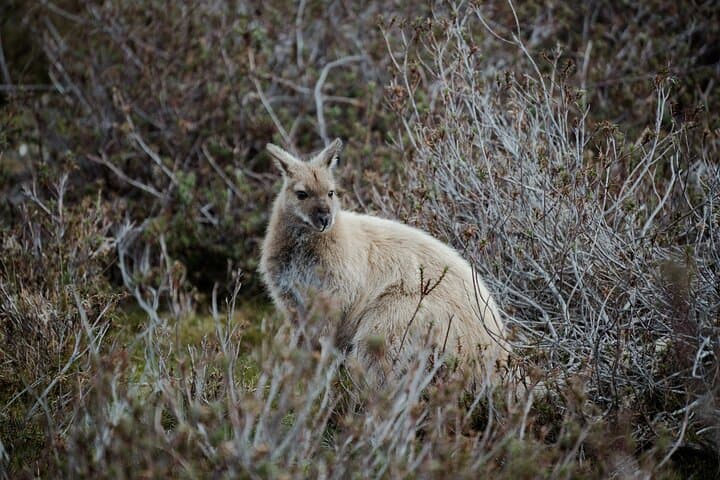
At Cradle you can choose the 6-km Dove Lake circuit—mostly flat boardwalk and hard-packed trail with viewpoints that open suddenly—or push for short side routes through King Billy pine stands where trunks are gnarled and slow-growing. Wildlife here is shy but present: wombats squat like weathered boulders at dusk, and wallabies appear on the margins of the trail. At Freycinet, the classic Wineglass Bay lookout is a brisk climb—plan for roughly 1.6–2.5 km return from the parking terrace with 100–200 m of ascent, depending on route—and rewards you with a surgical curve of white sand and turquoise water. For a tougher day, Mt Amos offers steep scramble sections and broader panoramas if your legs are ready for 400–500 m of gain.
Practicalities rule the success of this short itinerary: you’ll have roughly 3–4 hours to explore Cradle on day one and up to four hours at Freycinet on day two, so pack layers, a stout pair of boots, and a daypack. National Park passes are included, but food and drinks—especially at Freycinet Marine Farm—are out-of-pocket. Guides manage logistics and offer local context; expect pickup in Hobart and a late return back through familiar roads.
Timing is everything. Aim for early starts to beat the crowds at Wineglass Bay and to catch the low light on Dove Lake. Hydrate on long drives, bring waterproofs—weather shifts fast—and keep to marked trails to protect fragile flora. If you like seafood, leave room for oysters at Freycinet Marine Farm; if you want solitude, ask your guide for quieter vantage points around Honeymoon Bay. In two fast-moving days you’ll trade comfort for breadth: it’s not a slow wilderness trip, but it’s a thoroughly effective one—Tasmania’s two great scenes, delivered with pragmatic efficiency and the occasional wildlife cameo.
moderate.
48 hours (2 days).
Moderate fitness: able to hike 6 km with short elevation gains and tolerate multiple hours of bus travel.
Expect multiple short hikes: a 6 km Dove Lake circuit at Cradle and options at Freycinet ranging from the 1.6–2.5 km Wineglass Bay lookout walk to longer ascents like Mt Amos.
Yes—national park passes for Cradle Mountain and Freycinet are included in the tour price.
The itinerary typically includes an overnight stop in Launceston or nearby accommodation; confirm exact arrangements when booking.
Hotel pickup and guided commentary are included, but most meals, snacks, and drinks (including Freycinet Marine Farm purchases) are at your own expense.
Yes—walks are flexible with easier options; a moderate level of fitness is recommended due to walking and long travel segments.
Look for wombats at dusk, wallabies, and a variety of seabirds; Tasmanian devils are rare but sometimes seen in protected areas.
The Palawa people have occupied and managed these landscapes for thousands of years; European settlers later developed coastal fisheries and small farming towns like Campbell Town and Sheffield.
Both parks are protected with visitor limits and durable trail systems—stay on tracks, pack out waste, and obey wildlife-distance guidelines to minimize impact.
Tassie Tours Tasmania operates guided outdoor trips and adventures with an emphasis on safety, stewardship, and memorable experiences.
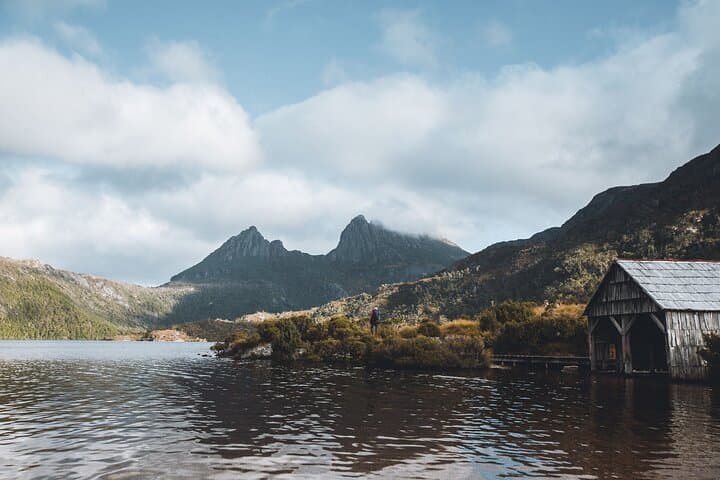
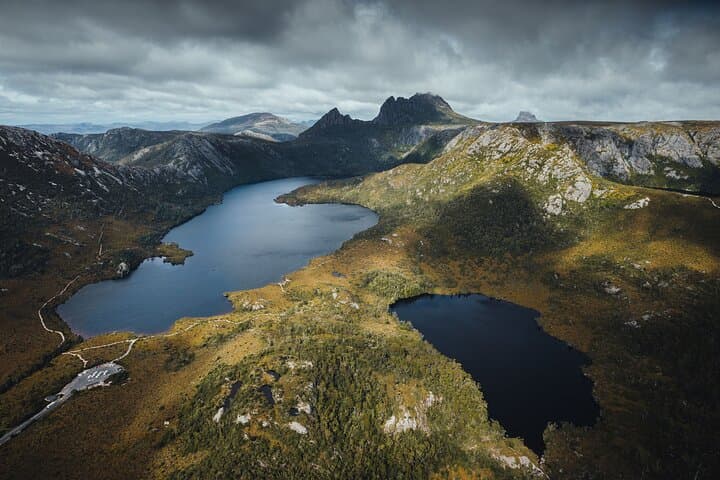
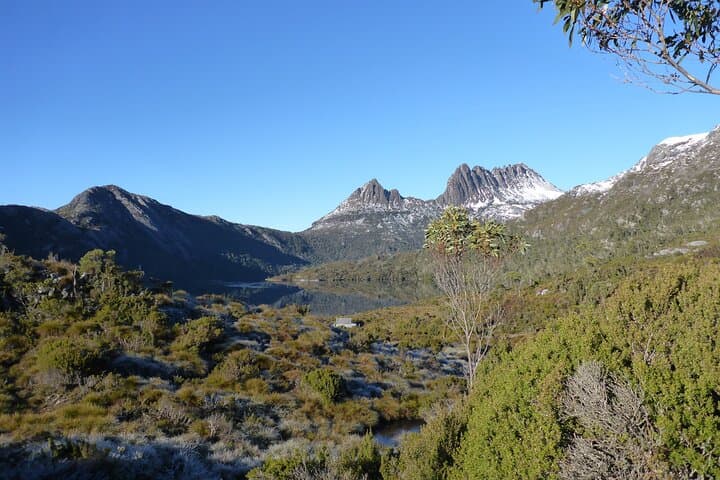
The bus glides out of Hobart before dawn, headlights cutting through a low Tasmanian mist. Farm fences slide by and the landscape opens into a hard, honest island—rolling hills give way to buttressed mountains and a coastline that seems to have been carved by a very determined sea. By midmorning you’re standing at the edge of Dove Lake, the granite of Cradle Mountain stoic above, and the air tastes like cold rain and eucalyptus: alive and sharp.
The bus glides out of Hobart before dawn, headlights cutting through a low Tasmanian mist. Farm fences slide by and the landscape opens into a hard, honest island—rolling hills give way to buttressed mountains and a coastline that seems to have been carved by a very determined sea. By midmorning you’re standing at the edge of Dove Lake, the granite of Cradle Mountain stoic above, and the air tastes like cold rain and eucalyptus: alive and sharp.
This compact two-day circuit stitches together two of Tasmania’s headline landscapes—Cradle Mountain-Lake St Clair National Park in the island’s rugged north and Freycinet National Park on the east coast—so expect a lot of driving and a lot of walking. Geologically, Tasmania reads like a field guide: ancient dolerite columns at Cradle, smoothed pink granite outcrops at Freycinet. The Indigenous Palawa people have walked these places for millennia; European settlers later mapped tracks and turned harbors into oyster farms.
At Cradle you can choose the 6-km Dove Lake circuit—mostly flat boardwalk and hard-packed trail with viewpoints that open suddenly—or push for short side routes through King Billy pine stands where trunks are gnarled and slow-growing. Wildlife here is shy but present: wombats squat like weathered boulders at dusk, and wallabies appear on the margins of the trail. At Freycinet, the classic Wineglass Bay lookout is a brisk climb—plan for roughly 1.6–2.5 km return from the parking terrace with 100–200 m of ascent, depending on route—and rewards you with a surgical curve of white sand and turquoise water. For a tougher day, Mt Amos offers steep scramble sections and broader panoramas if your legs are ready for 400–500 m of gain.
Practicalities rule the success of this short itinerary: you’ll have roughly 3–4 hours to explore Cradle on day one and up to four hours at Freycinet on day two, so pack layers, a stout pair of boots, and a daypack. National Park passes are included, but food and drinks—especially at Freycinet Marine Farm—are out-of-pocket. Guides manage logistics and offer local context; expect pickup in Hobart and a late return back through familiar roads.
Timing is everything. Aim for early starts to beat the crowds at Wineglass Bay and to catch the low light on Dove Lake. Hydrate on long drives, bring waterproofs—weather shifts fast—and keep to marked trails to protect fragile flora. If you like seafood, leave room for oysters at Freycinet Marine Farm; if you want solitude, ask your guide for quieter vantage points around Honeymoon Bay. In two fast-moving days you’ll trade comfort for breadth: it’s not a slow wilderness trip, but it’s a thoroughly effective one—Tasmania’s two great scenes, delivered with pragmatic efficiency and the occasional wildlife cameo.