THE ADVENTURE COLLECTIVE® · Independent discovery and booking for outdoor travel

Spend two days on the Avenue of the Volcanoes exploring Cotopaxi’s windswept slopes and the turquoise caldera of Quilotoa. This small-group trip combines moderate hikes, a bike section on volcanic roads, local market visits and a night at a mountain lodge.
Spend two days on the Avenue of the Volcanoes exploring Cotopaxi’s windswept slopes and the turquoise caldera of Quilotoa. This small-group trip combines moderate hikes, a bike section on volcanic roads, local market visits and a night at a mountain lodge.
You step out of the van into a thin, clean air that almost seems to sharpen sound — wind threading through high grass, a distant rumble under the sky where Cotopaxi rises in cone and ice. Day one moves between pine-sheltered roads and open páramo; you hike around Limpiopungo or Rinconada, then clip on a helmet for a short, gritty bike ride over volcanic ash and service roads that skirt the volcano’s base.
Verified experiences and guided adventures in the surrounding area.
Operated by Galapagos Tours Nature Galapagos & Ecuador · Machachi, Pichincha
You step out of the van into a thin, clean air that almost seems to sharpen sound — wind threading through high grass, a distant rumble under the sky where Cotopaxi rises in cone and ice. Day one moves between pine-sheltered roads and open páramo; you hike around Limpiopungo or Rinconada, then clip on a helmet for a short, gritty bike ride over volcanic ash and service roads that skirt the volcano’s base.
Cotopaxi and Quilotoa sit on the high spine of the Ecuadorian Sierra, part of the Avenue of the Volcanoes first mapped by Humboldt and long inhabited by Andean communities. Cotopaxi is a glaciated stratovolcano — frequent activity shapes parking, access, and safety rules — while Quilotoa is a caldera lake stained turquoise by mineral-rich waters after a massive collapse centuries ago. The route threads local markets (Saquisilí/Pujilí) and craft towns like Tigua, where feather-brush painting records mountain life.
Practically, this is a two-day, moderate-altitude experience: cold mornings, strong midday sun, and steep rim trails at Quilotoa that demand steady legs and good breathing. Bring layered insulation, sun protection, and gaited, grippy shoes for ash and loose scree. Hydrate early and often; altitude can surprise even fit travelers.
Expect small-group pacing, a night in a simple mountain lodge near Machachi, bilingual guides, packed lunches, and flexible timing depending on weather and volcanic restrictions. The reward is compact: a highland landscape that alternately dares and steadies you, with vivid crater water and the steady silhouette of an active cone overhead.
moderate.
2 days (approx. 8–10 hrs per day including transport).
Should be comfortable walking uphill for 60–120 minutes at altitude and able to ride short off-road sections; basic endurance required
The tour reaches 3,800 m around Limpiopungo and the Cotopaxi park zones; Quilotoa rim sits near 3,900 m. Mild altitude sickness is possible—acclimate in Quito, hydrate, and notify guides of symptoms.
The bike section is on dirt and ash roads, about 7–10 km with some rolling climbs; basic biking skill is sufficient. Helmets and bikes are provided by the operator.
Yes. Cotopaxi is active and access can be restricted; the supplier may alter routes or cancel sections for safety without refund in force majeure cases.
Yes — one night’s lodging in a double room at a local hotel, two lunches and one breakfast are included as stated in the itinerary.
The Avenue of the Volcanoes links highland communities and volcanic peaks long referenced by indigenous cosmovision; Cotopaxi has been a cultural landmark and occasional geological hazard for centuries.
The páramo is a fragile, peat-rich ecosystem — stick to trails, avoid litter, and use refillable water to reduce plastic waste; respect local grazing areas and cultural sites.
Galapagos Tours Nature Galapagos & Ecuador operates guided outdoor trips and adventures with an emphasis on safety, stewardship, and memorable experiences.


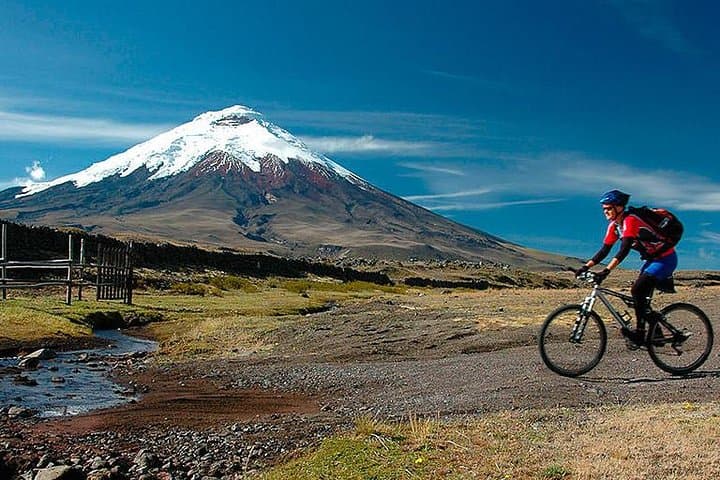

You step out of the van into a thin, clean air that almost seems to sharpen sound — wind threading through high grass, a distant rumble under the sky where Cotopaxi rises in cone and ice. Day one moves between pine-sheltered roads and open páramo; you hike around Limpiopungo or Rinconada, then clip on a helmet for a short, gritty bike ride over volcanic ash and service roads that skirt the volcano’s base.
You step out of the van into a thin, clean air that almost seems to sharpen sound — wind threading through high grass, a distant rumble under the sky where Cotopaxi rises in cone and ice. Day one moves between pine-sheltered roads and open páramo; you hike around Limpiopungo or Rinconada, then clip on a helmet for a short, gritty bike ride over volcanic ash and service roads that skirt the volcano’s base.
Cotopaxi and Quilotoa sit on the high spine of the Ecuadorian Sierra, part of the Avenue of the Volcanoes first mapped by Humboldt and long inhabited by Andean communities. Cotopaxi is a glaciated stratovolcano — frequent activity shapes parking, access, and safety rules — while Quilotoa is a caldera lake stained turquoise by mineral-rich waters after a massive collapse centuries ago. The route threads local markets (Saquisilí/Pujilí) and craft towns like Tigua, where feather-brush painting records mountain life.
Practically, this is a two-day, moderate-altitude experience: cold mornings, strong midday sun, and steep rim trails at Quilotoa that demand steady legs and good breathing. Bring layered insulation, sun protection, and gaited, grippy shoes for ash and loose scree. Hydrate early and often; altitude can surprise even fit travelers.
Expect small-group pacing, a night in a simple mountain lodge near Machachi, bilingual guides, packed lunches, and flexible timing depending on weather and volcanic restrictions. The reward is compact: a highland landscape that alternately dares and steadies you, with vivid crater water and the steady silhouette of an active cone overhead.