THE ADVENTURE COLLECTIVE® · Independent discovery and booking for outdoor travel

Ride beneath Cotopaxi’s glacier and walk high into Chimborazo’s páramo on this compact two-day expedition. Expect volcanic vistas, traditional hacienda lodging, and a blend of horseback and high-altitude hiking.
Ride beneath Cotopaxi’s glacier and walk high into Chimborazo’s páramo on this compact two-day expedition. Expect volcanic vistas, traditional hacienda lodging, and a blend of horseback and high-altitude hiking.
You leave Quito before dawn and the city fades into Andean scrub and checkerboard pastures. By the time Cotopaxi’s cone appears—white-capped and stark against a high blue sky—you’re in a landscape shaped by recent fire and older ice: volcanic gravel, páramo grasses, and trails trodden by herds and humans alike.
Verified experiences and guided adventures in the surrounding area.
Operated by Galapagos My World · Quito, Pichincha
You leave Quito before dawn and the city fades into Andean scrub and checkerboard pastures. By the time Cotopaxi’s cone appears—white-capped and stark against a high blue sky—you’re in a landscape shaped by recent fire and older ice: volcanic gravel, páramo grasses, and trails trodden by herds and humans alike.
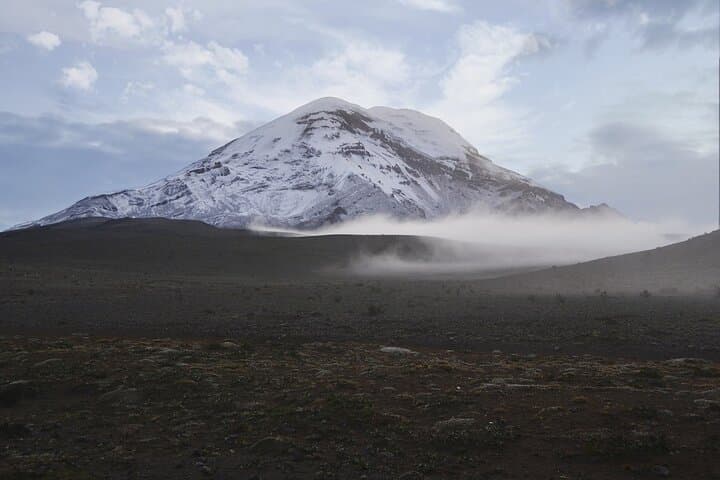
Cotopaxi and Chimborazo are geological siblings of the northern Andes. Cotopaxi is an active stratovolcano with a broad glacial collar, while Chimborazo, Ecuador’s highest peak at 6,263 m, claims a curious scientific footnote — its summit is the point on Earth farthest from the planet’s center because of the equatorial bulge. Both mountains are woven into Andean culture: haciendas that dot the valleys grew from colonial land systems, and indigenous markets like Guano continue centuries-old weaving and leatherwork traditions.
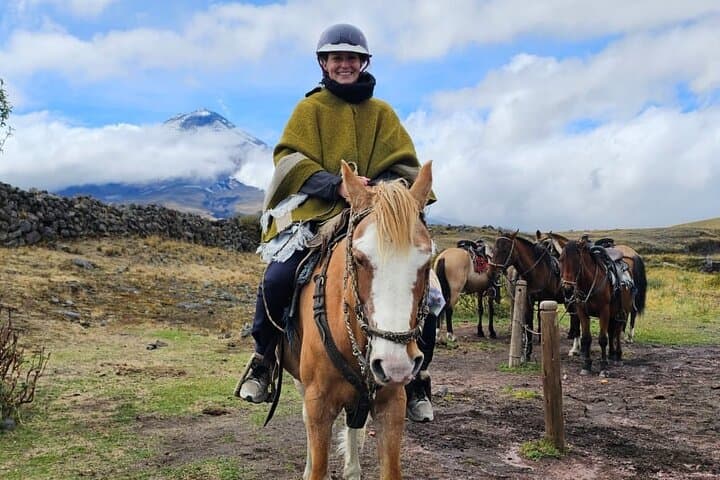
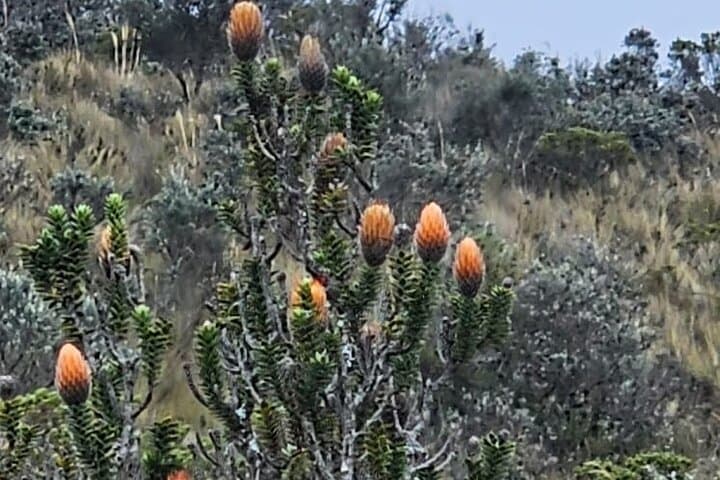
The two-day route pairs a two-hour horseback loop at Cotopaxi’s lower slopes (largely grassy, rocky stretches on well-worn tracks) with a high-altitude walk in Chimborazo Reserve from the first to the second refuge (roughly 210 m / 700 ft of elevation change, 45 minutes one-way on mixed loose stone and compacted earth). Wildlife—vicunas, Andean fox, and ground-nesting birds—shares the open páramo.
Practical notes: allow time to acclimatize in Quito, pack layered windproof clothing, and plan for sudden weather changes. Bring cash for small artisan stalls in Guano. The days are active but non-technical; horseback novices can manage short rides, but expect thin air above 3,500 m. With a guiding service and a night in a traditional hacienda, the trip balances culture, geology, and straightforward highland adventure.
moderate.
2 days.
Moderate cardiovascular fitness and the ability to walk 45–90 minutes at 3,500–5,000 m; comfortable mounting a horse for 2 hours.
No advanced riding skills are required for the two-hour guided loop; riders should be comfortable sitting for that duration and following a guide’s instructions.
Altitude is the main concern—participants travel above 3,500 m and should acclimatize, stay hydrated, and know symptoms (headache, nausea); guides may recommend coca tea and slower pacing.
The tour uses a traditional hacienda near the southern approaches to Cotopaxi/Riobamba, offering a comfortable, locally styled 4-star experience rather than camping.
Yes, pickup from Quito or the airport is included and private transport is provided for the full itinerary.
The Andes here carry layers of pre-Columbian indigenous routes and colonial-era hacienda farming; Chimborazo was a landmark for early scientific explorers like Alexander von Humboldt.
Chimborazo Fauna Reserve protects high-elevation species and fragile páramo; stick to trails, avoid disturbing wildlife, and pack out waste to minimize impact.
Galapagos My World operates guided outdoor trips and adventures with an emphasis on safety, stewardship, and memorable experiences.
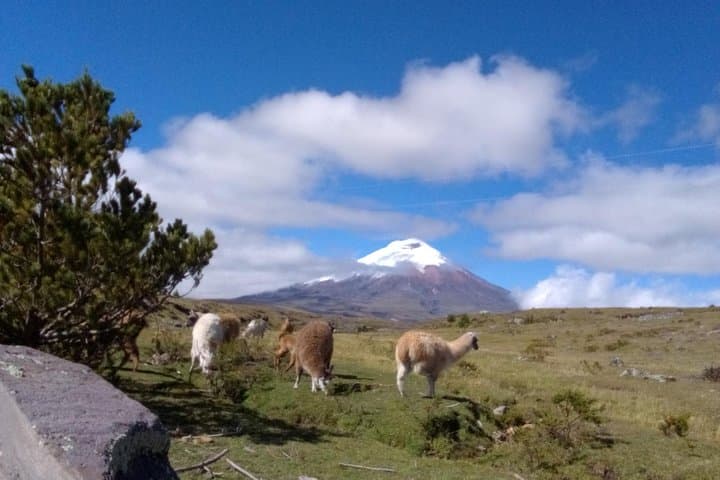
You leave Quito before dawn and the city fades into Andean scrub and checkerboard pastures. By the time Cotopaxi’s cone appears—white-capped and stark against a high blue sky—you’re in a landscape shaped by recent fire and older ice: volcanic gravel, páramo grasses, and trails trodden by herds and humans alike.
You leave Quito before dawn and the city fades into Andean scrub and checkerboard pastures. By the time Cotopaxi’s cone appears—white-capped and stark against a high blue sky—you’re in a landscape shaped by recent fire and older ice: volcanic gravel, páramo grasses, and trails trodden by herds and humans alike.
Cotopaxi and Chimborazo are geological siblings of the northern Andes. Cotopaxi is an active stratovolcano with a broad glacial collar, while Chimborazo, Ecuador’s highest peak at 6,263 m, claims a curious scientific footnote — its summit is the point on Earth farthest from the planet’s center because of the equatorial bulge. Both mountains are woven into Andean culture: haciendas that dot the valleys grew from colonial land systems, and indigenous markets like Guano continue centuries-old weaving and leatherwork traditions.
The two-day route pairs a two-hour horseback loop at Cotopaxi’s lower slopes (largely grassy, rocky stretches on well-worn tracks) with a high-altitude walk in Chimborazo Reserve from the first to the second refuge (roughly 210 m / 700 ft of elevation change, 45 minutes one-way on mixed loose stone and compacted earth). Wildlife—vicunas, Andean fox, and ground-nesting birds—shares the open páramo.
Practical notes: allow time to acclimatize in Quito, pack layered windproof clothing, and plan for sudden weather changes. Bring cash for small artisan stalls in Guano. The days are active but non-technical; horseback novices can manage short rides, but expect thin air above 3,500 m. With a guiding service and a night in a traditional hacienda, the trip balances culture, geology, and straightforward highland adventure.