THE ADVENTURE COLLECTIVE® · Independent discovery and booking for outdoor travel

Descend into one of the world’s deepest canyons on a paced two-day trek from Arequipa to Sangalle Oasis. Expect steep stone switchbacks, Andean condors at Condor’s Cross, a night in simple bungalows and a morning climb back to Cabanaconde with optional hot springs.
Descend into one of the world’s deepest canyons on a paced two-day trek from Arequipa to Sangalle Oasis. Expect steep stone switchbacks, Andean condors at Condor’s Cross, a night in simple bungalows and a morning climb back to Cabanaconde with optional hot springs.
You descend into a canyon carved by rivers and time, the air thinning as rock walls rise like pages of geological history. Morning begins in Arequipa with a long drive across high puna; by sunrise the Condor’s Cross opens the view and you watch Andean condors wheel on the canyon’s thermals—silent, exacting. The trail drops steeply for about three hours from roughly 3,300 m to 1,900 m, moving from windswept plateaus into irrigated terraces and the palm-lined Sangalle oasis where a warm pool waits.
Verified experiences and guided adventures in the surrounding area.
Operated by Happy Gringo Tours · Cabanaconde, Arequipa Region
You descend into a canyon carved by rivers and time, the air thinning as rock walls rise like pages of geological history. Morning begins in Arequipa with a long drive across high puna; by sunrise the Condor’s Cross opens the view and you watch Andean condors wheel on the canyon’s thermals—silent, exacting. The trail drops steeply for about three hours from roughly 3,300 m to 1,900 m, moving from windswept plateaus into irrigated terraces and the palm-lined Sangalle oasis where a warm pool waits.
Colca’s geology is volcanic and glacial: layered ignimbrites and river-cut gorges shaped by uplift and erosion. The valley holds traces of pre-Inca terrace agriculture still used by local communities (Collagua and Cabana traditions persist), and villages like Cabanaconde and Chivay offer markets and colonial-era churches that speak to the region’s blend of indigenous and Spanish histories.
On day two you start pre-dawn, climbing back up 1,400 m over rough stone steps and switchbacks—expect 3–4 hours of steady ascent rewarded by sunrise over terraced slopes. The route finishes with an optional soak in Chivay hot springs and a return drive to Arequipa.
Practical guidance: acclimatize in Arequipa 24–48 hours, carry 2–3 liters of water, and use trekking poles for the descent. Footwear with firm ankle support and a warm, windproof layer are essential; nights and mornings are cold, afternoons can be hot.
This two-day itinerary balances wildlife viewing, cultural encounters, and strenuous high-altitude hiking—plan for variable weather and allow extra time for photos and stops.
challenging.
2 days (approx. 8–10 hours hiking total).
Recommended for hikers with good aerobic fitness and experience with steep uphill/downhill trekking at altitude
Expect roughly 3 hours of steep descent into the canyon on day one and 3–4 hours of steady uphill on day two—both include stone steps and switchbacks.
Yes—starting elevations exceed 3,300 m. Acclimatize in Arequipa for 24–48 hours, hydrate, and inform guides of any symptoms.
Lodging is basic bungalows with comfortable beds and shared facilities; there’s a warm pool at the Sangalle oasis.
Minimum age is generally 7, but steep terrain and altitude make it best for older, fit children—check operator guidance before booking.
The Colca Valley hosts Collagua and Cabana cultural landscapes with centuries-old terrace agriculture and colonial-era towns that bridge indigenous and Spanish histories.
The high puna and riparian oases are fragile—stay on trails, pack out waste, and support local guides and community-run lodges to minimize impact.
Happy Gringo Tours operates guided outdoor trips and adventures with an emphasis on safety, stewardship, and memorable experiences.
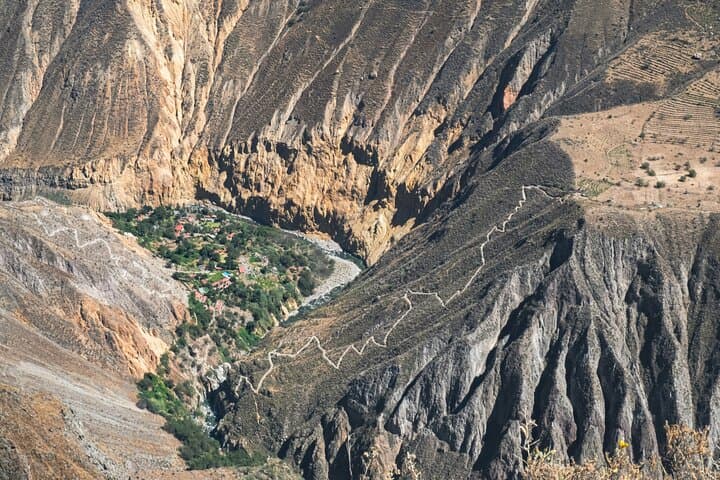


You descend into a canyon carved by rivers and time, the air thinning as rock walls rise like pages of geological history. Morning begins in Arequipa with a long drive across high puna; by sunrise the Condor’s Cross opens the view and you watch Andean condors wheel on the canyon’s thermals—silent, exacting. The trail drops steeply for about three hours from roughly 3,300 m to 1,900 m, moving from windswept plateaus into irrigated terraces and the palm-lined Sangalle oasis where a warm pool waits.
You descend into a canyon carved by rivers and time, the air thinning as rock walls rise like pages of geological history. Morning begins in Arequipa with a long drive across high puna; by sunrise the Condor’s Cross opens the view and you watch Andean condors wheel on the canyon’s thermals—silent, exacting. The trail drops steeply for about three hours from roughly 3,300 m to 1,900 m, moving from windswept plateaus into irrigated terraces and the palm-lined Sangalle oasis where a warm pool waits.
Colca’s geology is volcanic and glacial: layered ignimbrites and river-cut gorges shaped by uplift and erosion. The valley holds traces of pre-Inca terrace agriculture still used by local communities (Collagua and Cabana traditions persist), and villages like Cabanaconde and Chivay offer markets and colonial-era churches that speak to the region’s blend of indigenous and Spanish histories.
On day two you start pre-dawn, climbing back up 1,400 m over rough stone steps and switchbacks—expect 3–4 hours of steady ascent rewarded by sunrise over terraced slopes. The route finishes with an optional soak in Chivay hot springs and a return drive to Arequipa.
Practical guidance: acclimatize in Arequipa 24–48 hours, carry 2–3 liters of water, and use trekking poles for the descent. Footwear with firm ankle support and a warm, windproof layer are essential; nights and mornings are cold, afternoons can be hot.
This two-day itinerary balances wildlife viewing, cultural encounters, and strenuous high-altitude hiking—plan for variable weather and allow extra time for photos and stops.