THE ADVENTURE COLLECTIVE® · Independent discovery and booking for outdoor travel

Spend two active days from Chengdu visiting the Chengdu Panda Base, the cliff-carved Leshan Giant Buddha and Mount Emei’s Golden Summit. This small English-speaking group tour balances wildlife viewing, cultural sites and a substantive mountain hike.
Spend two active days from Chengdu visiting the Chengdu Panda Base, the cliff-carved Leshan Giant Buddha and Mount Emei’s Golden Summit. This small English-speaking group tour balances wildlife viewing, cultural sites and a substantive mountain hike.
You arrive in Sichuan city traffic before dawn, the coach easing out of Chengdu toward a patchwork of rice paddies and low hills. At the panda base, the animals move with deliberate curiosity—black ears twitching, bamboo crunching—while the morning light slides over their enclosures. By afternoon the landscape shifts: the Dadu River carves wider valleys and, at Leshan, a colossal carved face peers over the confluence of three rivers. On day two the trail up Mount Emei climbs through old-growth cloud forest to the Golden Summit, where temples and prayer flags punctuate a sea of mist.
Verified experiences and guided adventures in the surrounding area.
Operated by Travel Sichuan Guide · Chengdu, Sichuan
You arrive in Sichuan city traffic before dawn, the coach easing out of Chengdu toward a patchwork of rice paddies and low hills. At the panda base, the animals move with deliberate curiosity—black ears twitching, bamboo crunching—while the morning light slides over their enclosures. By afternoon the landscape shifts: the Dadu River carves wider valleys and, at Leshan, a colossal carved face peers over the confluence of three rivers. On day two the trail up Mount Emei climbs through old-growth cloud forest to the Golden Summit, where temples and prayer flags punctuate a sea of mist.
Leshan’s cliff-carved Buddha dates to the Tang dynasty and was engineered to divert river silting; Mt. Emei is one of China’s Four Sacred Buddhist Mountains, its paths shaped by centuries of pilgrims. Geologically, Emei is an uplifted massif of sedimentary layers weathered into steep ridges and forested terraces. Culturally, tea farming and Buddhist monasteries influence village life on the mountain’s lower slopes.
Practical guidance: expect a full two days with significant walking, stair sections and periods on paved paths and shuttle buses. Wear grippy shoes for wet stone and stairs, bring a light rain layer and water, and pace the Golden Summit ascent—altitude is modest but the stair climbs are sustained. The small-group format limits crowds on narrow trails but book early in high season. Hotel pickup in Chengdu simplifies logistics; carry your passport for monastery and Buddha admissions. Timing your visit for early morning at the panda base and late afternoon on Emei maximizes wildlife viewing and avoids midday crowds.
moderate.
36 hours (2 days).
Moderate fitness: able to manage sustained stair climbs, 2–4 hours walking in a day and short hikes at elevation.
Yes — pickup within Chengdu’s 2nd ring road is included; the tour typically starts early to reach the panda base at morning feeding time.
Admissions to the Chengdu Panda Base, Leshan Giant Buddha and Mt. Emei sightseeing points are included as stated in the itinerary.
Expect several hours of walking each day, including stair climbs to viewpoints and temple complexes; the Emei summit involves sustained uphill sections.
Children can join but infants must sit on laps; the tour is not recommended for travelers with serious back, heart or pregnancy-related restrictions due to stairs and hikes.
Leshan Giant Buddha was carved from the 8th century to control river shoaling; Mount Emei has been a Buddhist pilgrimage site for over a millennium, with temples dotting its slopes.
The Chengdu base focuses on captive breeding and reintroduction while visitor numbers at Emei are managed to reduce erosion—stick to marked paths and avoid feeding wildlife.
Travel Sichuan Guide operates guided outdoor trips and adventures with an emphasis on safety, stewardship, and memorable experiences.
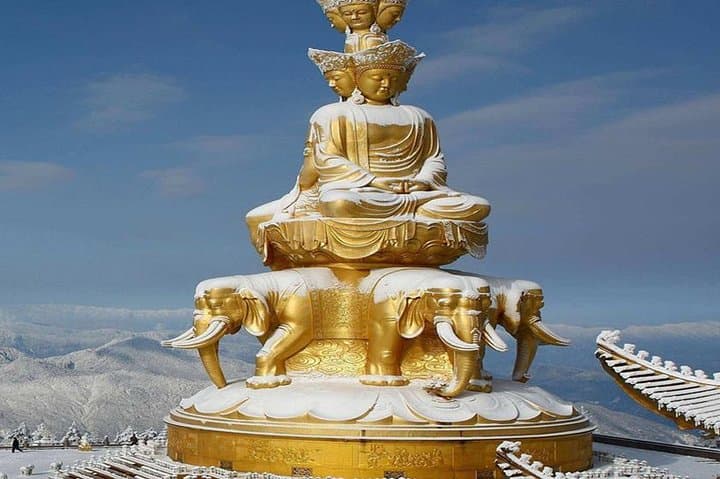

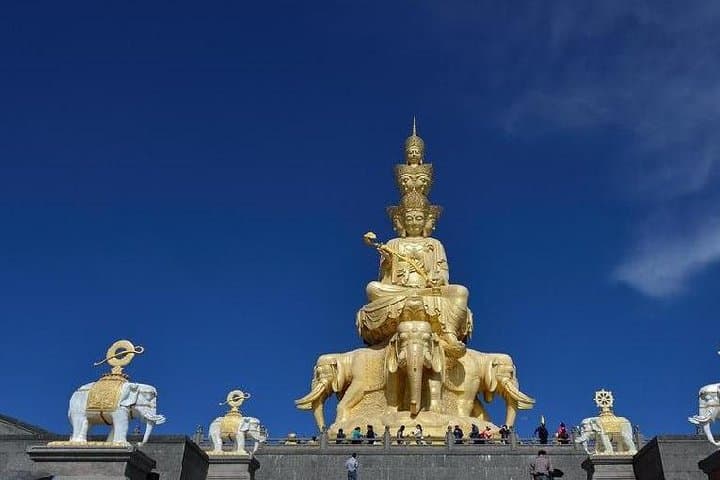
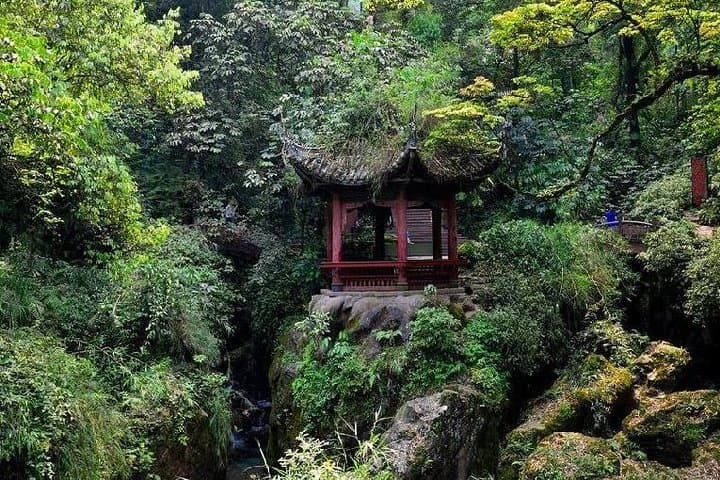
You arrive in Sichuan city traffic before dawn, the coach easing out of Chengdu toward a patchwork of rice paddies and low hills. At the panda base, the animals move with deliberate curiosity—black ears twitching, bamboo crunching—while the morning light slides over their enclosures. By afternoon the landscape shifts: the Dadu River carves wider valleys and, at Leshan, a colossal carved face peers over the confluence of three rivers. On day two the trail up Mount Emei climbs through old-growth cloud forest to the Golden Summit, where temples and prayer flags punctuate a sea of mist.
You arrive in Sichuan city traffic before dawn, the coach easing out of Chengdu toward a patchwork of rice paddies and low hills. At the panda base, the animals move with deliberate curiosity—black ears twitching, bamboo crunching—while the morning light slides over their enclosures. By afternoon the landscape shifts: the Dadu River carves wider valleys and, at Leshan, a colossal carved face peers over the confluence of three rivers. On day two the trail up Mount Emei climbs through old-growth cloud forest to the Golden Summit, where temples and prayer flags punctuate a sea of mist.
Leshan’s cliff-carved Buddha dates to the Tang dynasty and was engineered to divert river silting; Mt. Emei is one of China’s Four Sacred Buddhist Mountains, its paths shaped by centuries of pilgrims. Geologically, Emei is an uplifted massif of sedimentary layers weathered into steep ridges and forested terraces. Culturally, tea farming and Buddhist monasteries influence village life on the mountain’s lower slopes.
Practical guidance: expect a full two days with significant walking, stair sections and periods on paved paths and shuttle buses. Wear grippy shoes for wet stone and stairs, bring a light rain layer and water, and pace the Golden Summit ascent—altitude is modest but the stair climbs are sustained. The small-group format limits crowds on narrow trails but book early in high season. Hotel pickup in Chengdu simplifies logistics; carry your passport for monastery and Buddha admissions. Timing your visit for early morning at the panda base and late afternoon on Emei maximizes wildlife viewing and avoids midday crowds.