THE ADVENTURE COLLECTIVE® · Independent discovery and booking for outdoor travel

A concentrated two-day loop from Ulaanbaatar that pairs nomadic hospitality, sand-dune camel rides and the historic ruins and monastery of Karakorum with wildlife viewing in Khustai National Park. Ideal for travelers short on time who want an immersive taste of Mongolia’s open country.
A concentrated two-day loop from Ulaanbaatar that pairs nomadic hospitality, sand-dune camel rides and the historic ruins and monastery of Karakorum with wildlife viewing in Khustai National Park. Ideal for travelers short on time who want an immersive taste of Mongolia’s open country.
Morning light spills across a flat steppe as your vehicle leaves Ulaanbaatar behind; the road opens, and the horizon stretches into sand and sage. On this compact two-day loop you trade the capital’s grid for ger smoke and dun-colored dunes, then settle on a hill above Karakorum as the sun cools the day.
Verified experiences and guided adventures in the surrounding area.
Operated by NGA Tour Bureau · Karakorum (Kharkhorin), Övörkhangai
Morning light spills across a flat steppe as your vehicle leaves Ulaanbaatar behind; the road opens, and the horizon stretches into sand and sage. On this compact two-day loop you trade the capital’s grid for ger smoke and dun-colored dunes, then settle on a hill above Karakorum as the sun cools the day.
Central Mongolia folds history, culture and wildlife into tight miles. Karakorum (Kharkhorin) was the Mongol Empire’s 13th-century capital; nearby Erdene Zuu Monastery preserves Buddhist art and stupa-lined courtyards. The semi-Gobi brings sand and mobile pastoralism—camel trains and nomad gers that reveal pastoral lifeways still shaped by seasonal grazing. Geologically, the steppe grades from loess and river terraces into low dunes and basalt outcrops as you roll west.
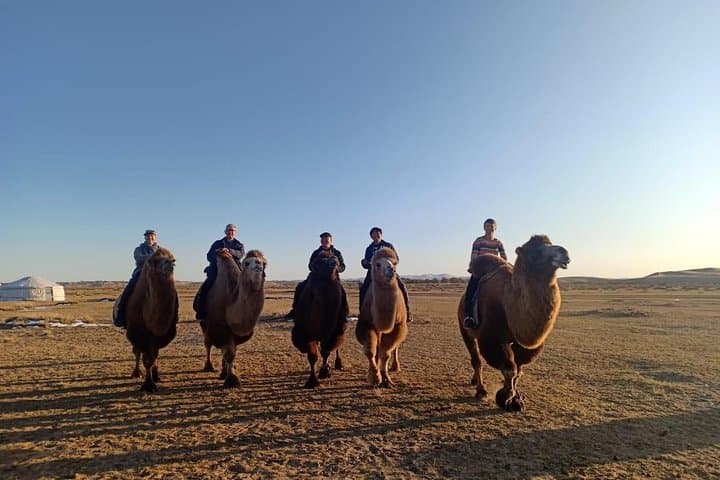
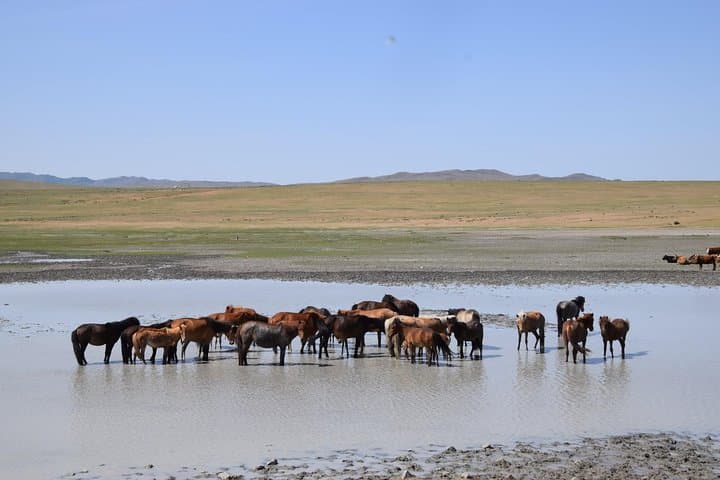
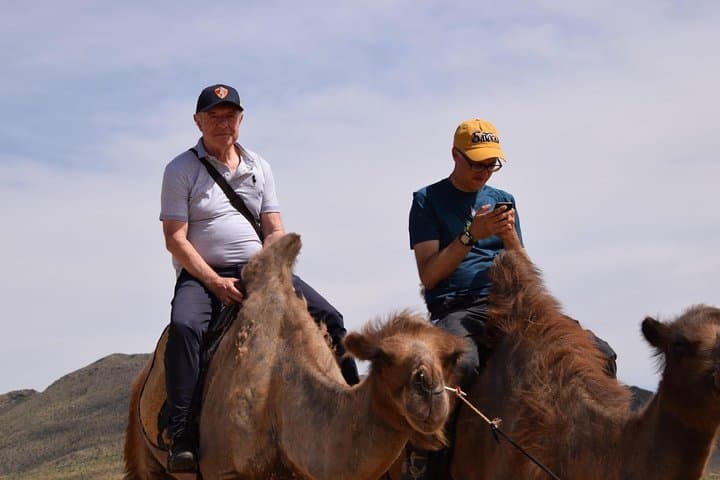
Day one centers on a nomad family: homemade lunch, a camel ride toward small dunes, and a night in a warm ger camp. Day two moves to museums and monasteries, then Khustai National Park to seek Przewalski’s horse and steppe predators.
Practical guidance: pack layers for strong diurnal swings, sturdy boots for uneven tracks and a sunhat for the exposed stretches. Hydrate between drives; bottled water is available but bring a refill bottle. Expect long roadside drives on paved and gravel surfaces—motion-friendly snacks and a light jacket help. Photography: aim for golden hour on the hill above Karakorum and bring binoculars for Khustai. Finally, respect nomad homes—ask before photographing and follow guides on interacting with animals.
easy.
2 days.
Suitable for travelers in basic physical condition; involves short camel rides, walking on uneven terrain and getting in/out of vehicles.
The tour is designed for all fitness levels—most time is spent in transport with short walks, a camel ride and light movement around camps and sites.
Casual, conservative clothes are fine; remove shoes if asked, and bring a light scarf or jacket for cooler evenings.
Khustai is the best place to see wild Takhi, but wildlife sightings aren’t guaranteed; mornings and late afternoons improve chances.
Yes—infants and small children are accommodated, but bring necessary supplies and confirm child seats or arrangements with the operator.
Karakorum served as the Mongol Empire’s capital in the 13th century; Erdene Zuu monastery was built from stones of the ancient city and is one of Mongolia’s oldest Buddhist complexes.
Khustai is a dedicated reserve protecting reintroduced Przewalski’s horses—stay on roads and follow park rules to minimize disturbance to grazing herds.
NGA Tour Bureau operates guided outdoor trips and adventures with an emphasis on safety, stewardship, and memorable experiences.
Morning light spills across a flat steppe as your vehicle leaves Ulaanbaatar behind; the road opens, and the horizon stretches into sand and sage. On this compact two-day loop you trade the capital’s grid for ger smoke and dun-colored dunes, then settle on a hill above Karakorum as the sun cools the day.
Morning light spills across a flat steppe as your vehicle leaves Ulaanbaatar behind; the road opens, and the horizon stretches into sand and sage. On this compact two-day loop you trade the capital’s grid for ger smoke and dun-colored dunes, then settle on a hill above Karakorum as the sun cools the day.
Central Mongolia folds history, culture and wildlife into tight miles. Karakorum (Kharkhorin) was the Mongol Empire’s 13th-century capital; nearby Erdene Zuu Monastery preserves Buddhist art and stupa-lined courtyards. The semi-Gobi brings sand and mobile pastoralism—camel trains and nomad gers that reveal pastoral lifeways still shaped by seasonal grazing. Geologically, the steppe grades from loess and river terraces into low dunes and basalt outcrops as you roll west.
Day one centers on a nomad family: homemade lunch, a camel ride toward small dunes, and a night in a warm ger camp. Day two moves to museums and monasteries, then Khustai National Park to seek Przewalski’s horse and steppe predators.
Practical guidance: pack layers for strong diurnal swings, sturdy boots for uneven tracks and a sunhat for the exposed stretches. Hydrate between drives; bottled water is available but bring a refill bottle. Expect long roadside drives on paved and gravel surfaces—motion-friendly snacks and a light jacket help. Photography: aim for golden hour on the hill above Karakorum and bring binoculars for Khustai. Finally, respect nomad homes—ask before photographing and follow guides on interacting with animals.