THE ADVENTURE COLLECTIVE® · Independent discovery and booking for outdoor travel

Two days of karst cliffs, jungle trails, and night kayaking through bioluminescent waters — a compact Cat Ba experience that balances paddling, trekking, and cultural stops in Viet Hai Village.
Two days of karst cliffs, jungle trails, and night kayaking through bioluminescent waters — a compact Cat Ba experience that balances paddling, trekking, and cultural stops in Viet Hai Village.
A lacquered wooden boat slips from Ben Beo Pier and the limestone islands of Lan Ha Bay rise like weathered monuments. Salt air pushes at your face, cliffs drip with tropical greenery, and the engine hum becomes the county line between town life and wild. By dusk you’ll trade the boat for a kayak; the water under your paddle answers with tiny lights — bioluminescent plankton that make each stroke look like a comet.
Verified experiences and guided adventures in the surrounding area.
Operated by Authentic Travel VIETNAM · Cat Ba Town, Hai Phong
A lacquered wooden boat slips from Ben Beo Pier and the limestone islands of Lan Ha Bay rise like weathered monuments. Salt air pushes at your face, cliffs drip with tropical greenery, and the engine hum becomes the county line between town life and wild. By dusk you’ll trade the boat for a kayak; the water under your paddle answers with tiny lights — bioluminescent plankton that make each stroke look like a comet.
Geology here is blunt and old: karst towers formed from uplifted reef and coral over millions of years, their vertical faces scored by tides. Cat Ba National Park preserves lowland tropical forest and offshore mangroves and is an important refuge for endemic species, including the critically endangered Cat Ba langur (rarely seen). Viet Hai Village sits on the island’s quieter side — a small farming community accessed by boat and a short network of trails used for generations.
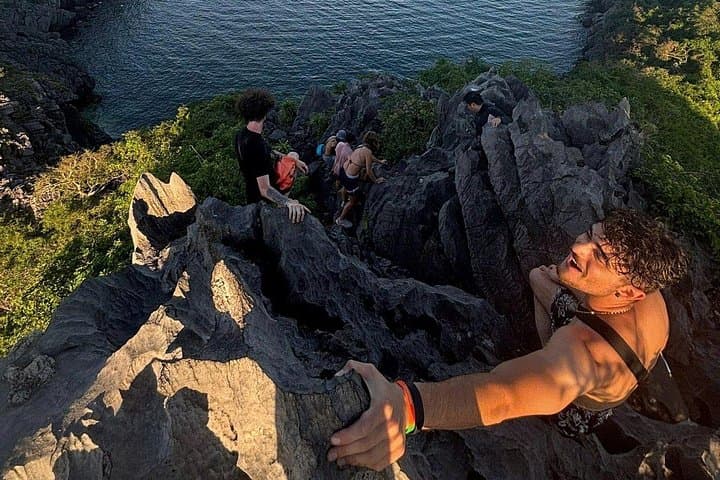
Expect active two days: boat cruising and 1–2 hours of guided kayaking on Day 1, night paddle in calm inlets, then 5–8 km of cycling and a 3–6 km trek on Day 2 with up to ~200–300 m of short, steep climbs on forest tracks. Terrain alternates from packed dirt and roots to rocky viewpoints and sandy coves like Ba Trai Dao.
Practical: bring a light rain shell, sturdy trail shoes that can get wet, dry-bag for electronics, and cash for village purchases. Start early to avoid midday heat, listen to your guide about currents and wildlife distances, and leave no trace in both sea and forest.
moderate.
2 days (48 hours).
Should be comfortable walking 5–8 km, climbing short steep sections, and paddling for 1–2 hours; basic mobility required for boarding small boats.
The trek segments are short to moderate — expect uneven dirt trails, occasional steep pitches up to 200–300 m cumulative gain, and 3–6 km walking on Day 2.
No — visibility depends on tide, weather, and plankton density; guides pick calm, dark inlets that maximize the chance of seeing bioluminescent plankton.
Overnight is in a homestay in Viet Hai Village in private or shared jungle bungalows; facilities are basic but comfortable with local meals included as described.
Monkeys are wild and food-motivated; keep distance, secure belongings, and follow guide instructions to avoid stressful interactions.
The karst islands are uplifted reef systems with human use dating back to traditional fishing communities like Cai Beo; Viet Hai developed as an isolated agricultural settlement serviced by boats.
Cat Ba National Park is critical for endemic species; visitors are encouraged to minimize plastic waste, stay on trails, and respect village resources to reduce tourism pressure.
Authentic Travel VIETNAM operates guided outdoor trips and adventures with an emphasis on safety, stewardship, and memorable experiences.
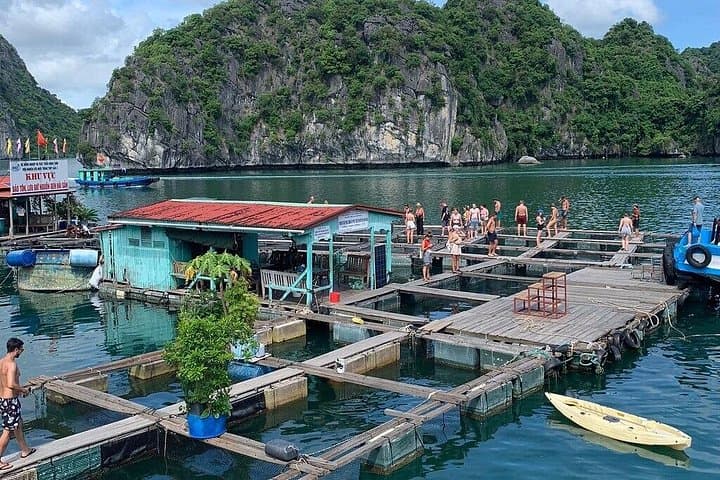


A lacquered wooden boat slips from Ben Beo Pier and the limestone islands of Lan Ha Bay rise like weathered monuments. Salt air pushes at your face, cliffs drip with tropical greenery, and the engine hum becomes the county line between town life and wild. By dusk you’ll trade the boat for a kayak; the water under your paddle answers with tiny lights — bioluminescent plankton that make each stroke look like a comet.
A lacquered wooden boat slips from Ben Beo Pier and the limestone islands of Lan Ha Bay rise like weathered monuments. Salt air pushes at your face, cliffs drip with tropical greenery, and the engine hum becomes the county line between town life and wild. By dusk you’ll trade the boat for a kayak; the water under your paddle answers with tiny lights — bioluminescent plankton that make each stroke look like a comet.
Geology here is blunt and old: karst towers formed from uplifted reef and coral over millions of years, their vertical faces scored by tides. Cat Ba National Park preserves lowland tropical forest and offshore mangroves and is an important refuge for endemic species, including the critically endangered Cat Ba langur (rarely seen). Viet Hai Village sits on the island’s quieter side — a small farming community accessed by boat and a short network of trails used for generations.
Expect active two days: boat cruising and 1–2 hours of guided kayaking on Day 1, night paddle in calm inlets, then 5–8 km of cycling and a 3–6 km trek on Day 2 with up to ~200–300 m of short, steep climbs on forest tracks. Terrain alternates from packed dirt and roots to rocky viewpoints and sandy coves like Ba Trai Dao.
Practical: bring a light rain shell, sturdy trail shoes that can get wet, dry-bag for electronics, and cash for village purchases. Start early to avoid midday heat, listen to your guide about currents and wildlife distances, and leave no trace in both sea and forest.