THE ADVENTURE COLLECTIVE® · Independent discovery and booking for outdoor travel

Float over fairy chimneys at sunrise, descend into an eight-level underground city and sleep in a cave hotel: this two-day tour from Istanbul compresses Cappadocia’s high points into a practical, immersive itinerary. Read on for what you’ll see, where to shoot photos and how to prepare.
Float over fairy chimneys at sunrise, descend into an eight-level underground city and sleep in a cave hotel: this two-day tour from Istanbul compresses Cappadocia’s high points into a practical, immersive itinerary. Read on for what you’ll see, where to shoot photos and how to prepare.
You wake before dawn in Istanbul, blink at the bedside clock and find a sky still ink-dark. An hour later the plane tilts over Anatolia and the plateau unspools below — moonscape ridges, punctured columns and the pale, worked stone of a landscape shaped by fire and wind. By sunrise you are in Göreme, where cave hotels pierce the skyline and, if you timed it right, hot-air balloons pepper the air like slow lanterns.
Verified experiences and guided adventures in the surrounding area.
Operated by Turkey Tours Packages · Göreme, Nevşehir
You wake before dawn in Istanbul, blink at the bedside clock and find a sky still ink-dark. An hour later the plane tilts over Anatolia and the plateau unspools below — moonscape ridges, punctured columns and the pale, worked stone of a landscape shaped by fire and wind. By sunrise you are in Göreme, where cave hotels pierce the skyline and, if you timed it right, hot-air balloons pepper the air like slow lanterns.
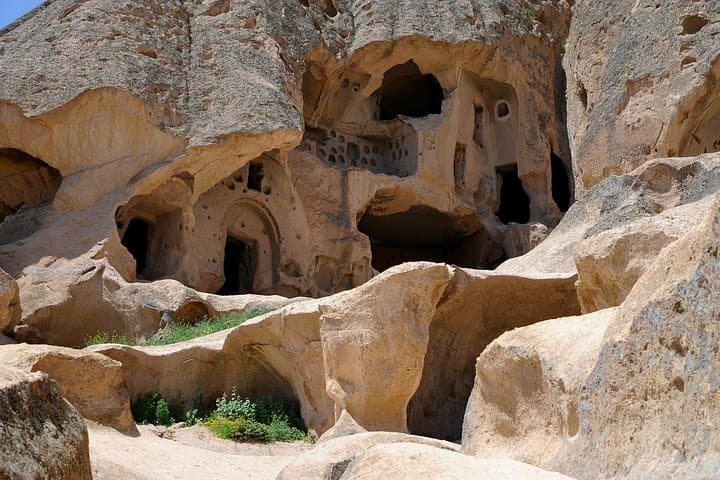
Cappadocia’s story is geological and human at once. Millennia ago volcanic ash settled into a soft rock called tuff; erosion carved that tuff into chimneys, valleys and amphitheaters. People turned that softness into shelter: entire villages and churches were hewn from rock, and underground cities such as Derinkuyu expanded downward into multi-level refuges. Byzantine frescoes in carved chapels record rites performed centuries ago; potters in Avanos still shape red clay the same way their grandparents did.
This two-day itinerary compresses those essentials. Day one includes a morning transfer and the South (Green) tour: a guided descent into Derinkuyu’s eight levels open to visitors, a 4–6 km hike through Ihlara Valley along the Melendiz River, and a late-afternoon lookout over Pigeon Valley. Overnight is in a restored cave boutique hotel in Göreme—sleeping in volcanic stone feels like history with plumbing.
Day two follows the North route: a sunrise option for balloons, a sunlit visit to Uchisar Castle, the rock-cut chapels of Göreme Open Air Museum and a hands-on pottery demo in Avanos. Devrent Valley’s animal-formed rocks and Paşabağ’s mushroom chimneys round out the day before a short flight back to Istanbul.
Practical edge: the program includes round-trip domestic flights and airport transfers, two lunches and one breakfast, entrance fees and a cave-hotel stay. Hotel pickups start roughly 30–60 minutes before departure, and luggage is limited—one suitcase plus a carry-on, oversized items may be restricted (15 kg guidance).
Terrain is mixed: paved roads, dusty valley trails, uneven steps inside underground chambers and short rock-hopping sections. Bring sturdy walking shoes, a headlamp won’t be necessary but comfortable knees will. Balloons are optional and typically booked separately; if the sky is calm they sell out fast, so arrange ahead.
Timing matters—spring and autumn offer mild temperatures and fewer crowds, summer gets hot on exposed ridges, and winter can dust the valleys with snow, changing the character of every viewpoint. With a moderate fitness baseline, good footwear and layered clothing, this two-day loop gives a compact, sensory primer to Cappadocia’s peculiar geology and long human history.
moderate.
2 days.
Moderate fitness: able to walk 4–6 km over uneven terrain, climb stairs and stand during museum visits.
No—balloon rides are optional and usually booked separately; contact the operator in advance to reserve a spot.
Expect several short hikes of 1–6 km total across valleys like Ihlara and brief walks between viewpoints; many stops include stairs and uneven surfaces.
Yes—round-trip domestic flights between Istanbul and Cappadocia are included in this tour package.
Yes—infants can use strollers and are required to sit on laps; the tour is marketed as suitable for all fitness levels, but underground passages have narrow stairs.
Each traveler is allowed one suitcase and one carry-on; oversized or sports equipment may be restricted—confirm with the operator beforehand.
A valid passport is required; confirm visa requirements for Turkey before travel, as travelers are responsible for their own documents.
Cappadocia’s carved churches and underground cities date to early Christian communities who used the soft tuff to create hermitages and refuges.
Increasing visitor numbers stress fragile erosion-prone rock and ancient frescoes; stick to marked paths, avoid touching carvings and support local businesses that practice low-impact tourism.
Turkey Tours Packages operates guided outdoor trips and adventures with an emphasis on safety, stewardship, and memorable experiences.

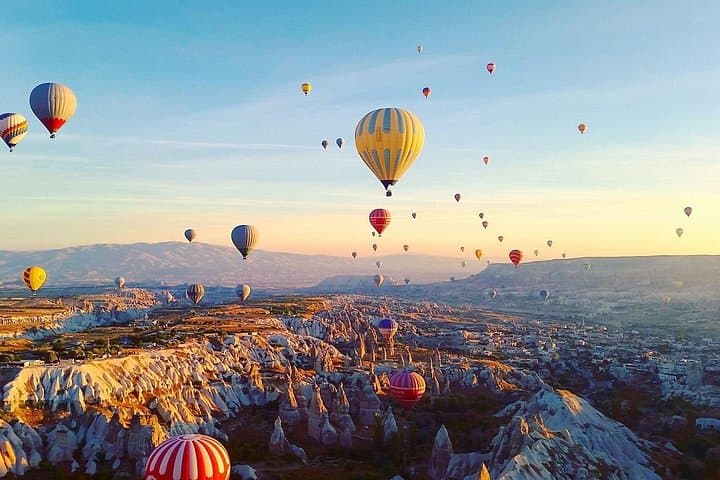

You wake before dawn in Istanbul, blink at the bedside clock and find a sky still ink-dark. An hour later the plane tilts over Anatolia and the plateau unspools below — moonscape ridges, punctured columns and the pale, worked stone of a landscape shaped by fire and wind. By sunrise you are in Göreme, where cave hotels pierce the skyline and, if you timed it right, hot-air balloons pepper the air like slow lanterns.
You wake before dawn in Istanbul, blink at the bedside clock and find a sky still ink-dark. An hour later the plane tilts over Anatolia and the plateau unspools below — moonscape ridges, punctured columns and the pale, worked stone of a landscape shaped by fire and wind. By sunrise you are in Göreme, where cave hotels pierce the skyline and, if you timed it right, hot-air balloons pepper the air like slow lanterns.
Cappadocia’s story is geological and human at once. Millennia ago volcanic ash settled into a soft rock called tuff; erosion carved that tuff into chimneys, valleys and amphitheaters. People turned that softness into shelter: entire villages and churches were hewn from rock, and underground cities such as Derinkuyu expanded downward into multi-level refuges. Byzantine frescoes in carved chapels record rites performed centuries ago; potters in Avanos still shape red clay the same way their grandparents did.
This two-day itinerary compresses those essentials. Day one includes a morning transfer and the South (Green) tour: a guided descent into Derinkuyu’s eight levels open to visitors, a 4–6 km hike through Ihlara Valley along the Melendiz River, and a late-afternoon lookout over Pigeon Valley. Overnight is in a restored cave boutique hotel in Göreme—sleeping in volcanic stone feels like history with plumbing.
Day two follows the North route: a sunrise option for balloons, a sunlit visit to Uchisar Castle, the rock-cut chapels of Göreme Open Air Museum and a hands-on pottery demo in Avanos. Devrent Valley’s animal-formed rocks and Paşabağ’s mushroom chimneys round out the day before a short flight back to Istanbul.
Practical edge: the program includes round-trip domestic flights and airport transfers, two lunches and one breakfast, entrance fees and a cave-hotel stay. Hotel pickups start roughly 30–60 minutes before departure, and luggage is limited—one suitcase plus a carry-on, oversized items may be restricted (15 kg guidance).
Terrain is mixed: paved roads, dusty valley trails, uneven steps inside underground chambers and short rock-hopping sections. Bring sturdy walking shoes, a headlamp won’t be necessary but comfortable knees will. Balloons are optional and typically booked separately; if the sky is calm they sell out fast, so arrange ahead.
Timing matters—spring and autumn offer mild temperatures and fewer crowds, summer gets hot on exposed ridges, and winter can dust the valleys with snow, changing the character of every viewpoint. With a moderate fitness baseline, good footwear and layered clothing, this two-day loop gives a compact, sensory primer to Cappadocia’s peculiar geology and long human history.