THE ADVENTURE COLLECTIVE® · Independent discovery and booking for outdoor travel

Spend two days moving from wind‑carved chimneys to candlelit devotion in Cappadocia. This private tour pairs the region’s surreal geology — Devrent, Paşabağ and Zelve — with an evening Whirling Dervish ceremony inside a 13th‑century caravanserai.
Spend two days moving from wind‑carved chimneys to candlelit devotion in Cappadocia. This private tour pairs the region’s surreal geology — Devrent, Paşabağ and Zelve — with an evening Whirling Dervish ceremony inside a 13th‑century caravanserai.
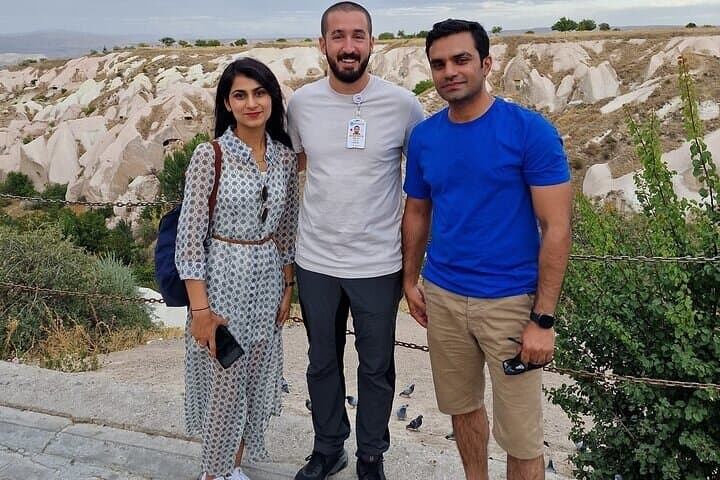
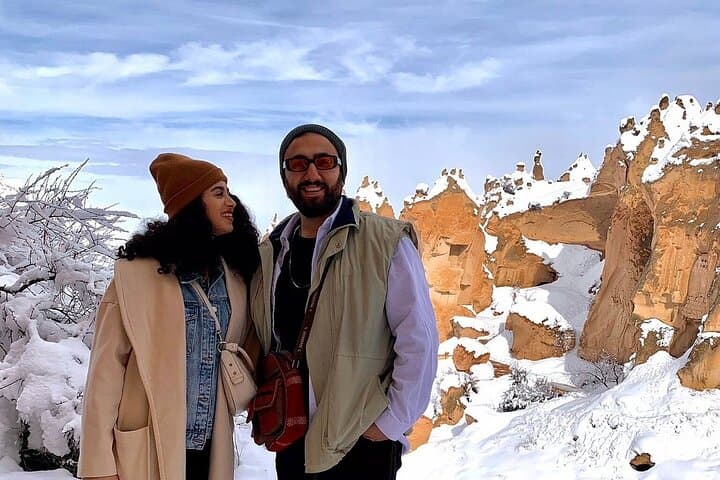
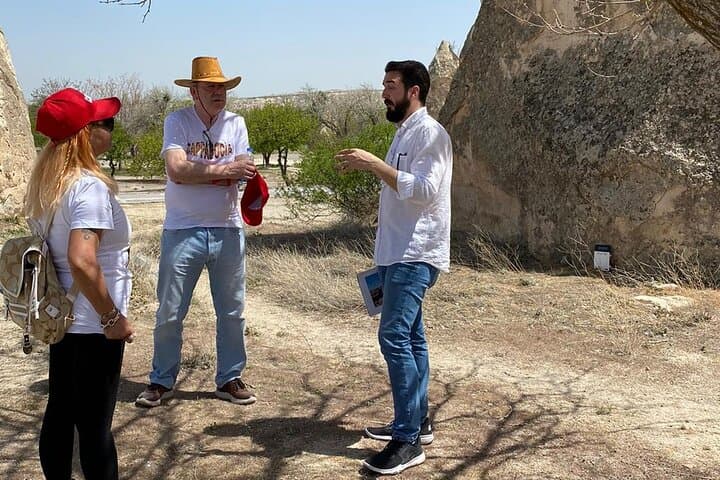
You arrive before dawn and the landscape is already awake — not with highway noise or city bustle, but with the patient, slow exhale of wind across stone. Cappadocia’s valleys open like pages of an old atlas: ribbed ridges, mushroom-topped chimneys and honeycombed rock faces that seem to have been shaped by deliberate hands rather than millennia of weather. On this private two-day itinerary, the region’s geological theater does the heavy lifting while a local guide stitches context into every stop.
Verified experiences and guided adventures in the surrounding area.
Operated by Touchstone Travel · Göreme, Nevşehir Province
You arrive before dawn and the landscape is already awake — not with highway noise or city bustle, but with the patient, slow exhale of wind across stone. Cappadocia’s valleys open like pages of an old atlas: ribbed ridges, mushroom-topped chimneys and honeycombed rock faces that seem to have been shaped by deliberate hands rather than millennia of weather. On this private two-day itinerary, the region’s geological theater does the heavy lifting while a local guide stitches context into every stop.
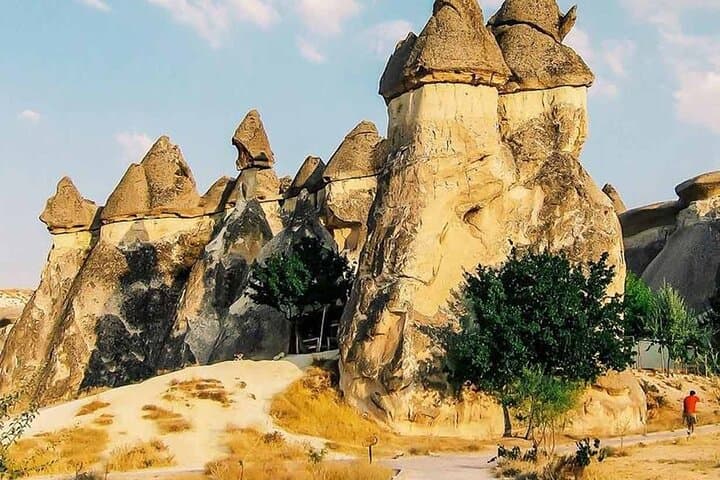
Day one moves like a précis of Cappadocia’s best chapters. Devrent Valley teases your eye — shapes of camels and monks appear in the eroded tuff as if someone carved a hidden joke into the earth. Zelve’s abandoned cave village reads as living history: churches, homes and tunnels hewn into soft stone where generations folded daily life into rock. In Paşabağ, the fairy chimneys stand like patient monks, some capped with multiple stone hats and hollowed inside for solitude; you can still imagine hermits tracing prayers along the narrow chambers.
Between these geological wonders, the human story arrives: Avanos, a riverside town shaped by the Kızılırmak and centuries of pottery craft, where local clay and a potter’s wheel continue a Hittite-age craft. Uçhisar Castle, the highest natural lookout, gives perspective — the Anatolian plateau stepping down in terraces to valleys that once sheltered Byzantine Christians and Seljuk caravans.
On the second night, the tone shifts from discovery to reflection. The Saruhan Caravanserai — a 13th-century stone courtyard designed to shelter Silk Road caravans — hosts a candlelit Sema. Watching the Mevlevi dervishes whirl is not a tourist spectacle so much as an intimate, spiritual choreography: hands rise and fall like the slow rhythm of the land itself, and the music shapes light and shadow across the ancient stones.
Practicalities: the tour is private and door-to-door pickup is typically offered from Göreme hotels; plan for full days on Day 1 and an evening ceremony on Day 2. Bring sturdy walking shoes for uneven rock and erosion-scarred paths, sun protection for exposed valley walks, and modest attire for the Sema (shoulders covered and no shorts). Photography is encouraged in the valleys, but be discreet and follow house rules during the ceremony — no flash and silence is part of the ritual. Book early: small-group cultural performances fill fast, especially in high season.
At its best, this two-day route balances geology and culture, giving you both the raw, sculpted landscapes Cappadocia is known for and a quiet, memorable encounter with Anatolian spiritual heritage.
moderate.
2 days.
Moderate fitness: you'll be walking on uneven terrain for several hours and climbing short stairways or carved passages.
Yes, children can attend but the atmosphere is solemn; consider your child’s ability to sit quietly in dim, candlelit conditions.
Entrance fees for the ceremony and a set-menu lunch are included in the tour price as described in the itinerary.
Pickup from Göreme-area hotels is standard; confirm your exact pickup point when booking and be ready in the lobby 10 minutes early.
Photography is usually restricted or allowed without flash — follow the guide’s instructions to respect performers and heritage rules.
Expect several hours of easy-to-moderate walking over uneven ground on day one and minimal walking on day two before the evening ceremony.
Dress modestly: cover shoulders and avoid revealing clothing; scarves are often acceptable and can be provided locally if needed.
Cappadocia’s cave dwellings and churches were carved from volcanic tuff by Byzantine and earlier communities; caravanserais like Saruhan served Silk Road traders in the Seljuk era.
The soft tuff is vulnerable to erosion and foot traffic — stick to marked paths, avoid touching frescoes, and support local artisans rather than mass-market souvenirs.
Touchstone Travel operates guided outdoor trips and adventures with an emphasis on safety, stewardship, and memorable experiences.
You arrive before dawn and the landscape is already awake — not with highway noise or city bustle, but with the patient, slow exhale of wind across stone. Cappadocia’s valleys open like pages of an old atlas: ribbed ridges, mushroom-topped chimneys and honeycombed rock faces that seem to have been shaped by deliberate hands rather than millennia of weather. On this private two-day itinerary, the region’s geological theater does the heavy lifting while a local guide stitches context into every stop.
You arrive before dawn and the landscape is already awake — not with highway noise or city bustle, but with the patient, slow exhale of wind across stone. Cappadocia’s valleys open like pages of an old atlas: ribbed ridges, mushroom-topped chimneys and honeycombed rock faces that seem to have been shaped by deliberate hands rather than millennia of weather. On this private two-day itinerary, the region’s geological theater does the heavy lifting while a local guide stitches context into every stop.
Day one moves like a précis of Cappadocia’s best chapters. Devrent Valley teases your eye — shapes of camels and monks appear in the eroded tuff as if someone carved a hidden joke into the earth. Zelve’s abandoned cave village reads as living history: churches, homes and tunnels hewn into soft stone where generations folded daily life into rock. In Paşabağ, the fairy chimneys stand like patient monks, some capped with multiple stone hats and hollowed inside for solitude; you can still imagine hermits tracing prayers along the narrow chambers.
Between these geological wonders, the human story arrives: Avanos, a riverside town shaped by the Kızılırmak and centuries of pottery craft, where local clay and a potter’s wheel continue a Hittite-age craft. Uçhisar Castle, the highest natural lookout, gives perspective — the Anatolian plateau stepping down in terraces to valleys that once sheltered Byzantine Christians and Seljuk caravans.
On the second night, the tone shifts from discovery to reflection. The Saruhan Caravanserai — a 13th-century stone courtyard designed to shelter Silk Road caravans — hosts a candlelit Sema. Watching the Mevlevi dervishes whirl is not a tourist spectacle so much as an intimate, spiritual choreography: hands rise and fall like the slow rhythm of the land itself, and the music shapes light and shadow across the ancient stones.
Practicalities: the tour is private and door-to-door pickup is typically offered from Göreme hotels; plan for full days on Day 1 and an evening ceremony on Day 2. Bring sturdy walking shoes for uneven rock and erosion-scarred paths, sun protection for exposed valley walks, and modest attire for the Sema (shoulders covered and no shorts). Photography is encouraged in the valleys, but be discreet and follow house rules during the ceremony — no flash and silence is part of the ritual. Book early: small-group cultural performances fill fast, especially in high season.
At its best, this two-day route balances geology and culture, giving you both the raw, sculpted landscapes Cappadocia is known for and a quiet, memorable encounter with Anatolian spiritual heritage.