THE ADVENTURE COLLECTIVE® · Independent discovery and booking for outdoor travel

Spend two days moving from the Giza Plateau’s pyramids to Cairo’s major museums with a private guide. This compact itinerary balances open-air monuments with museum galleries so you can see millennia of Egyptian history in one weekend.
Spend two days moving from the Giza Plateau’s pyramids to Cairo’s major museums with a private guide. This compact itinerary balances open-air monuments with museum galleries so you can see millennia of Egyptian history in one weekend.
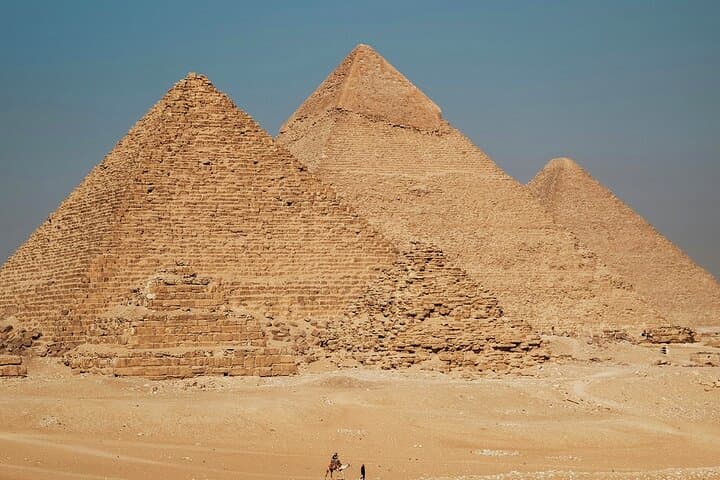
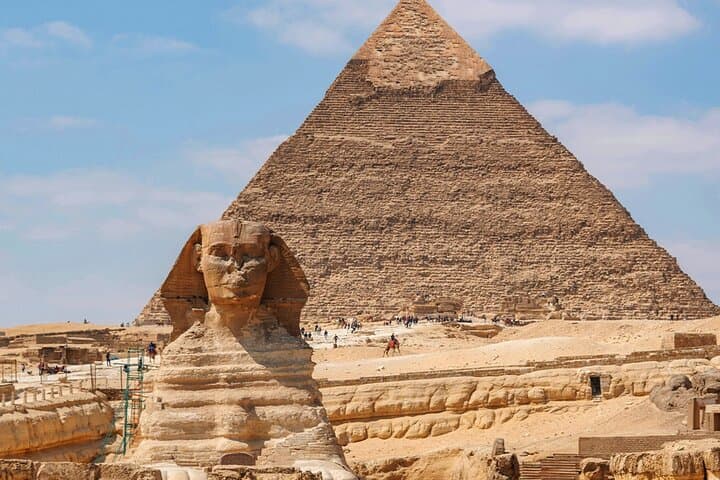
The morning air over the Giza Plateau feels heavy with time: dust, limestone, and the low hum of traffic beyond the dunes. On day one you stand at the base of Cheops while the Great Pyramid looms like a stone mountain that refuses to erode. The Sphinx watches from its limestone plinth, eyes fixed on an Egypt that once measured power by monument.
Verified experiences and guided adventures in the surrounding area.
Operated by Sun Pyramids Tours · Cairo, Cairo Governorate
The morning air over the Giza Plateau feels heavy with time: dust, limestone, and the low hum of traffic beyond the dunes. On day one you stand at the base of Cheops while the Great Pyramid looms like a stone mountain that refuses to erode. The Sphinx watches from its limestone plinth, eyes fixed on an Egypt that once measured power by monument.
This two-day private tour threads together Egypt’s most iconic sites and its curated museum narrative. Day one moves through the three main pyramids, the Valley Temple and the Citadel’s Mohamed Ali Mosque, tracing layers of medieval and pharaonic rule. Day two visits the National Museum of Egyptian Civilization in Fustat—where royal mummies have a modern stage—and the older Egyptian Museum in Tahrir, home to King Tutankhamun’s treasures and thousands of artifacts that span five millennia.
Geology here is obvious: wind-polished limestone, Nile silt in the plains, and the engineered tombs cut to precise alignments. Culture alternates between loud market alleys and quiet temple thresholds; guides translate hieroglyphs into human stories. Practical note: expect lots of short walks, staircases at museum galleries, and sun exposure on the plateau.
Bring a rhythm of slow mornings for the open sites and reserve midday for shaded museums and lunch. Hydrate frequently, wear sturdy walking shoes, and allow time for negotiation if you plan to explore Khan el-Khalili after the tour. The trip is both a crash course in ancient engineering and a measured immersion in Cairo’s layered history.
easy.
2 days.
Suitable for most travelers with the ability to walk 1–3 miles across uneven surfaces and climb stairs.
Yes—this private tour includes entrance fees to the pyramids, museums, and the Citadel as listed in the itinerary.
Pickup is provided from hotels in Cairo and Giza; the operator will confirm your exact pickup time and location during booking.
The operator notes wheelchair accessibility, but some outdoor areas at Giza have uneven terrain—contact the operator in advance for assistance.
Photography policies vary by gallery; flash may be restricted and additional fees may apply in special exhibitions—check with your guide on arrival.
The pyramids at Giza were constructed during Egypt’s Fourth Dynasty (~2600–2500 BCE); museums in Cairo now preserve artifacts spanning Pharaonic, Greco-Roman and Islamic periods.
High visitor numbers stress fragile sites—stay on marked paths, avoid touching stonework, and follow guide instructions to minimize impact.
Sun Pyramids Tours operates guided outdoor trips and adventures with an emphasis on safety, stewardship, and memorable experiences.


The morning air over the Giza Plateau feels heavy with time: dust, limestone, and the low hum of traffic beyond the dunes. On day one you stand at the base of Cheops while the Great Pyramid looms like a stone mountain that refuses to erode. The Sphinx watches from its limestone plinth, eyes fixed on an Egypt that once measured power by monument.
The morning air over the Giza Plateau feels heavy with time: dust, limestone, and the low hum of traffic beyond the dunes. On day one you stand at the base of Cheops while the Great Pyramid looms like a stone mountain that refuses to erode. The Sphinx watches from its limestone plinth, eyes fixed on an Egypt that once measured power by monument.
This two-day private tour threads together Egypt’s most iconic sites and its curated museum narrative. Day one moves through the three main pyramids, the Valley Temple and the Citadel’s Mohamed Ali Mosque, tracing layers of medieval and pharaonic rule. Day two visits the National Museum of Egyptian Civilization in Fustat—where royal mummies have a modern stage—and the older Egyptian Museum in Tahrir, home to King Tutankhamun’s treasures and thousands of artifacts that span five millennia.
Geology here is obvious: wind-polished limestone, Nile silt in the plains, and the engineered tombs cut to precise alignments. Culture alternates between loud market alleys and quiet temple thresholds; guides translate hieroglyphs into human stories. Practical note: expect lots of short walks, staircases at museum galleries, and sun exposure on the plateau.
Bring a rhythm of slow mornings for the open sites and reserve midday for shaded museums and lunch. Hydrate frequently, wear sturdy walking shoes, and allow time for negotiation if you plan to explore Khan el-Khalili after the tour. The trip is both a crash course in ancient engineering and a measured immersion in Cairo’s layered history.