THE ADVENTURE COLLECTIVE® · Independent discovery and booking for outdoor travel

A focused, private two-day tour that pairs Giza’s pyramids and the Step Pyramid of Saqqara with Cairo’s Egyptian Museum, Citadel and Khan al-Khalili bazaar. Ideal for travelers who want concentrated access to Egypt’s top antiquities with guided context and included lunches.
A focused, private two-day tour that pairs Giza’s pyramids and the Step Pyramid of Saqqara with Cairo’s Egyptian Museum, Citadel and Khan al-Khalili bazaar. Ideal for travelers who want concentrated access to Egypt’s top antiquities with guided context and included lunches.
You step from an air-conditioned van into a wind that has been shaping the desert for millennia—warm, dry, and insistently curious.
Verified experiences and guided adventures in the surrounding area.
Operated by Egypt Lifetime Tours · Cairo, Cairo Governorate
You step from an air-conditioned van into a wind that has been shaping the desert for millennia—warm, dry, and insistently curious.
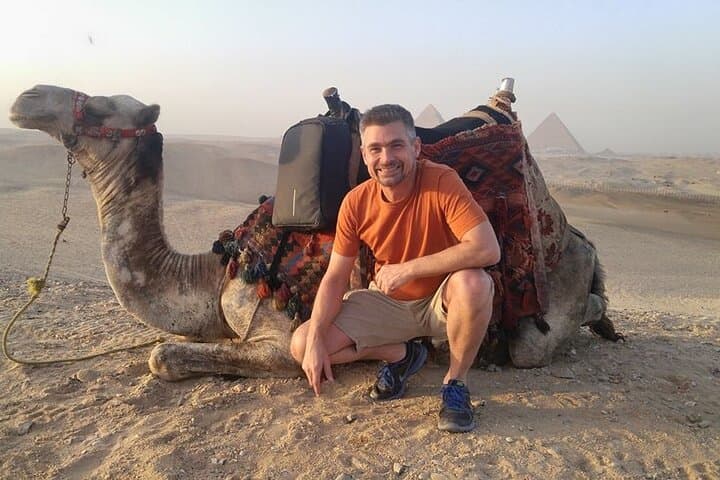
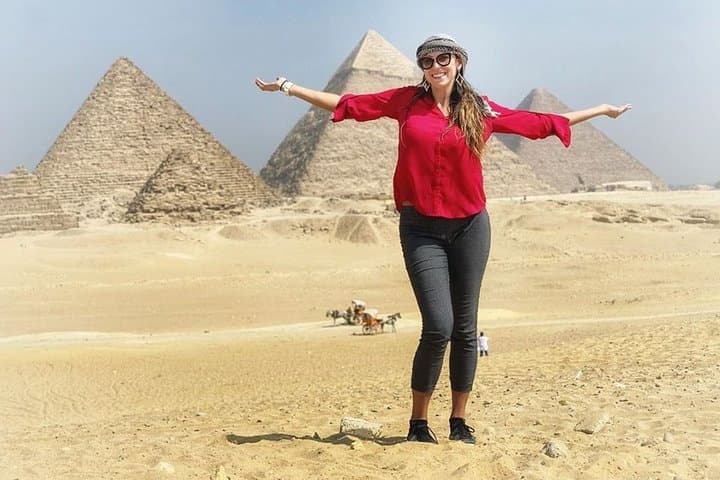
On day one the Giza Plateau unfolds: three monumental pyramids rising like deliberate geometry from ochre flats, the Sphinx watching the route of the Nile as if measuring time itself. Saqqara’s Step Pyramid follows, older and rawer, its stepped silhouette marking the shift from mudbrick tombs to carved stone ambition. Dahshur’s Bent and Red pyramids push that story forward—early experiments in scale and angle that still stand stubborn against the desert.
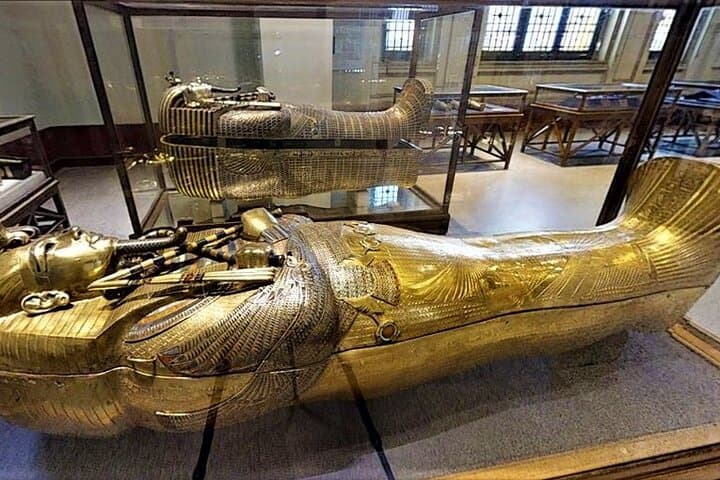
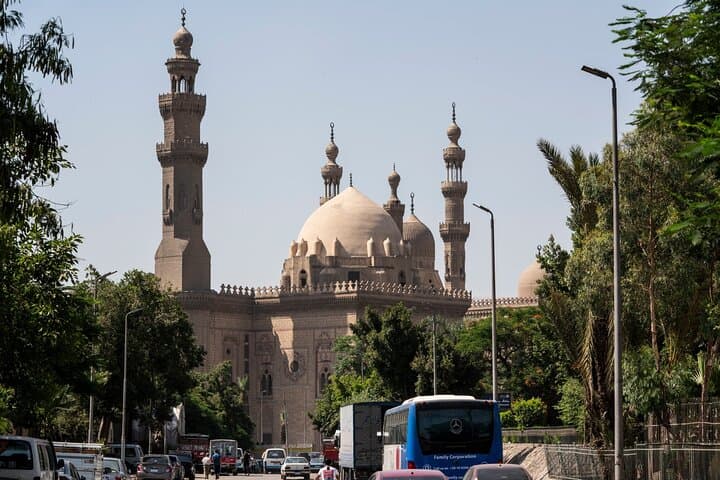
Day two shifts to the city’s human layers: the Egyptian Museum’s packed galleries telling millennia through gold and papyrus; the Citadel’s mosque crowns a strategic hill where power rewired Cairo; and Khan al-Khalili’s market squeezes centuries of trade into narrow alleys where voices barter spices, coffee, and small histories.
Practical planning is straightforward but essential: this private, two-day tour covers long stretches of walking on uneven ground and repeated exposures to sun and dust, so pace yourself between sites. Entrance fees are typically paid on-site; bring a card and local cash for small purchases and tips. Mornings are cooler and less crowded—aim for early starts. Respect barriers and conservation signage at archaeological sites: photographs are welcome, climbing is not.
This itinerary gives a concentrated sweep of Egypt’s most visible pasts and the city’s lived present—packed days that reward focus, sensible gear, and an appetite for history under an expansive sky.
moderate.
2 days.
Light to moderate fitness; able to walk several kilometers across uneven terrain and stand for extended museum visits.
No, the itinerary notes that admission fees are not included; travelers typically pay on-site—bring a card and some local cash.
The operator lists wheelchair accessibility; however, some archaeological areas have uneven terrain and limited access, so contact the provider in advance to confirm specific site access.
Round-trip private transport from Cairo/Giza hotels is included; airport pickup or drop-off can be arranged for an extra fee per person—confirm when booking.
Yes, the tour includes a professional English-speaking guide; other languages may be available for an additional charge.
The pyramids at Giza were built roughly 4,500 years ago; Saqqara’s Step Pyramid, commissioned for Pharaoh Djoser, predates them and represents an early revolution in monumental stone architecture.
High visitor volume stresses ancient monuments—follow barriers, avoid touching carvings, and use refillable bottles to reduce plastic waste; support licensed guides and local conservation initiatives.
Egypt Lifetime Tours operates guided outdoor trips and adventures with an emphasis on safety, stewardship, and memorable experiences.
You step from an air-conditioned van into a wind that has been shaping the desert for millennia—warm, dry, and insistently curious.
You step from an air-conditioned van into a wind that has been shaping the desert for millennia—warm, dry, and insistently curious.
On day one the Giza Plateau unfolds: three monumental pyramids rising like deliberate geometry from ochre flats, the Sphinx watching the route of the Nile as if measuring time itself. Saqqara’s Step Pyramid follows, older and rawer, its stepped silhouette marking the shift from mudbrick tombs to carved stone ambition. Dahshur’s Bent and Red pyramids push that story forward—early experiments in scale and angle that still stand stubborn against the desert.
Day two shifts to the city’s human layers: the Egyptian Museum’s packed galleries telling millennia through gold and papyrus; the Citadel’s mosque crowns a strategic hill where power rewired Cairo; and Khan al-Khalili’s market squeezes centuries of trade into narrow alleys where voices barter spices, coffee, and small histories.
Practical planning is straightforward but essential: this private, two-day tour covers long stretches of walking on uneven ground and repeated exposures to sun and dust, so pace yourself between sites. Entrance fees are typically paid on-site; bring a card and local cash for small purchases and tips. Mornings are cooler and less crowded—aim for early starts. Respect barriers and conservation signage at archaeological sites: photographs are welcome, climbing is not.
This itinerary gives a concentrated sweep of Egypt’s most visible pasts and the city’s lived present—packed days that reward focus, sensible gear, and an appetite for history under an expansive sky.