THE ADVENTURE COLLECTIVE® · Independent discovery and booking for outdoor travel

Two compact days stitch together Giza’s pyramids, Saqqara’s Step Pyramid, Dahshur’s Red and Bent Pyramids, the Egyptian Museum and the Citadel. Follow a guided, private itinerary that minimizes transit and maximizes time at Cairo’s essential antiquities.
Two compact days stitch together Giza’s pyramids, Saqqara’s Step Pyramid, Dahshur’s Red and Bent Pyramids, the Egyptian Museum and the Citadel. Follow a guided, private itinerary that minimizes transit and maximizes time at Cairo’s essential antiquities.
You arrive as the city exhales heat and history — dust lifting off the plateau where stone giants have watched the Nile for 4,500 years. On day one the Giza Plateau dominates the skyline: Khufu, Khafre and Menkaure stand in geometric silence while camel handlers and vendors punctuate the edges of the site.
Verified experiences and guided adventures in the surrounding area.
Operated by Emo Tours Egypt · Cairo, Cairo Governorate
You arrive as the city exhales heat and history — dust lifting off the plateau where stone giants have watched the Nile for 4,500 years. On day one the Giza Plateau dominates the skyline: Khufu, Khafre and Menkaure stand in geometric silence while camel handlers and vendors punctuate the edges of the site.
This short itinerary threads ancient and modern Cairo. From the funerary architecture of Giza to Djoser’s Step Pyramid at Saqqara and the Bent and Red pyramids at Dahshur, you trace the evolution of monumental stonework and funerary practice. Memphis recalls early dynastic power with its colossal Ramses II fragments, while the Egyptian Museum holds the gold-laden cache of Tutankhamun and thousands of artifacts spanning millennia. The Citadel of Saladin and the Mohamed Ali (Alabaster) Mosque reveal medieval Cairo’s defensive and religious shifts; Khan el-Khalili bazaars provide a living snapshot of urban commerce and craft.
Geology here is straightforward: limestone and gypsum beds that ancient masons exploited, yielding the warm ochre tones of the tombs and pyramids; the nearby desert horizon pushes and defines the city.
Practical side: expect long days on foot across uneven stone and sand, sun exposure, and crowded sites. Start early to avoid peak heat, carry water, and wear sturdy, closed shoes for walking on loose gravel. Bring cash for small purchases and a modest dress code at religious sites. With a private vehicle and guided logistics included, this two-day loop is dense but manageable — a compact primer on Egypt’s layered history.
easy.
2 days (full days of touring).
Moderate mobility required—able to walk several hours over uneven ground each day
This tour description lists entry fees as included—confirm specific inclusions at booking and carry ID for museum access.
The tour is labeled physically easy and generally suitable for most ages, but it involves walking on uneven terrain; travelers with mobility issues should check accessibility and request assistance.
Modest clothing is required—shoulders and knees covered; women may be asked to cover hair in some mosque areas and should bring a scarf.
Yes; the tour includes hotel pick-up and airport transfer options—confirm your flight details when booking.
These sites span from early dynastic Memphis (c. 3100 B.C.) through Old Kingdom pyramid builders to medieval Islamic Cairo; the area records Egypt’s long continuity of urban and ritual life.
Visitor pressure and urban expansion stress these ancient sites; follow guide instructions, avoid touching carvings, and use established pathways to reduce erosion and wear.
Emo Tours Egypt operates guided outdoor trips and adventures with an emphasis on safety, stewardship, and memorable experiences.
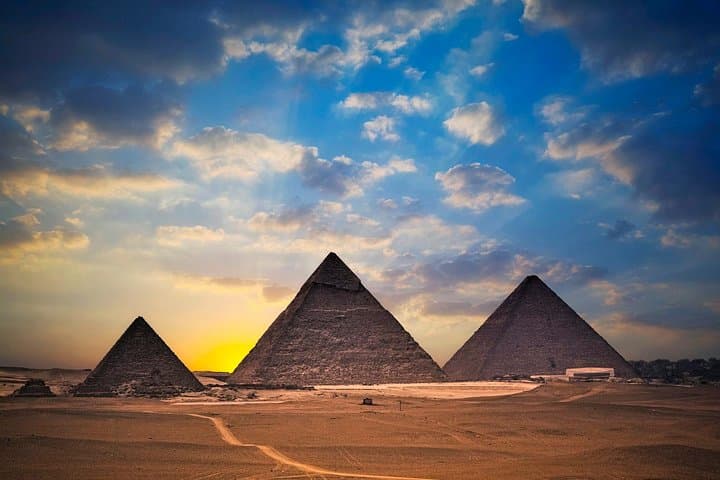

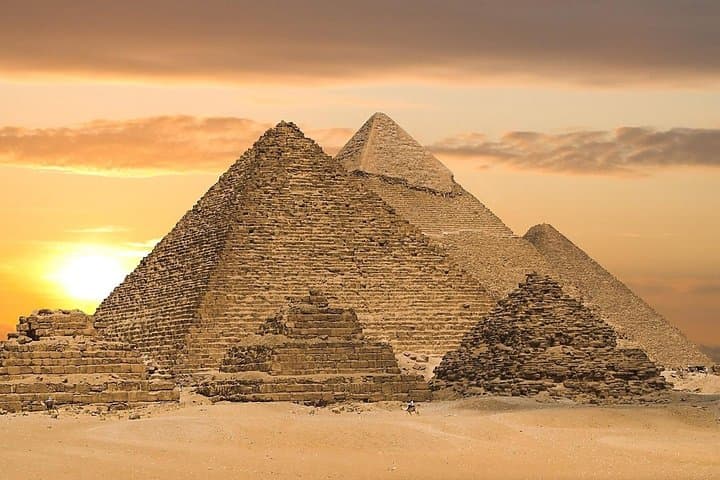
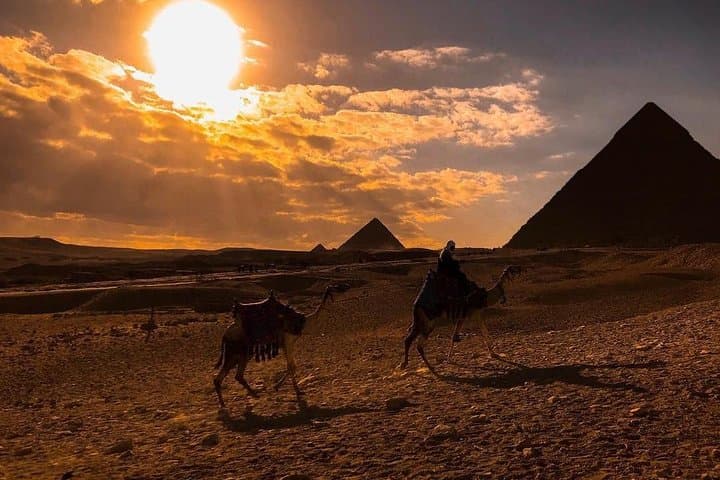
You arrive as the city exhales heat and history — dust lifting off the plateau where stone giants have watched the Nile for 4,500 years. On day one the Giza Plateau dominates the skyline: Khufu, Khafre and Menkaure stand in geometric silence while camel handlers and vendors punctuate the edges of the site.
You arrive as the city exhales heat and history — dust lifting off the plateau where stone giants have watched the Nile for 4,500 years. On day one the Giza Plateau dominates the skyline: Khufu, Khafre and Menkaure stand in geometric silence while camel handlers and vendors punctuate the edges of the site.
This short itinerary threads ancient and modern Cairo. From the funerary architecture of Giza to Djoser’s Step Pyramid at Saqqara and the Bent and Red pyramids at Dahshur, you trace the evolution of monumental stonework and funerary practice. Memphis recalls early dynastic power with its colossal Ramses II fragments, while the Egyptian Museum holds the gold-laden cache of Tutankhamun and thousands of artifacts spanning millennia. The Citadel of Saladin and the Mohamed Ali (Alabaster) Mosque reveal medieval Cairo’s defensive and religious shifts; Khan el-Khalili bazaars provide a living snapshot of urban commerce and craft.
Geology here is straightforward: limestone and gypsum beds that ancient masons exploited, yielding the warm ochre tones of the tombs and pyramids; the nearby desert horizon pushes and defines the city.
Practical side: expect long days on foot across uneven stone and sand, sun exposure, and crowded sites. Start early to avoid peak heat, carry water, and wear sturdy, closed shoes for walking on loose gravel. Bring cash for small purchases and a modest dress code at religious sites. With a private vehicle and guided logistics included, this two-day loop is dense but manageable — a compact primer on Egypt’s layered history.