THE ADVENTURE COLLECTIVE® · Independent discovery and booking for outdoor travel

Spend two days crossing the Rwanda–Uganda border to Bwindi Impenetrable National Park for up-close mountain gorilla encounters. This lodge-based trek combines community visits with unpredictable, exhilarating forest tracking—permits required and boots mandatory.
Spend two days crossing the Rwanda–Uganda border to Bwindi Impenetrable National Park for up-close mountain gorilla encounters. This lodge-based trek combines community visits with unpredictable, exhilarating forest tracking—permits required and boots mandatory.
Dawn slips across the ridgelines as the vehicle peels away from Kigali, the hills to the west sharpening into rows of cultivated slopes and the air cooling as the road climbs toward Bwindi.
Verified experiences and guided adventures in the surrounding area.
Operated by Silverbird Tours Agency · Buhoma, Kanungu District
Dawn slips across the ridgelines as the vehicle peels away from Kigali, the hills to the west sharpening into rows of cultivated slopes and the air cooling as the road climbs toward Bwindi.
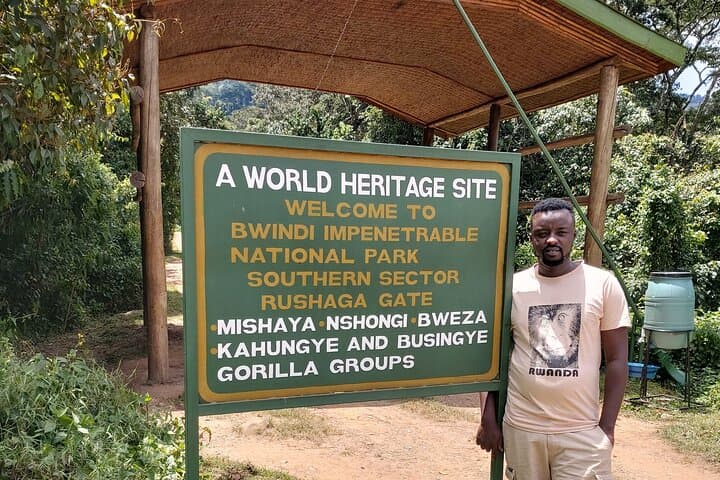
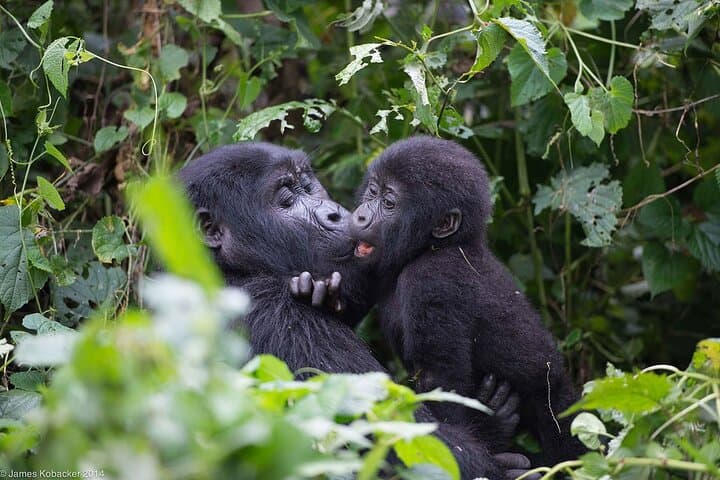
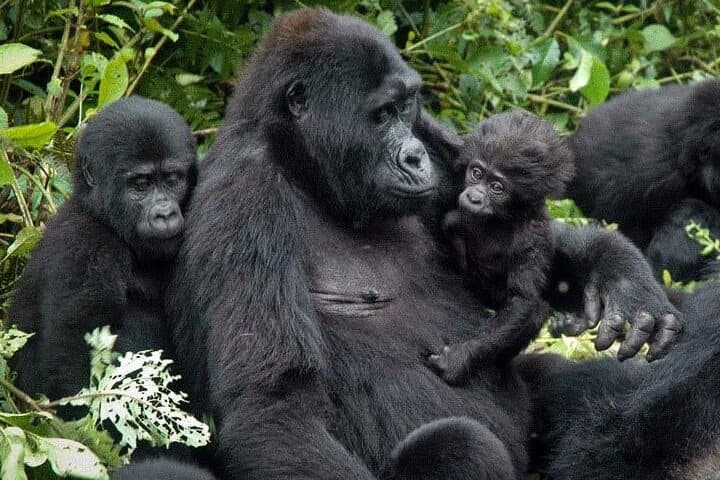
On arrival at Buhoma park headquarters, trekkers step into a forest that presses close: vines coil at ankle height, ancient trees brace the canopy, and the mist seems to follow each footfall. The march into Bwindi Impenetrable National Park is part trail, part negotiation with the jungle—slashes of undergrowth, quick river crossings, the occasional steep switchback—until the forest finally yields the sight that everyone comes for: a family of mountain gorillas moving among the ferns, unconcerned and profoundly present.
Bwindi’s dense rainforest sits on metamorphic bedrock carved by tectonics and eroded by time; elevations range roughly from 1,160 to 2,600 meters, which creates cool, wet conditions and a high level of biodiversity. The Batwa people have lived on these slopes for generations; community visits included in many itineraries provide context on local culture and land use.
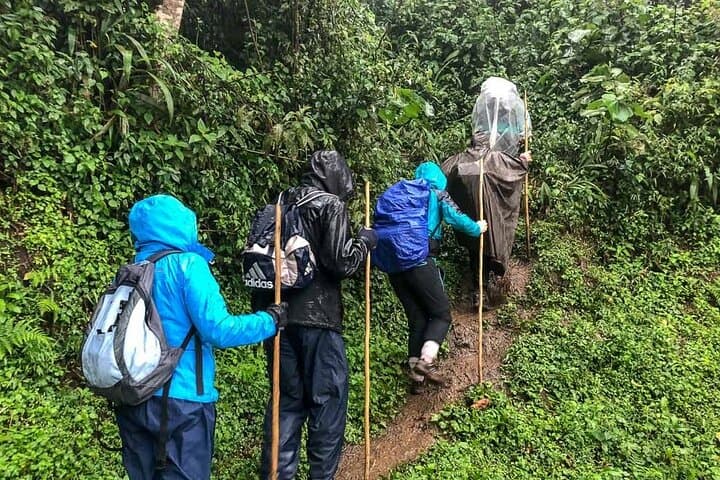
Practically, this is a two-day, lodge-based outing with permits secured in advance and an hour permitted with gorilla groups once located. Treks vary widely—some groups find gorillas after a short climb, others require several hours on steep, muddy trails. Wear full-grip waterproof boots, gaiters, and layers for quick temperature shifts. Carry at least 2–3 liters of water, rain protection, and a compact camera with a zoom lens; keep noise low and follow the guides’ distancing rules to protect both you and the gorillas.
The reward is immediate: close behavioral observation of an animal species that challenges you to slow down, breathe, and match the forest’s rhythm while leaving it intact.
moderate.
2 days.
Suitable for travelers with a reasonable level of endurance who can hike 3–6 hours over uneven, sometimes steep terrain; not technical but physically demanding.
Yes—permits are mandatory, limited in number, and generally arranged or confirmed before travel; check with your operator for availability.
Trek times vary widely—from under an hour to several hours—because gorilla locations change daily; plan for a full morning or afternoon out.
Moderate fitness is recommended; trails can be steep and muddy, but the pace is set by the group and rangers and porters can be hired where available.
Pregnant travelers and people with serious heart or spinal conditions are typically advised against trekking; consult the operator and your doctor in advance.
Bwindi has supported human forest communities for centuries; the park was designated in 1991 to protect its unique mountain gorilla population.
Gorilla tourism funds park protection and community projects, but strict rules (limited permits, distance limits, hygiene protocols) are essential to reduce disease and disturbance risks.
Silverbird Tours Agency operates guided outdoor trips and adventures with an emphasis on safety, stewardship, and memorable experiences.
Dawn slips across the ridgelines as the vehicle peels away from Kigali, the hills to the west sharpening into rows of cultivated slopes and the air cooling as the road climbs toward Bwindi.
Dawn slips across the ridgelines as the vehicle peels away from Kigali, the hills to the west sharpening into rows of cultivated slopes and the air cooling as the road climbs toward Bwindi.
On arrival at Buhoma park headquarters, trekkers step into a forest that presses close: vines coil at ankle height, ancient trees brace the canopy, and the mist seems to follow each footfall. The march into Bwindi Impenetrable National Park is part trail, part negotiation with the jungle—slashes of undergrowth, quick river crossings, the occasional steep switchback—until the forest finally yields the sight that everyone comes for: a family of mountain gorillas moving among the ferns, unconcerned and profoundly present.
Bwindi’s dense rainforest sits on metamorphic bedrock carved by tectonics and eroded by time; elevations range roughly from 1,160 to 2,600 meters, which creates cool, wet conditions and a high level of biodiversity. The Batwa people have lived on these slopes for generations; community visits included in many itineraries provide context on local culture and land use.
Practically, this is a two-day, lodge-based outing with permits secured in advance and an hour permitted with gorilla groups once located. Treks vary widely—some groups find gorillas after a short climb, others require several hours on steep, muddy trails. Wear full-grip waterproof boots, gaiters, and layers for quick temperature shifts. Carry at least 2–3 liters of water, rain protection, and a compact camera with a zoom lens; keep noise low and follow the guides’ distancing rules to protect both you and the gorillas.
The reward is immediate: close behavioral observation of an animal species that challenges you to slow down, breathe, and match the forest’s rhythm while leaving it intact.