THE ADVENTURE COLLECTIVE® · Independent discovery and booking for outdoor travel

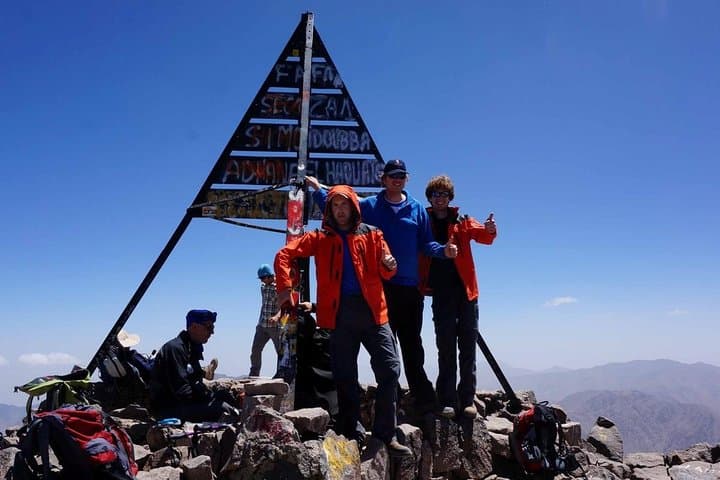
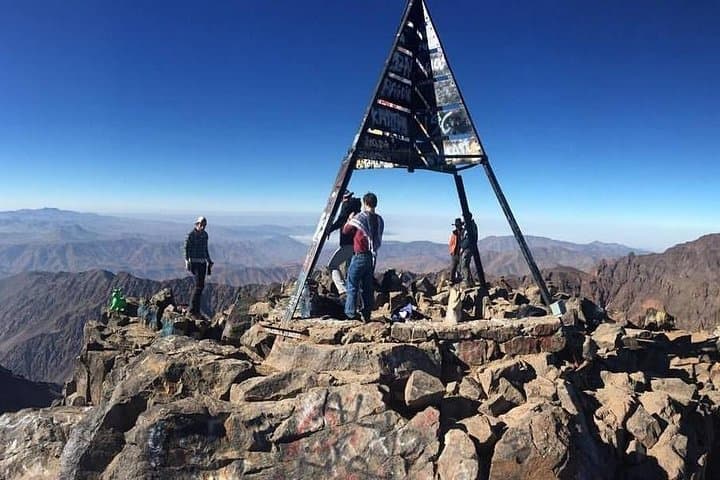
A compact, budget-friendly trek from Imlil to the summit of Jebel Toubkal that covers the ascent in two days. Expect steep trails, rocky scree near the top, an alpine refuge overnight, and sweeping High Atlas views.
A compact, budget-friendly trek from Imlil to the summit of Jebel Toubkal that covers the ascent in two days. Expect steep trails, rocky scree near the top, an alpine refuge overnight, and sweeping High Atlas views.
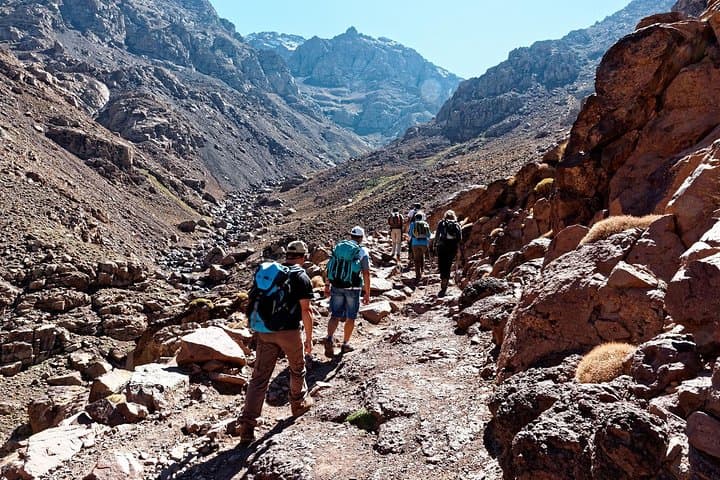
The dawn lifts over the High Atlas as a soft orange light crawls up the ridgeline, and your small group steps from Imlil onto a rocky path that angles toward the summit of Jebel Toubkal. Stone terraces and scattered Berber houses fall away below, while the trail climbs through juniper and scree, the mountain itself seeming to test each step.
Verified experiences and guided adventures in the surrounding area.
Operated by Smart Morocco Tours Excursions · Imlil, Marrakesh-Safi
The dawn lifts over the High Atlas as a soft orange light crawls up the ridgeline, and your small group steps from Imlil onto a rocky path that angles toward the summit of Jebel Toubkal. Stone terraces and scattered Berber houses fall away below, while the trail climbs through juniper and scree, the mountain itself seeming to test each step.
Toubkal (4,167 m) sits on folded Mesozoic and Precambrian rocks pushed up during the Atlas orogeny; human history here is written in Berber villages and pilgrimage stops like Sidi Chamharouch where local faith and mountain lore meet. Mule tracks, seasonal shepherding, and the refuge at 3,207 m mark a long tradition of low-tech, high-altitude travel.
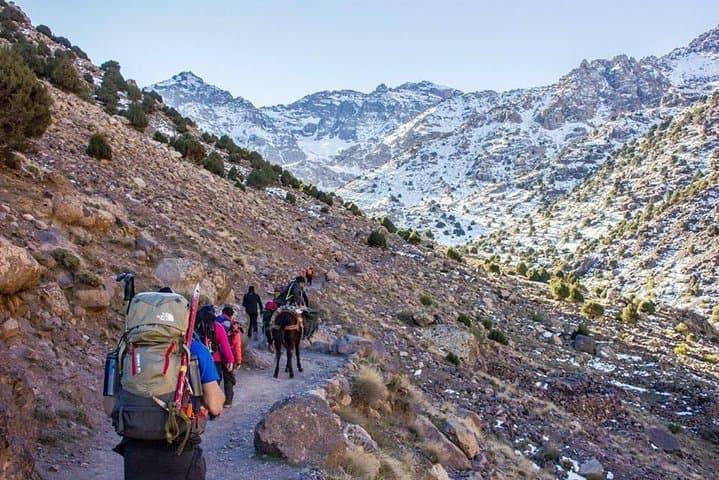
Expect two long days: a 5–6 hour push from Imlil to the refuge with wide valley views, then a pre-dawn summit bid of 3–4 hours followed by descent. Terrain varies—well-worn dirt and rock paths, loose scree near the top, and occasional snow patches outside summer. Weather switches fast; sun, wind and cold can all arrive in a single day.
Practical guidance: pace conservatively, keep hydrated, use poles for scree, and pack a warm, windproof layer for the summit. Local guides handle logistics, mules and refuge lodging on budget treks; tipping supports mountain communities. Time your trip for late spring to early fall for minimal snow, or come in winter only with crampons and experience. The route offers immediate rewards—nearby valleys, stubborn almond orchards, and panoramic views that make a fast two-day ascent feel complete.
challenging.
2 days.
Good aerobic fitness and endurance for consecutive long days at altitude; regular hikers can manage with pace control.
Plan on 3–4 hours ascending from the refuge to the summit and 3–4 hours to descend back to the refuge, depending on fitness and conditions.
In summer the route is non-technical and requires no ropes; in winter or heavy snow, crampons and an ice axe may be necessary.
Fit beginners can, with a local guide and conservative pacing, but altitude and long days make it challenging for inexperienced hikers.
Basic dormitory accommodation and simple food are provided at the refuge; facilities are rustic compared with towns.
Berber communities have used these valleys for centuries; Toubkal has been a local landmark and pilgrimage area long before modern trekking.
Visitor pressure and litter are concerns—use local guides, pack out trash, and respect grazing lands to support sustainable trekking.
Smart Morocco Tours Excursions operates guided outdoor trips and adventures with an emphasis on safety, stewardship, and memorable experiences.
The dawn lifts over the High Atlas as a soft orange light crawls up the ridgeline, and your small group steps from Imlil onto a rocky path that angles toward the summit of Jebel Toubkal. Stone terraces and scattered Berber houses fall away below, while the trail climbs through juniper and scree, the mountain itself seeming to test each step.
The dawn lifts over the High Atlas as a soft orange light crawls up the ridgeline, and your small group steps from Imlil onto a rocky path that angles toward the summit of Jebel Toubkal. Stone terraces and scattered Berber houses fall away below, while the trail climbs through juniper and scree, the mountain itself seeming to test each step.
Toubkal (4,167 m) sits on folded Mesozoic and Precambrian rocks pushed up during the Atlas orogeny; human history here is written in Berber villages and pilgrimage stops like Sidi Chamharouch where local faith and mountain lore meet. Mule tracks, seasonal shepherding, and the refuge at 3,207 m mark a long tradition of low-tech, high-altitude travel.
Expect two long days: a 5–6 hour push from Imlil to the refuge with wide valley views, then a pre-dawn summit bid of 3–4 hours followed by descent. Terrain varies—well-worn dirt and rock paths, loose scree near the top, and occasional snow patches outside summer. Weather switches fast; sun, wind and cold can all arrive in a single day.
Practical guidance: pace conservatively, keep hydrated, use poles for scree, and pack a warm, windproof layer for the summit. Local guides handle logistics, mules and refuge lodging on budget treks; tipping supports mountain communities. Time your trip for late spring to early fall for minimal snow, or come in winter only with crampons and experience. The route offers immediate rewards—nearby valleys, stubborn almond orchards, and panoramic views that make a fast two-day ascent feel complete.