THE ADVENTURE COLLECTIVE® · Independent discovery and booking for outdoor travel

Spend two days hiking granite peaks, visiting ancient rock art and camping beneath some of Namibia’s darkest skies. This budget guided trip combines short scrambles, cultural sites and unforgettable stargazing.
Spend two days hiking granite peaks, visiting ancient rock art and camping beneath some of Namibia’s darkest skies. This budget guided trip combines short scrambles, cultural sites and unforgettable stargazing.
A wind-flattened plain gives way to granite giants as the van eases onto the dirt approach road; the Spitzkoppe rises, raw and uncompromising, its orange faces catching late-afternoon light. On this compact two‑day guided trip travelers trade asphalt for boulder-strewn trails, sleeping beside the rocks and waking to a sunrise that rims the peaks.
Verified experiences and guided adventures in the surrounding area.
Operated by QUALITY TIME TOURS · Usakos, Erongo
A wind-flattened plain gives way to granite giants as the van eases onto the dirt approach road; the Spitzkoppe rises, raw and uncompromising, its orange faces catching late-afternoon light. On this compact two‑day guided trip travelers trade asphalt for boulder-strewn trails, sleeping beside the rocks and waking to a sunrise that rims the peaks.
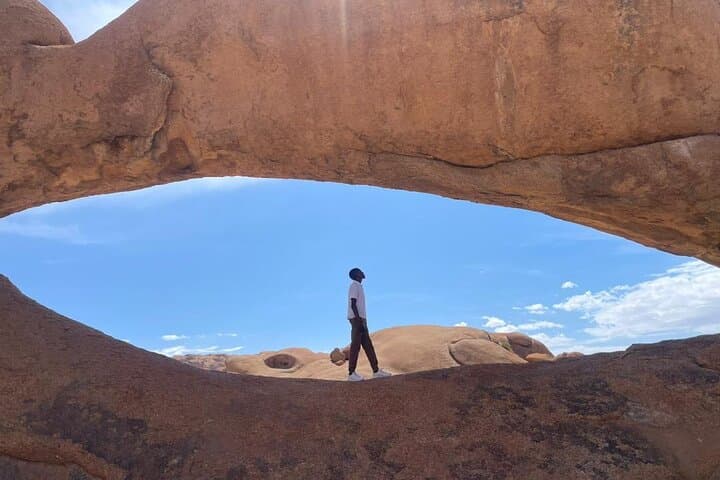
Geologically the Spitzkoppe is a remnant granite intrusion—rounded tors and arches carved by millennia of thermal fracturing and wind abrasion. Culturally the range carries San rock art panels concentrated in Bushman’s Paradise; the ochre and charcoal figures are fragile records of hunters and gatherers who moved through this arid landscape.
Hikes are short but varied: expect 2–5 km segments over sandy tracks and solid granite, with short sections of scrambling to reach viewpoints. Elevation changes are modest (roughly 150–350 m on the main Peak viewpoint), but footing can be uneven—granite slabs, scree and narrow ledges. Sunset at Pontok rewards a patient climb; a sunrise push to the Peak viewpoint offers broad views over the Namib plains.
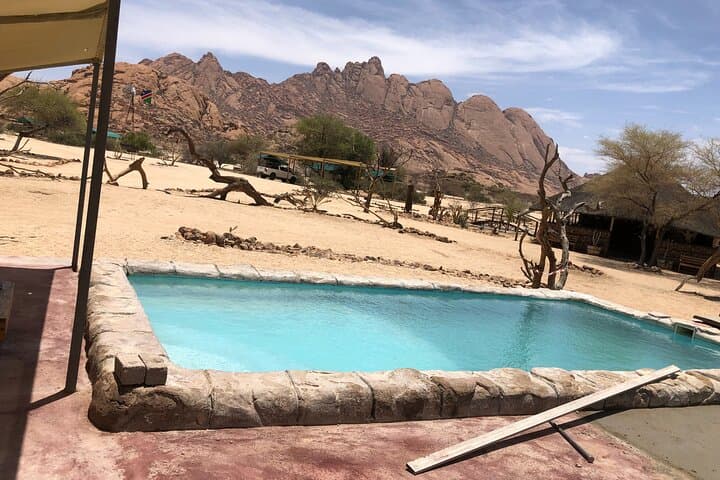
Practical notes: camping is at tented campsites with basic facilities; guides handle permits, meals and vehicle fuel. Temperatures swing—hot days, cold nights—so pack layered clothing, reliable footwear and at least 2–3 liters of water per day. Leave rock art untouched and carry out all waste. For a short, affordable introduction to Namibia’s high desert, this itinerary balances light trekking, culture and a spectacular night sky—ideal for photographers and first-time desert hikers.
moderate.
2 days.
Suitable for travelers in basic to good fitness; able to hike 2–5 km with short scrambles and carry a daypack.
No technical experience is required, but participants should be comfortable on uneven ground and short rock scrambles.
Yes—basic tented campsites are provided and the guide handles setup; bring a sleeping bag and personal items.
Dry months (May–October) offer stable conditions and clear skies; summer brings higher temperatures and occasional showers.
The tour notes that entrance fees to national parks and conservancies are included in the program.
The Spitzkoppe region preserves San (Bushman) rock art panels that document hunter-gatherer presence and seasonal movement across the central Namib.
The desert ecosystem is fragile—stick to trails, avoid touching rock art and pack out all waste; use fuel stoves instead of open fires where possible.
QUALITY TIME TOURS operates guided outdoor trips and adventures with an emphasis on safety, stewardship, and memorable experiences.
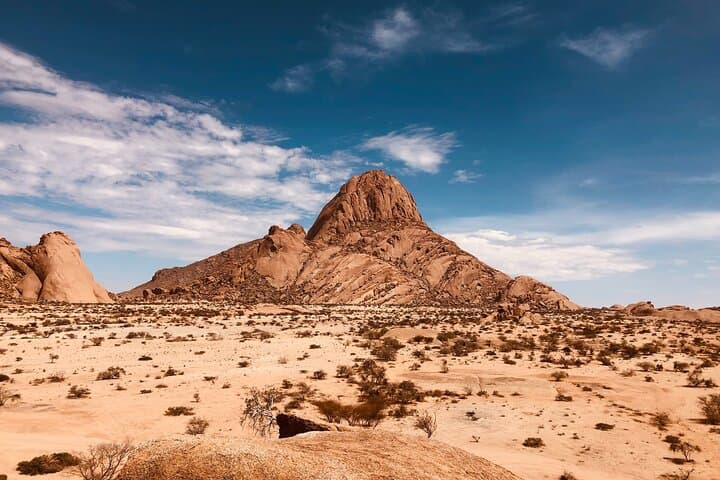
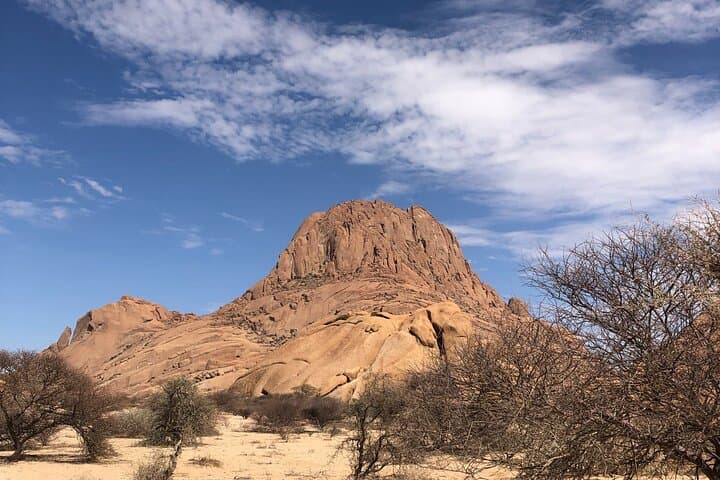
A wind-flattened plain gives way to granite giants as the van eases onto the dirt approach road; the Spitzkoppe rises, raw and uncompromising, its orange faces catching late-afternoon light. On this compact two‑day guided trip travelers trade asphalt for boulder-strewn trails, sleeping beside the rocks and waking to a sunrise that rims the peaks.
A wind-flattened plain gives way to granite giants as the van eases onto the dirt approach road; the Spitzkoppe rises, raw and uncompromising, its orange faces catching late-afternoon light. On this compact two‑day guided trip travelers trade asphalt for boulder-strewn trails, sleeping beside the rocks and waking to a sunrise that rims the peaks.
Geologically the Spitzkoppe is a remnant granite intrusion—rounded tors and arches carved by millennia of thermal fracturing and wind abrasion. Culturally the range carries San rock art panels concentrated in Bushman’s Paradise; the ochre and charcoal figures are fragile records of hunters and gatherers who moved through this arid landscape.
Hikes are short but varied: expect 2–5 km segments over sandy tracks and solid granite, with short sections of scrambling to reach viewpoints. Elevation changes are modest (roughly 150–350 m on the main Peak viewpoint), but footing can be uneven—granite slabs, scree and narrow ledges. Sunset at Pontok rewards a patient climb; a sunrise push to the Peak viewpoint offers broad views over the Namib plains.
Practical notes: camping is at tented campsites with basic facilities; guides handle permits, meals and vehicle fuel. Temperatures swing—hot days, cold nights—so pack layered clothing, reliable footwear and at least 2–3 liters of water per day. Leave rock art untouched and carry out all waste. For a short, affordable introduction to Namibia’s high desert, this itinerary balances light trekking, culture and a spectacular night sky—ideal for photographers and first-time desert hikers.