THE ADVENTURE COLLECTIVE® · Independent discovery and booking for outdoor travel

Leave Agadir for a two-day sweep through the Anti-Atlas: Legzira’s red cliffs, berber villages, and a bivouac night in Bou Jerif with camel ride at sunset. Comfortable, low-impact desert travel with cultural stops and big skies.
Leave Agadir for a two-day sweep through the Anti-Atlas: Legzira’s red cliffs, berber villages, and a bivouac night in Bou Jerif with camel ride at sunset. Comfortable, low-impact desert travel with cultural stops and big skies.
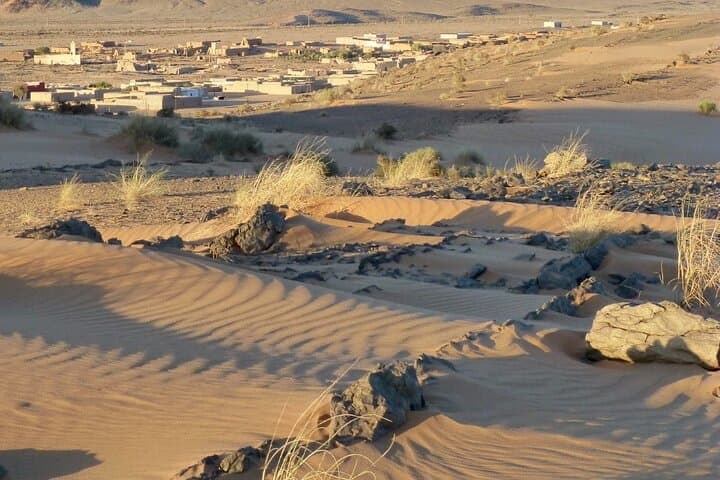
You leave Agadir at dawn, the Atlantic light sliding off the surf as the road pushes inland toward the Anti-Atlas. Salt air gives way to sun-baked stone; roadside argan trees squat like old watchmen. By midday the red cliffs at Legzira rise, their arches cutting the coast; later the landscape thins into sweeping plains and the dunes of Bou Jerif, where the sand seems to gather every story the wind tells.
Verified experiences and guided adventures in the surrounding area.
Operated by Adi Tours · Agadir, Souss-Massa
You leave Agadir at dawn, the Atlantic light sliding off the surf as the road pushes inland toward the Anti-Atlas. Salt air gives way to sun-baked stone; roadside argan trees squat like old watchmen. By midday the red cliffs at Legzira rise, their arches cutting the coast; later the landscape thins into sweeping plains and the dunes of Bou Jerif, where the sand seems to gather every story the wind tells.
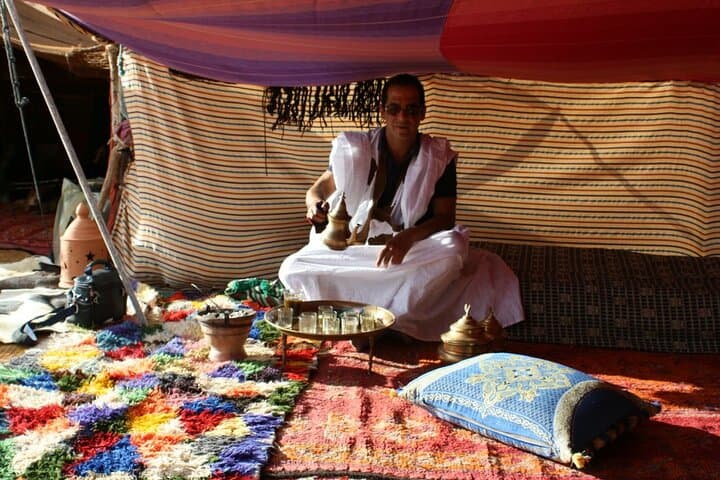
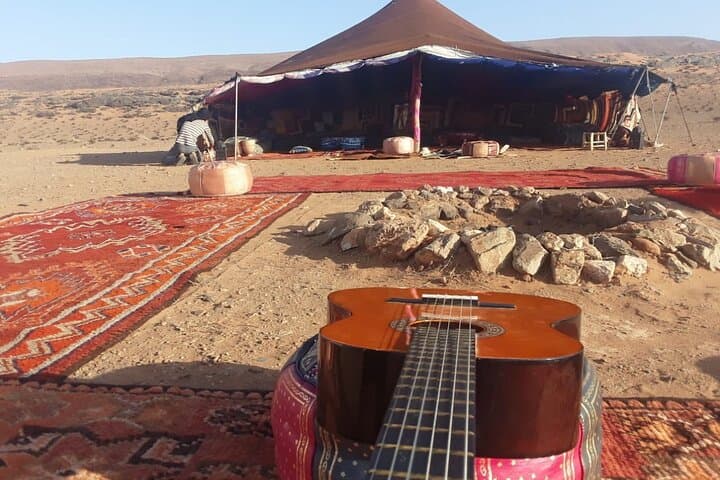
This route follows traditional southbound corridors used for centuries by Berber traders moving between the Atlantic and the Draa Valley. Geologically the Anti-Atlas is an older range—rounded, folded, and studded with sandstone and volcanic outcrops—so the trip alternates coastal cliffs, terraced oases, and soft desert sands. Culturally, expect Berber hospitality: strong mint tea, music around a fire, and artisan pottery in villages like Tamegroute and Taznakht.
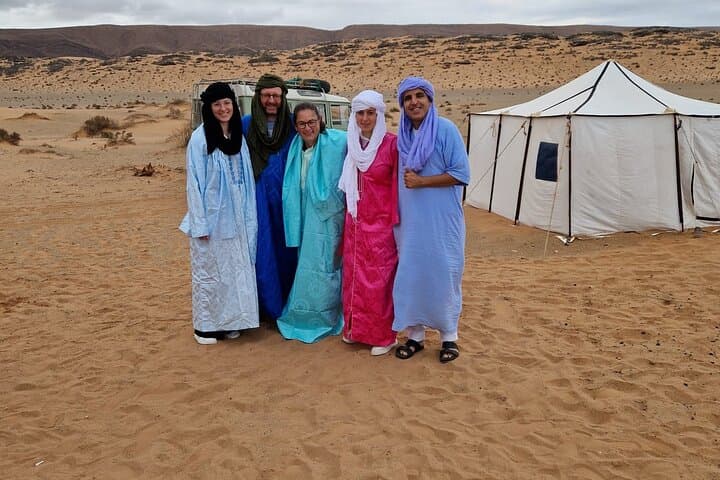
Practically, the tour is a low‑impact, comfortable introduction to desert travel: short drives between stops, guided camel rides at sunset, and a night in a staffed bivouac with shared tents and communal meals. Pack layers for hot days and cool nights, bring at least 2–3 liters of water per person, and wear closed-toe shoes for dune walks. Sunrise and sunset are the best photo windows—midday glare can be intense.
Timing your visit for spring or autumn gives milder temperatures and calmer winds. Respect local customs, minimize single-use plastics, and stick to marked paths around fragile dune grasses. For travelers who want an adventurous but accessible overnight under desert skies, this two-day circuit delivers coastal drama, small-town craft, and a genuine Saharan night under open sky.
easy.
2 days (approx. 48 hours).
Suitable for most travelers; requires basic mobility for caravan-style camel rides and short dune walks
Yes—this itinerary is rated easy and accommodates families; children can ride camels and tents are staffed, but check mobility for dune walking.
The overnight is in a staffed bivouac with shared tents, basic mattresses, and communal toilets; bring a light sleep liner if you prefer extra comfort.
Breakfast, lunch and dinner are included as specified; water and additional drinks may be extra depending on the operator—confirm before departure.
Camel rides typically last around 30–60 minutes for sunset transfer to the bivouac; they’re optional—alternatives often include short vehicle transfers.
This corridor links Atlantic ports to interior oases used by Amazigh (Berber) traders for centuries; pottery and manuscript traditions survive in towns like Tamegroute.
Dune vegetation and oasis soils are fragile—stick to established trails, avoid lighting fires outside designated bivouac areas, and minimize single-use plastics to protect scarce water resources.
Adi Tours operates guided outdoor trips and adventures with an emphasis on safety, stewardship, and memorable experiences.
You leave Agadir at dawn, the Atlantic light sliding off the surf as the road pushes inland toward the Anti-Atlas. Salt air gives way to sun-baked stone; roadside argan trees squat like old watchmen. By midday the red cliffs at Legzira rise, their arches cutting the coast; later the landscape thins into sweeping plains and the dunes of Bou Jerif, where the sand seems to gather every story the wind tells.
You leave Agadir at dawn, the Atlantic light sliding off the surf as the road pushes inland toward the Anti-Atlas. Salt air gives way to sun-baked stone; roadside argan trees squat like old watchmen. By midday the red cliffs at Legzira rise, their arches cutting the coast; later the landscape thins into sweeping plains and the dunes of Bou Jerif, where the sand seems to gather every story the wind tells.
This route follows traditional southbound corridors used for centuries by Berber traders moving between the Atlantic and the Draa Valley. Geologically the Anti-Atlas is an older range—rounded, folded, and studded with sandstone and volcanic outcrops—so the trip alternates coastal cliffs, terraced oases, and soft desert sands. Culturally, expect Berber hospitality: strong mint tea, music around a fire, and artisan pottery in villages like Tamegroute and Taznakht.
Practically, the tour is a low‑impact, comfortable introduction to desert travel: short drives between stops, guided camel rides at sunset, and a night in a staffed bivouac with shared tents and communal meals. Pack layers for hot days and cool nights, bring at least 2–3 liters of water per person, and wear closed-toe shoes for dune walks. Sunrise and sunset are the best photo windows—midday glare can be intense.
Timing your visit for spring or autumn gives milder temperatures and calmer winds. Respect local customs, minimize single-use plastics, and stick to marked paths around fragile dune grasses. For travelers who want an adventurous but accessible overnight under desert skies, this two-day circuit delivers coastal drama, small-town craft, and a genuine Saharan night under open sky.