THE ADVENTURE COLLECTIVE® · Independent discovery and booking for outdoor travel

Walk high passes and walnut groves on a two-day trek through the Azzaden Valley. Experience traditional Berber hospitality, waterfalls, and panoramic Atlas views while staying in a family-run guesthouse.
Walk high passes and walnut groves on a two-day trek through the Azzaden Valley. Experience traditional Berber hospitality, waterfalls, and panoramic Atlas views while staying in a family-run guesthouse.
You leave Marrakech before dawn and the city’s heat peels away as the road climbs toward the High Atlas. By midmorning you step out of the car in Imlil, the air thinner and cooler, and begin an uphill that opens to a high pass at 2,500m. Juniper trees slope away from the trail, and the valley below holds a scatter of flat-roofed Berber houses like careful stitches on an open hand.
Verified experiences and guided adventures in the surrounding area.
Operated by Toubkal Experience · Imlil, Marrakesh-Safi
You leave Marrakech before dawn and the city’s heat peels away as the road climbs toward the High Atlas. By midmorning you step out of the car in Imlil, the air thinner and cooler, and begin an uphill that opens to a high pass at 2,500m. Juniper trees slope away from the trail, and the valley below holds a scatter of flat-roofed Berber houses like careful stitches on an open hand.
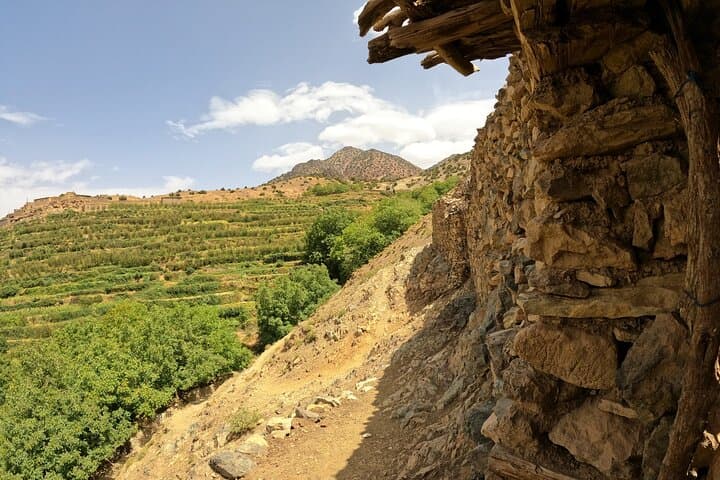
This two-day trek threads village to village through the Azzaden Valley, passing the Tamsoulte waterfalls—among the highest cascades in the Atlas—and walnut-lined riverbanks. The landscape is geologically recent: folded sedimentary ridges worn by winter torrents and summer sun, creating narrow gorges and broad terraces that local farmers have carved for centuries.
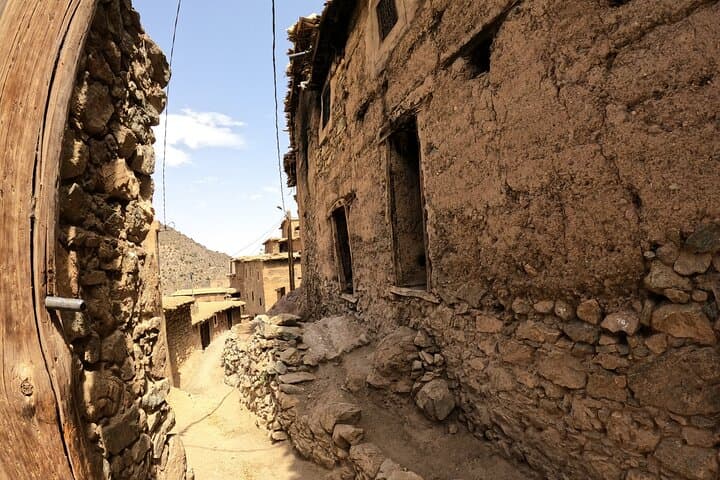
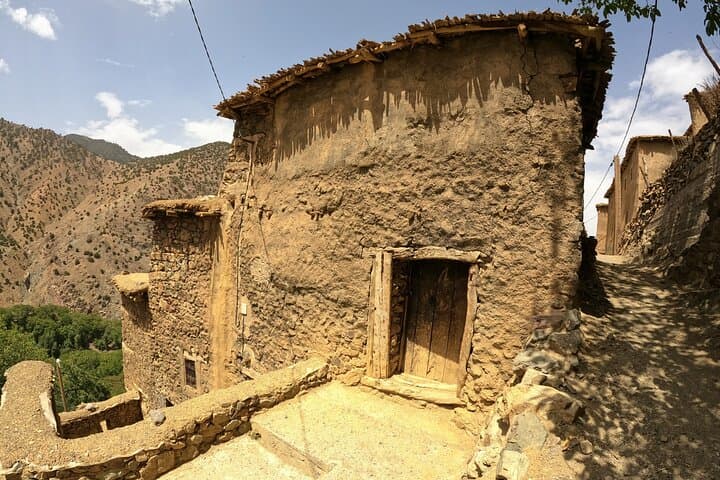
Culturally, the route is a working landscape of Amazigh (Berber) communities. Homes are stone and earth-brick; terraces grow walnuts and barley; mules remain the primary freight. Guides share oral histories about seasonal migrations, terraced irrigation, and the role these passes played as local trade routes.
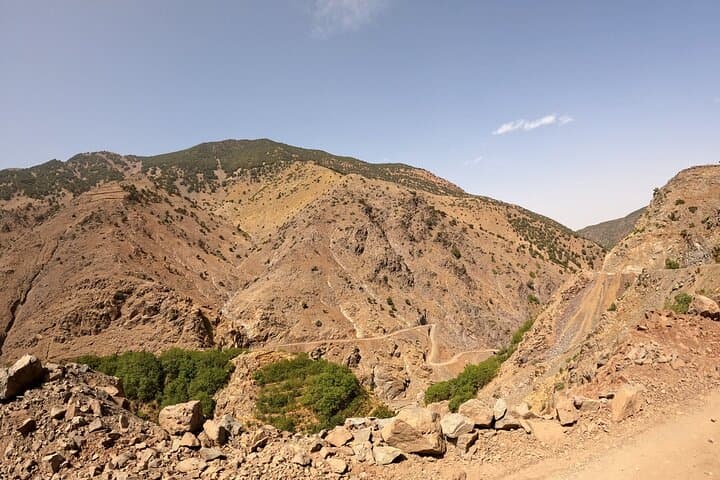
Practically, expect steady climbs and rocky trails, short stretches of loose scree, and altitude changes between 1,800–2,500m. Accommodations are family-run guesthouses with shared meals and simple comforts. Water is available at villages but carry purification if you prefer.
Plan for layered clothing, sturdy boots, and daylight navigation—trail markers exist but can be faint after rain. Start early to avoid afternoon heat, respect local customs (ask before photographing people), and let muleteers carry your heavier luggage.
The trek balances raw mountain scenery with hands-on cultural encounters—an accessible, two-day immersion into Atlas life and landscape.
moderate.
2 days (6–9 hours walking total).
Moderate fitness — able to hike uphill for several hours with a daypack; comfortable on uneven terrain and at mild altitude.
The route is labeled moderate: steady ascents and some loose ground but no technical climbing. Basic fitness and experience with multi-hour hikes will make it comfortable.
Typical inclusions are transfers from Marrakech, one night guesthouse accommodation, all meals during the trek, guide and muleteer services, and mule transport for luggage.
Local muleteers carry main luggage on mules; you should bring a small daypack with water, layers, and valuables for the walking sections.
The highest pass reaches about 2,500m. Most people tolerate this altitude, but stay hydrated, move at a steady pace, and mention any history of altitude illness to your guide.
The Azzaden Valley has been inhabited by Amazigh (Berber) communities for centuries; terraced farming and mule routes shaped settlement patterns and local trade.
Water is scarce and trails are sensitive to erosion; stick to established paths, avoid single-use plastics, and support local guides and guesthouses to keep tourism sustainable.
Toubkal Experience operates guided outdoor trips and adventures with an emphasis on safety, stewardship, and memorable experiences.
You leave Marrakech before dawn and the city’s heat peels away as the road climbs toward the High Atlas. By midmorning you step out of the car in Imlil, the air thinner and cooler, and begin an uphill that opens to a high pass at 2,500m. Juniper trees slope away from the trail, and the valley below holds a scatter of flat-roofed Berber houses like careful stitches on an open hand.
You leave Marrakech before dawn and the city’s heat peels away as the road climbs toward the High Atlas. By midmorning you step out of the car in Imlil, the air thinner and cooler, and begin an uphill that opens to a high pass at 2,500m. Juniper trees slope away from the trail, and the valley below holds a scatter of flat-roofed Berber houses like careful stitches on an open hand.
This two-day trek threads village to village through the Azzaden Valley, passing the Tamsoulte waterfalls—among the highest cascades in the Atlas—and walnut-lined riverbanks. The landscape is geologically recent: folded sedimentary ridges worn by winter torrents and summer sun, creating narrow gorges and broad terraces that local farmers have carved for centuries.
Culturally, the route is a working landscape of Amazigh (Berber) communities. Homes are stone and earth-brick; terraces grow walnuts and barley; mules remain the primary freight. Guides share oral histories about seasonal migrations, terraced irrigation, and the role these passes played as local trade routes.
Practically, expect steady climbs and rocky trails, short stretches of loose scree, and altitude changes between 1,800–2,500m. Accommodations are family-run guesthouses with shared meals and simple comforts. Water is available at villages but carry purification if you prefer.
Plan for layered clothing, sturdy boots, and daylight navigation—trail markers exist but can be faint after rain. Start early to avoid afternoon heat, respect local customs (ask before photographing people), and let muleteers carry your heavier luggage.
The trek balances raw mountain scenery with hands-on cultural encounters—an accessible, two-day immersion into Atlas life and landscape.