THE ADVENTURE COLLECTIVE® · Independent discovery and booking for outdoor travel

Walk from Rum village across red dunes and rocky valleys with Bedouin guides, sleep each night under open skies or in rock shelters, and see Burdah Arch and Lawrence’s House along the way. This two-day itinerant trek blends geology, culture, and simple desert camping.
Walk from Rum village across red dunes and rocky valleys with Bedouin guides, sleep each night under open skies or in rock shelters, and see Burdah Arch and Lawrence’s House along the way. This two-day itinerant trek blends geology, culture, and simple desert camping.
Dawn strips color across the sandstone as you step out of Rum village and into open desert—wind-sculpted ridges to one side, a wide, red dune daring you to climb on the other. Your Bedouin guide leads a slow, steady rhythm: sand, scrub, a narrow canyon, then the broad view from a low jebel where the valley unrolls like a map.
Verified experiences and guided adventures in the surrounding area.
Operated by Sunrise Camp · Rum (Wadi Rum Village), Ma'an Governorate
Dawn strips color across the sandstone as you step out of Rum village and into open desert—wind-sculpted ridges to one side, a wide, red dune daring you to climb on the other. Your Bedouin guide leads a slow, steady rhythm: sand, scrub, a narrow canyon, then the broad view from a low jebel where the valley unrolls like a map.
This is Wadi Rum country, a landscape carved by wind and ancient seas. Rock faces preserve petroglyphs and faint Arabic and Thamudic inscriptions; Lawrence of Arabia left a footprint in local lore and the stone wall known as Lawrence’s House stands as a modest historical marker. Geology here is dramatic—sandstone and granite layers tilted and eroded into arches and spires; Burdah Arch dominates one skyline and a mushroom-shaped rock punctuates a dry valley.
Culturally, the trek is run by a Bedouin family with decades guiding experience; meals follow traditional patterns—salads and slow-cooked stews—and nights are spent sleeping under the open sky or in sheltered rock alcoves chosen for view and wind protection.
Practically, expect two days of walking across mixed sand and rocky terraces, moderate grades with short climbs, and exposed sun by day and cold nights. Carry a hydration system, sun protection, and warm layers for after sunset. Respect local customs—ask before photographing people—and minimize water use; this is a fragile desert. With straightforward footing, basic navigation, and an eye for changing weather, this itinerant trek delivers steady hiking, striking geology, and an unfiltered night under the stars.
moderate.
2 days (approx. 6–7 hours walking per day).
Suitable for travelers with regular walking fitness able to handle uneven terrain and full-day hikes.
Moderate: expect several hours of walking per day on mixed sand and rocky terrain with some short climbs; a baseline of regular fitness is recommended.
You sleep outdoors each night—either on mattresses under the stars or in sheltered rock alcoves selected by the guide to block wind and provide views.
Yes: lunches and dinners for both days and breakfast on the final morning are included, typically salads and warm, slow-cooked dishes in the Bedouin style.
Potentially, if they have moderate fitness and can handle uneven ground and desert conditions; consult the operator about age limits and mobility concerns.
Wadi Rum has been a travel corridor for millennia; Bedouin communities have lived and guided in these valleys for generations and Lawrence of Arabia traveled here during the Arab Revolt.
The desert is ecologically fragile—stay on established routes, pack out waste, conserve water, and support local guides who practice low-impact camping.
Sunrise Camp operates guided outdoor trips and adventures with an emphasis on safety, stewardship, and memorable experiences.
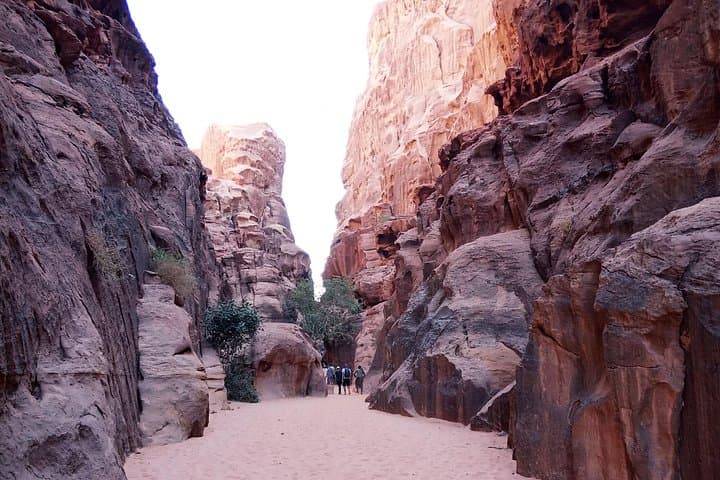
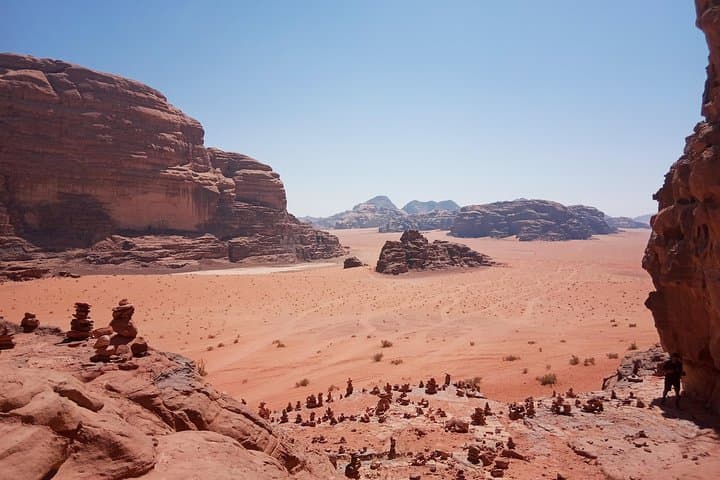
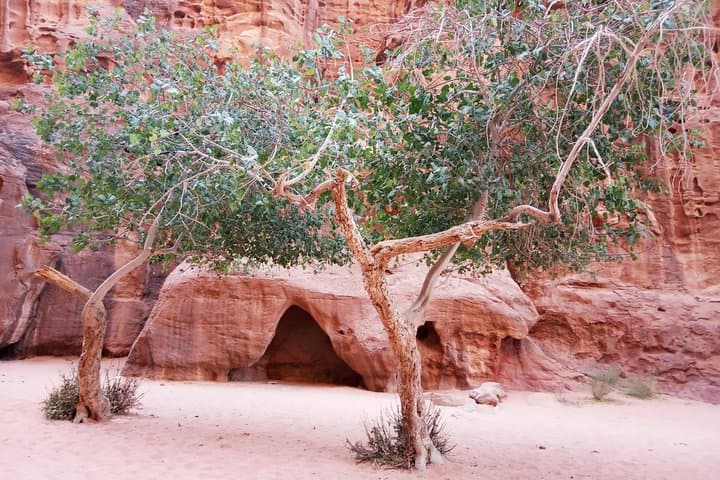
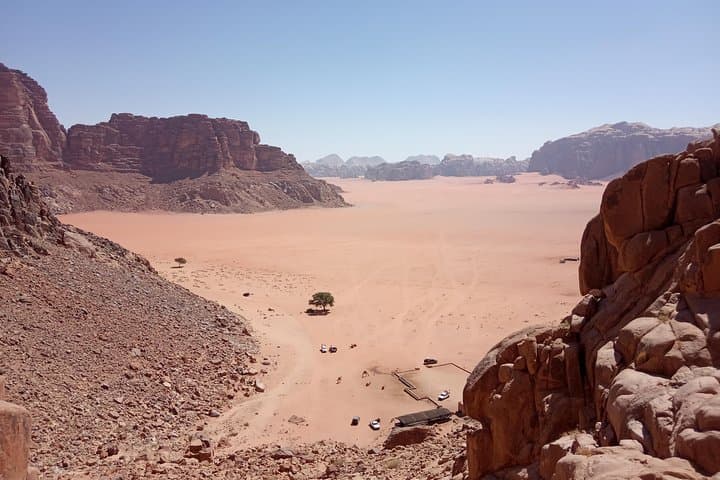
Dawn strips color across the sandstone as you step out of Rum village and into open desert—wind-sculpted ridges to one side, a wide, red dune daring you to climb on the other. Your Bedouin guide leads a slow, steady rhythm: sand, scrub, a narrow canyon, then the broad view from a low jebel where the valley unrolls like a map.
Dawn strips color across the sandstone as you step out of Rum village and into open desert—wind-sculpted ridges to one side, a wide, red dune daring you to climb on the other. Your Bedouin guide leads a slow, steady rhythm: sand, scrub, a narrow canyon, then the broad view from a low jebel where the valley unrolls like a map.
This is Wadi Rum country, a landscape carved by wind and ancient seas. Rock faces preserve petroglyphs and faint Arabic and Thamudic inscriptions; Lawrence of Arabia left a footprint in local lore and the stone wall known as Lawrence’s House stands as a modest historical marker. Geology here is dramatic—sandstone and granite layers tilted and eroded into arches and spires; Burdah Arch dominates one skyline and a mushroom-shaped rock punctuates a dry valley.
Culturally, the trek is run by a Bedouin family with decades guiding experience; meals follow traditional patterns—salads and slow-cooked stews—and nights are spent sleeping under the open sky or in sheltered rock alcoves chosen for view and wind protection.
Practically, expect two days of walking across mixed sand and rocky terraces, moderate grades with short climbs, and exposed sun by day and cold nights. Carry a hydration system, sun protection, and warm layers for after sunset. Respect local customs—ask before photographing people—and minimize water use; this is a fragile desert. With straightforward footing, basic navigation, and an eye for changing weather, this itinerant trek delivers steady hiking, striking geology, and an unfiltered night under the stars.