THE ADVENTURE COLLECTIVE® · Independent discovery and booking for outdoor travel

Spend two days in Wadi Rum with Bedouin guides: climb Jabal Umm ad Dami, explore Nabatean inscriptions, camp in a traditional tent and watch an extraordinary desert sky. Practical tips for hikes, gear and timing make this an accessible desert experience.
Spend two days in Wadi Rum with Bedouin guides: climb Jabal Umm ad Dami, explore Nabatean inscriptions, camp in a traditional tent and watch an extraordinary desert sky. Practical tips for hikes, gear and timing make this an accessible desert experience.
You step out of the jeep and the desert immediately rearranges your scale. Towering red sandstone walls fold into sheets of shadow; wind-blown dunes slope like slow waves; a single Bedouin tent hovers on the horizon, smoke rising from a zarb oven. Over two days, this Wadi Rum tour hands you a condensed primer on the desert’s motion: short climbs to lookouts, canyon walks into rock-carved ruins, a night under an enormous sky punctured by stars.
Verified experiences and guided adventures in the surrounding area.
Operated by Bedouin Nomad Adventures · Wadi Rum Village, Ma'an Governorate
You step out of the jeep and the desert immediately rearranges your scale. Towering red sandstone walls fold into sheets of shadow; wind-blown dunes slope like slow waves; a single Bedouin tent hovers on the horizon, smoke rising from a zarb oven. Over two days, this Wadi Rum tour hands you a condensed primer on the desert’s motion: short climbs to lookouts, canyon walks into rock-carved ruins, a night under an enormous sky punctured by stars.
Geology here reads like a slow-motion film. The sandstones and granite of Wadi Rum were sculpted over millions of years—wind, water and temperature have hollowed natural bridges and stacked pinnacles that climbers and hikers now use as routes and viewpoints. Human history is layered on top: Nabatean inscriptions and a small temple speak to ancient desert worship, while modern legend arrives in the form of Lawrence of Arabia’s wash and the Bedouin families who still guide, cook and camp here.
Day one commonly pushes toward Jabal Umm ad Dami, Wadi Rum’s highest point at roughly 1,850 meters. A motivated ascent from a nearby trailhead is a steep, rocky scramble—expect roughly 3–4 km one way and an elevation gain in the order of 600–700 meters depending on where you start. Day two’s highlight loop is a series of shorter hikes and 4x4 hops: Khazali Canyon’s petroglyphs and the long ledge views from Burdah and Um Frouth natural bridges are accessible in 20–90 minute spur walks.
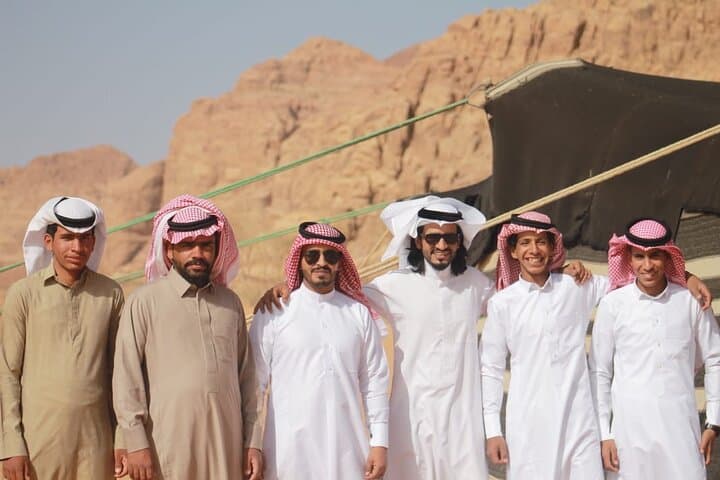
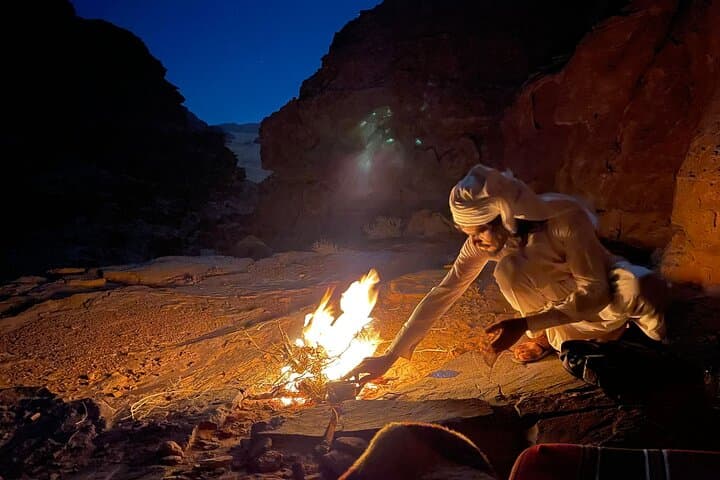
The Bedouin camp is practical and rich with hospitality: bread, hummus, stews and zarb (meat and vegetables slow-cooked underground) sustain you for both days. Nights are for stargazing—the sky here is one of the best in the region, as the desert’s thin air and lack of light pollution render constellations sharp and immediate.
Practical edge: water is your governing resource—carry at least 3 liters for day hikes in warm months, more if you plan to climb. Footwear should be rugged and grippy; many routes are loose and require steady footing. Temperatures swing hard after sunset—bring breathable layers and a wind shell. Plan hikes in the morning or late afternoon to avoid the worst desert heat, and keep a small headlamp for walking camp paths after dark.
This two-day itinerary suits travelers who want a hands-on desert experience without remote expedition logistics—the Bedouin hosts manage cooking, transport and camps, while you handle the walking. The result is immediate: harsh landscape, careful tradition, and a night that compels you to look up.
moderate.
2 days (approx. 48 hours).
Good baseline fitness; able to handle several short steep scrambles and sustained walking on sand and rock.
Yes—camps and short walks are family-friendly, but discuss mobility and heat tolerance with the operator; infants require sun protection and frequent breaks.
Expect a steep scramble: roughly 3–4 km one-way with significant elevation gain; it’s challenging but achievable for fit hikers comfortable on uneven terrain.
All meals during the tour are included—breakfast, picnic lunches and a traditional zarb dinner at the Bedouin camp.
Camps use traditional Bedouin tents with mats and blankets; conditions are basic but warm and culturally immersive.
Charging may be limited at camps; bring portable batteries for phones and cameras to ensure power for photos and navigation.
Cell coverage is patchy in the valley; expect limited service near villages and none in deeper canyons—plan accordingly.
Wadi Rum bears traces of Nabatean civilization and later became a base for T.E. Lawrence during the Arab Revolt; Bedouin tribes have lived and guided in the desert for generations.
The desert ecosystem is fragile—pack out waste, minimize campfire impact and follow local guidance to protect rock art and habitats.
Bedouin Nomad Adventures operates guided outdoor trips and adventures with an emphasis on safety, stewardship, and memorable experiences.
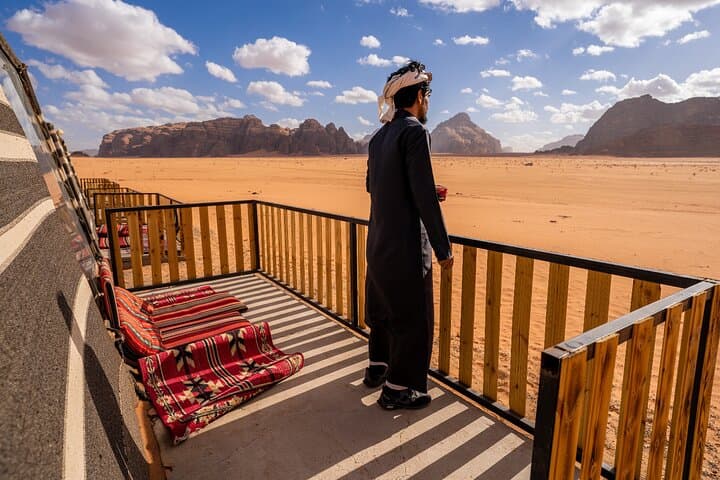
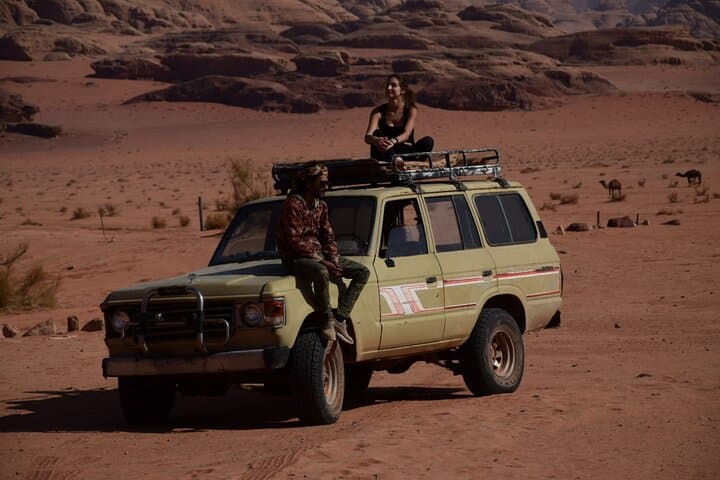
You step out of the jeep and the desert immediately rearranges your scale. Towering red sandstone walls fold into sheets of shadow; wind-blown dunes slope like slow waves; a single Bedouin tent hovers on the horizon, smoke rising from a zarb oven. Over two days, this Wadi Rum tour hands you a condensed primer on the desert’s motion: short climbs to lookouts, canyon walks into rock-carved ruins, a night under an enormous sky punctured by stars.
You step out of the jeep and the desert immediately rearranges your scale. Towering red sandstone walls fold into sheets of shadow; wind-blown dunes slope like slow waves; a single Bedouin tent hovers on the horizon, smoke rising from a zarb oven. Over two days, this Wadi Rum tour hands you a condensed primer on the desert’s motion: short climbs to lookouts, canyon walks into rock-carved ruins, a night under an enormous sky punctured by stars.
Geology here reads like a slow-motion film. The sandstones and granite of Wadi Rum were sculpted over millions of years—wind, water and temperature have hollowed natural bridges and stacked pinnacles that climbers and hikers now use as routes and viewpoints. Human history is layered on top: Nabatean inscriptions and a small temple speak to ancient desert worship, while modern legend arrives in the form of Lawrence of Arabia’s wash and the Bedouin families who still guide, cook and camp here.
Day one commonly pushes toward Jabal Umm ad Dami, Wadi Rum’s highest point at roughly 1,850 meters. A motivated ascent from a nearby trailhead is a steep, rocky scramble—expect roughly 3–4 km one way and an elevation gain in the order of 600–700 meters depending on where you start. Day two’s highlight loop is a series of shorter hikes and 4x4 hops: Khazali Canyon’s petroglyphs and the long ledge views from Burdah and Um Frouth natural bridges are accessible in 20–90 minute spur walks.
The Bedouin camp is practical and rich with hospitality: bread, hummus, stews and zarb (meat and vegetables slow-cooked underground) sustain you for both days. Nights are for stargazing—the sky here is one of the best in the region, as the desert’s thin air and lack of light pollution render constellations sharp and immediate.
Practical edge: water is your governing resource—carry at least 3 liters for day hikes in warm months, more if you plan to climb. Footwear should be rugged and grippy; many routes are loose and require steady footing. Temperatures swing hard after sunset—bring breathable layers and a wind shell. Plan hikes in the morning or late afternoon to avoid the worst desert heat, and keep a small headlamp for walking camp paths after dark.
This two-day itinerary suits travelers who want a hands-on desert experience without remote expedition logistics—the Bedouin hosts manage cooking, transport and camps, while you handle the walking. The result is immediate: harsh landscape, careful tradition, and a night that compels you to look up.