THE ADVENTURE COLLECTIVE® · Independent discovery and booking for outdoor travel

Spend two days crossing the Alay Valley by 4x4, sleeping in a yurt at Tulpar Lake and hiking to Lenin Peak’s base camp. This compact itinerary mixes high‑altitude scenery, nomadic culture, and classic mountaineering history.
Spend two days crossing the Alay Valley by 4x4, sleeping in a yurt at Tulpar Lake and hiking to Lenin Peak’s base camp. This compact itinerary mixes high‑altitude scenery, nomadic culture, and classic mountaineering history.
A low sun slices the Alay Valley as your 4x4 hums toward Tulpar Lake, the Pamir ridgeline cutting a clean silhouette against the sky. In two days you move from roadside passes and colorful geopark slopes into high alpine meadows, spend a night in a traditional yurt next to the lake, and walk up to the mountaineers’ base camp where prayer flags and memorial plaques mark decades of Himalayan effort.
Verified experiences and guided adventures in the surrounding area.
Operated by OSH TRIPS · Sary-Mogol, Osh Region
A low sun slices the Alay Valley as your 4x4 hums toward Tulpar Lake, the Pamir ridgeline cutting a clean silhouette against the sky. In two days you move from roadside passes and colorful geopark slopes into high alpine meadows, spend a night in a traditional yurt next to the lake, and walk up to the mountaineers’ base camp where prayer flags and memorial plaques mark decades of Himalayan effort.
The route threads Taldyk Pass (≈3,400 m) and Sary-Mogol village, places shaped by glacial carving and active tectonics where the Pamir and Alay ranges meet. Lenin Peak itself—one of Central Asia’s classic climbs—carries a Soviet-era climbing history; the north-side base camps retain that mixed legacy of international alpinism and local nomadic life.
Expect varied terrain: paved and gravel roads, short scree sections, grassy slopes dotted with alpine flowers, and moraine fields near the base camp. Wildlife is spare but distinct—red marmots pop from burrows; highland birds circle thermals.
Practical guidance: the morning hike to base camp typically takes 3–5 hours (6–12 km round-trip) with 300–600 m of elevation gain from the yurt camp; pushing to the Travellers’ Pass reaches 4,800 m and requires additional time, acclimatization, and judgment. Nights are in yurts with basic facilities; transport uses 4WD vehicles. Carry layered clothing, sun protection, and extra water at altitude. Start hikes early for stable weather, and allow a slow pace—altitude, not distance, sets the day’s limits.
moderate.
2 days.
Suitable for reasonably fit travelers who can manage sustained uphill hiking at altitude; good cardio and steady pace important.
The walk from the yurt camp to base camp typically takes 3–5 hours one way, depending on pace and how high you go; round‑trip distances are usually 6–12 km.
The itinerary is physically moderate but involves high altitude; children and those with cardiovascular issues should consult a doctor and consider acclimatization time.
Overnight is in traditional yurts near Tulpar Lake with simple facilities; meals include local lunches and communal dinners in the yurt camp.
No technical climbing skill is required to reach the base camp; however, attempting higher passes (like Travellers' Pass at 4,800 m) requires good acclimatization and trekking experience.
Lenin Peak became a focus of Soviet and international alpinism in the 20th century; the north approach remains a classic access point to the Pamir massif.
This is fragile high‑alpine pasture and campland—stick to established trails, pack out waste, and avoid disturbing grazing livestock and nesting birds.
OSH TRIPS operates guided outdoor trips and adventures with an emphasis on safety, stewardship, and memorable experiences.
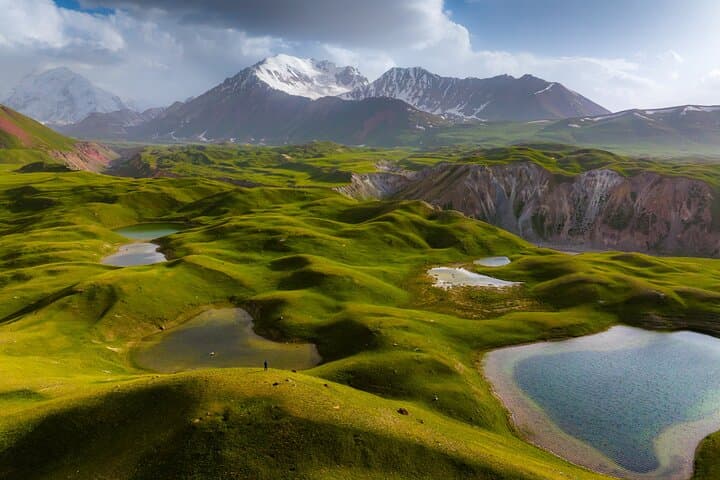
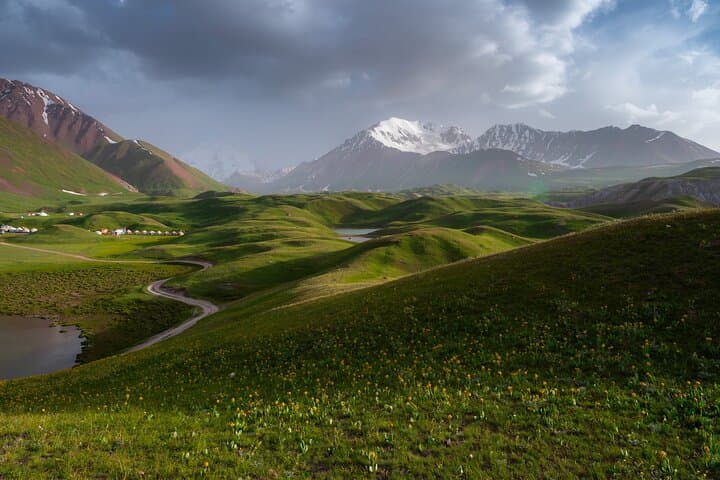
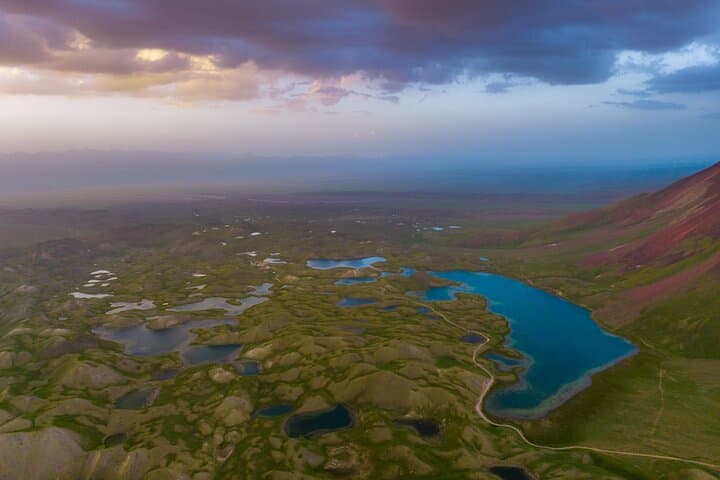
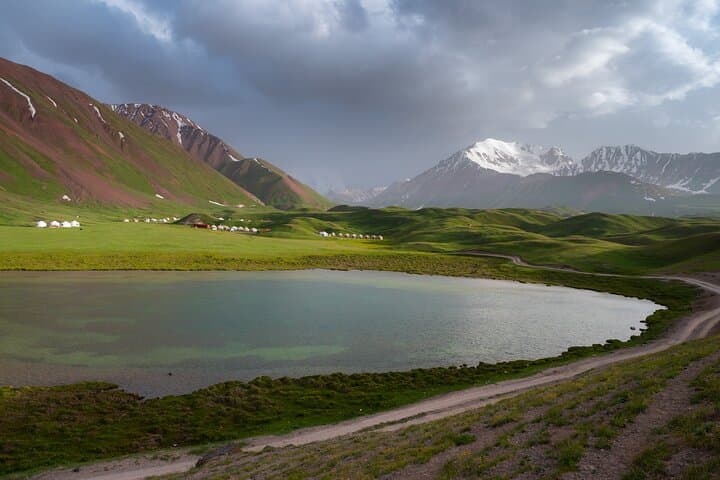
A low sun slices the Alay Valley as your 4x4 hums toward Tulpar Lake, the Pamir ridgeline cutting a clean silhouette against the sky. In two days you move from roadside passes and colorful geopark slopes into high alpine meadows, spend a night in a traditional yurt next to the lake, and walk up to the mountaineers’ base camp where prayer flags and memorial plaques mark decades of Himalayan effort.
A low sun slices the Alay Valley as your 4x4 hums toward Tulpar Lake, the Pamir ridgeline cutting a clean silhouette against the sky. In two days you move from roadside passes and colorful geopark slopes into high alpine meadows, spend a night in a traditional yurt next to the lake, and walk up to the mountaineers’ base camp where prayer flags and memorial plaques mark decades of Himalayan effort.
The route threads Taldyk Pass (≈3,400 m) and Sary-Mogol village, places shaped by glacial carving and active tectonics where the Pamir and Alay ranges meet. Lenin Peak itself—one of Central Asia’s classic climbs—carries a Soviet-era climbing history; the north-side base camps retain that mixed legacy of international alpinism and local nomadic life.
Expect varied terrain: paved and gravel roads, short scree sections, grassy slopes dotted with alpine flowers, and moraine fields near the base camp. Wildlife is spare but distinct—red marmots pop from burrows; highland birds circle thermals.
Practical guidance: the morning hike to base camp typically takes 3–5 hours (6–12 km round-trip) with 300–600 m of elevation gain from the yurt camp; pushing to the Travellers’ Pass reaches 4,800 m and requires additional time, acclimatization, and judgment. Nights are in yurts with basic facilities; transport uses 4WD vehicles. Carry layered clothing, sun protection, and extra water at altitude. Start hikes early for stable weather, and allow a slow pace—altitude, not distance, sets the day’s limits.