THE ADVENTURE COLLECTIVE® · Independent discovery and booking for outdoor travel

A private 2‑day 4x4 loop from Cairo that pairs Bahariya’s oasis history with the unearthly rock sculptures of the Black and White Deserts. Expect dusty drives, short hikes, nights around a campfire and close‑up views of Crystal Mountain and desert mushroom rocks.
A private 2‑day 4x4 loop from Cairo that pairs Bahariya’s oasis history with the unearthly rock sculptures of the Black and White Deserts. Expect dusty drives, short hikes, nights around a campfire and close‑up views of Crystal Mountain and desert mushroom rocks.
Dawn strips the city lights from the rear window as a private 4x4 threads out of Cairo and into a powder‑dry horizon. After roughly 360 km of desert tarmac and wadis you reach Bahariya Oasis, where palm lines and spring water hint at a long human presence before the dunes reclaim the map.
Verified experiences and guided adventures in the surrounding area.
Operated by Egypt tours Gateway · Bahariya Oasis (El-Bawiti), Giza Governorate
Dawn strips the city lights from the rear window as a private 4x4 threads out of Cairo and into a powder‑dry horizon. After roughly 360 km of desert tarmac and wadis you reach Bahariya Oasis, where palm lines and spring water hint at a long human presence before the dunes reclaim the map.
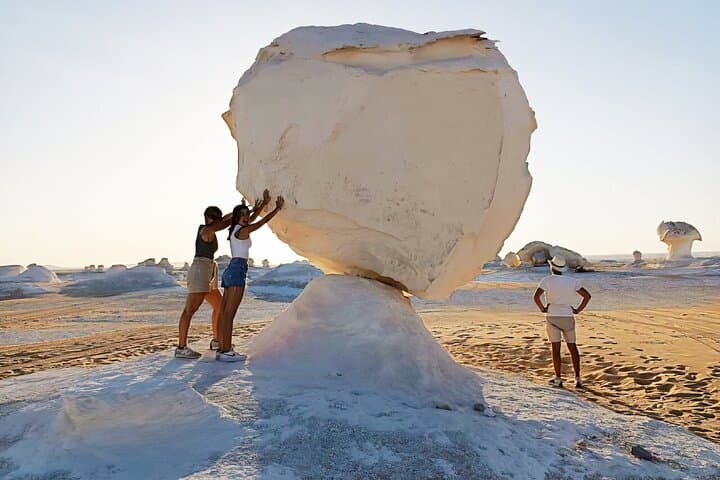
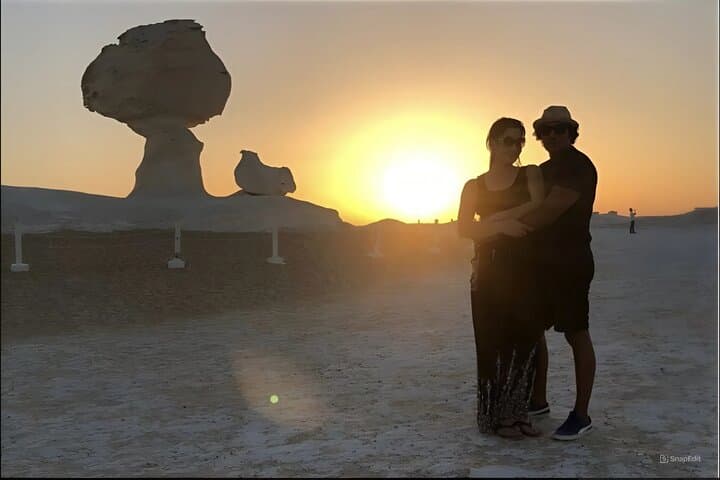
This two‑day loop mixes geology and culture: Bahariya’s archaeological pockets (including the famous Valley of the Golden Mummies) point to millennia of oasis life, while the Black Desert’s basalt mounds and the shimmering quartz of Crystal Mountain show volcanic and hydrothermal processes at work. The White Desert’s wind‑sculpted chalk formations—giant mushroom and pedestal rocks—are chalky cathedral forms shaped by sand and time. Local Bedouin communities maintain seasonal grazing and small agricultural plots; you’ll likely hear their stories around the campfire.
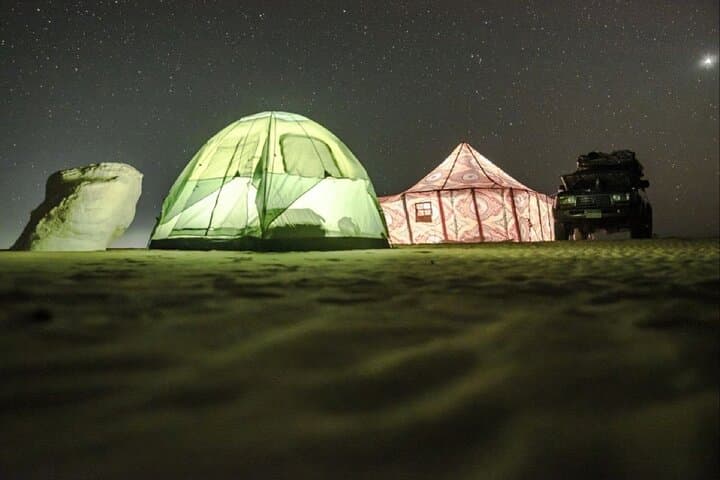
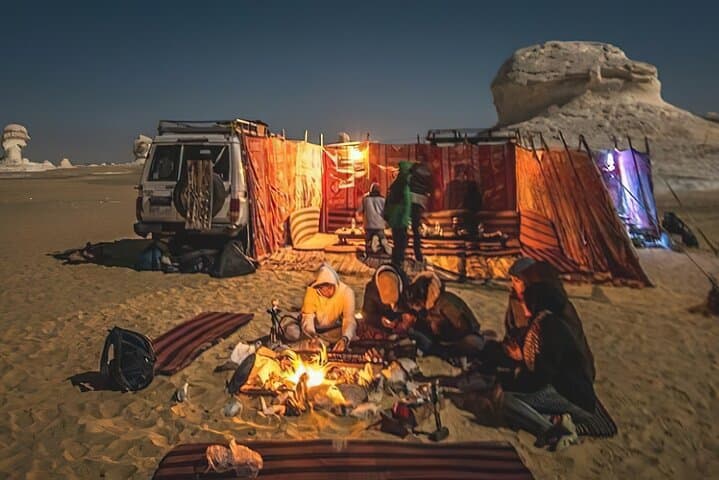
Expect compact drives in a 4x4, short hikes over mixed terrain (sand, gravel and flat rock), and an overnight under open sky—either in a simple desert camp or a Farafra‑area hotel depending on logistics. Meals are full board; entrance fees and a desert guide are included. Nights get cold—layers are essential. Water is scarce and sun is relentless: carry at least 2 liters, sun protection and footwear that handles both shifting sand and sharp quartz rubble.
Best times are autumn through spring for cooler days and clearer nights. Respect fragile desert crusts, follow your guide’s route to avoid cultural sites, and leave no trace of your campsite when you go.
moderate.
2 days.
Light to moderate fitness—able to manage short walks over uneven sand and rock and tolerate bumpy 4x4 rides
The transfer is about 360 km and typically takes around 4 hours by private vehicle, depending on traffic and stops.
Accommodations vary by departure—either a basic desert camp with sleeping mats and blankets or an overnight at a Farafra‑area hotel, confirmed at booking.
Yes—this tour includes three meals (full board), entrance fees to listed sites and a desert guide, as stated in the itinerary.
The operator notes the tour is accessible for all fitness levels, but expect bumpy 4x4 travel and some short walks over uneven ground—discuss special needs when booking.
Bahariya Oasis has Pharaonic and Greco‑Roman archaeological sites, including discoveries like the Valley of the Golden Mummies that reveal the area’s ancient burial practices.
The White Desert’s chalk formations are fragile—stay on routes, avoid carving or climbing fragile pinnacles, and pack out all waste to protect cryptic desert life.
Egypt tours Gateway operates guided outdoor trips and adventures with an emphasis on safety, stewardship, and memorable experiences.
Dawn strips the city lights from the rear window as a private 4x4 threads out of Cairo and into a powder‑dry horizon. After roughly 360 km of desert tarmac and wadis you reach Bahariya Oasis, where palm lines and spring water hint at a long human presence before the dunes reclaim the map.
Dawn strips the city lights from the rear window as a private 4x4 threads out of Cairo and into a powder‑dry horizon. After roughly 360 km of desert tarmac and wadis you reach Bahariya Oasis, where palm lines and spring water hint at a long human presence before the dunes reclaim the map.
This two‑day loop mixes geology and culture: Bahariya’s archaeological pockets (including the famous Valley of the Golden Mummies) point to millennia of oasis life, while the Black Desert’s basalt mounds and the shimmering quartz of Crystal Mountain show volcanic and hydrothermal processes at work. The White Desert’s wind‑sculpted chalk formations—giant mushroom and pedestal rocks—are chalky cathedral forms shaped by sand and time. Local Bedouin communities maintain seasonal grazing and small agricultural plots; you’ll likely hear their stories around the campfire.
Expect compact drives in a 4x4, short hikes over mixed terrain (sand, gravel and flat rock), and an overnight under open sky—either in a simple desert camp or a Farafra‑area hotel depending on logistics. Meals are full board; entrance fees and a desert guide are included. Nights get cold—layers are essential. Water is scarce and sun is relentless: carry at least 2 liters, sun protection and footwear that handles both shifting sand and sharp quartz rubble.
Best times are autumn through spring for cooler days and clearer nights. Respect fragile desert crusts, follow your guide’s route to avoid cultural sites, and leave no trace of your campsite when you go.