THE ADVENTURE COLLECTIVE® · Independent discovery and booking for outdoor travel

Two days of guided mountain biking from Marrakech into the High Atlas, riding passes, Berber villages and rocky singletrack with an overnight in a rustic lodge. Expect 3–4 hours of riding per day, mixed terrain, and local hospitality.
Two days of guided mountain biking from Marrakech into the High Atlas, riding passes, Berber villages and rocky singletrack with an overnight in a rustic lodge. Expect 3–4 hours of riding per day, mixed terrain, and local hospitality.
You leave Marrakech before dawn, the city shrinking as the road climbs toward the southern flank of Mount Toubkal. By mid-morning the air is thinner and cooler; terraces and dry-stone walls slide past in a pattern the mountains repeat for centuries. The first day routes out of Imsker climb a rolling road to Tamatert Pass then drop you into a series of Berber villages where beehive granaries cling to steep slopes and children wave from courtyards.
Verified experiences and guided adventures in the surrounding area.
Operated by Toubkal Trekking · Imsker, Marrakech-Safi
You leave Marrakech before dawn, the city shrinking as the road climbs toward the southern flank of Mount Toubkal. By mid-morning the air is thinner and cooler; terraces and dry-stone walls slide past in a pattern the mountains repeat for centuries. The first day routes out of Imsker climb a rolling road to Tamatert Pass then drop you into a series of Berber villages where beehive granaries cling to steep slopes and children wave from courtyards.
Geology here is transparent: folded, uplifted metamorphic rock shaped by the collision of the African and Eurasian plates. Culture is immediate — Amazigh (Berber) hamlets, tzintzin dishes, and lodges run by local families that keep the day grounded. The highest peaks around Toubkal push weather into quick changes; expect sun one hour and wind-driven cloud the next.
Practicalities: this is a small-group, two-day loop with roughly 3–4 hours of riding each day on mixed terrain — dirt roads, rocky singletrack and steep, technical descents. Elevations commonly sit between ~1,400–2,300 m, so moderate fitness and confident off-road handling are required. Guides manage food, overnight lodging in a rustic Berber lodge, and transfers back to Marrakech.
Pack a proper helmet, layered clothing for cold nights, a basic repair kit, and 2–3 liters of water capacity. Start early to avoid the hottest valley stretches and let your guide set pace for loose descents.
This tour blends technical riding with cultural contact: expect honest climbs, fast singletrack, and evenings in a lodge where mountain air pushes you toward rest.
moderate.
2 days.
Moderate cardiovascular fitness and leg strength; able to ride sustained climbs and handle technical descents for 3–4 hours daily.
Yes — the tour includes use of a mountain bike, but bring personal pedals or gloves if you prefer your own setup.
Minimum age is 15; younger riders must be capable of handling steep, technical terrain and meet the fitness requirement.
Expect 3–4 hours of riding each day with sustained climbs and technical descents; a moderate fitness level is required.
Yes — a valid passport is required on the day of travel and passport details are collected at booking.
The High Atlas are shaped by the collision of tectonic plates and long human habitation by Amazigh communities; villages still use traditional dry-stone terraces and seasonal transhumance.
Trails cross fragile mountain soils and grazing areas — stick to established tracks, pack out waste, and support local guides to keep tourism sustainable.
Toubkal Trekking operates guided outdoor trips and adventures with an emphasis on safety, stewardship, and memorable experiences.
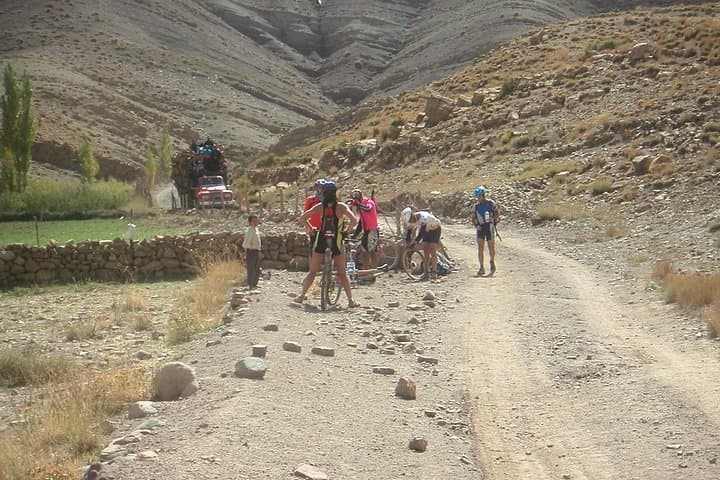
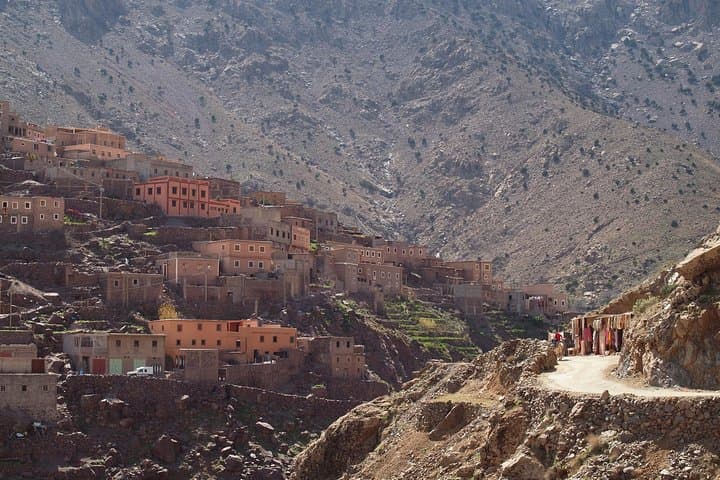
You leave Marrakech before dawn, the city shrinking as the road climbs toward the southern flank of Mount Toubkal. By mid-morning the air is thinner and cooler; terraces and dry-stone walls slide past in a pattern the mountains repeat for centuries. The first day routes out of Imsker climb a rolling road to Tamatert Pass then drop you into a series of Berber villages where beehive granaries cling to steep slopes and children wave from courtyards.
You leave Marrakech before dawn, the city shrinking as the road climbs toward the southern flank of Mount Toubkal. By mid-morning the air is thinner and cooler; terraces and dry-stone walls slide past in a pattern the mountains repeat for centuries. The first day routes out of Imsker climb a rolling road to Tamatert Pass then drop you into a series of Berber villages where beehive granaries cling to steep slopes and children wave from courtyards.
Geology here is transparent: folded, uplifted metamorphic rock shaped by the collision of the African and Eurasian plates. Culture is immediate — Amazigh (Berber) hamlets, tzintzin dishes, and lodges run by local families that keep the day grounded. The highest peaks around Toubkal push weather into quick changes; expect sun one hour and wind-driven cloud the next.
Practicalities: this is a small-group, two-day loop with roughly 3–4 hours of riding each day on mixed terrain — dirt roads, rocky singletrack and steep, technical descents. Elevations commonly sit between ~1,400–2,300 m, so moderate fitness and confident off-road handling are required. Guides manage food, overnight lodging in a rustic Berber lodge, and transfers back to Marrakech.
Pack a proper helmet, layered clothing for cold nights, a basic repair kit, and 2–3 liters of water capacity. Start early to avoid the hottest valley stretches and let your guide set pace for loose descents.
This tour blends technical riding with cultural contact: expect honest climbs, fast singletrack, and evenings in a lodge where mountain air pushes you toward rest.