THE ADVENTURE COLLECTIVE® · Independent discovery and booking for outdoor travel

Two days of Cambodia’s greatest temple sites: sunrise at Angkor Wat, the smiling faces of Bayon, a Tonle Sap boat ride, and the jungle ruins of Beng Mealea and Phnom Kulen. Practical tips on tickets, timing, and what to pack for long temple days.
Two days of Cambodia’s greatest temple sites: sunrise at Angkor Wat, the smiling faces of Bayon, a Tonle Sap boat ride, and the jungle ruins of Beng Mealea and Phnom Kulen. Practical tips on tickets, timing, and what to pack for long temple days.
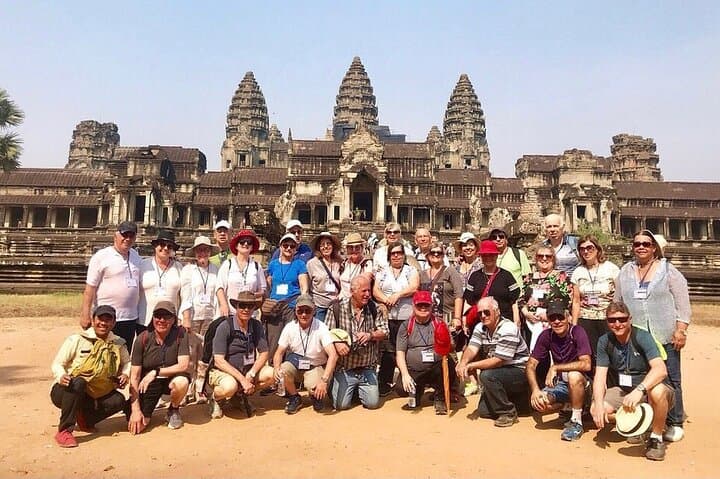
Morning light strips across sandstone terraces as your guide steers an air‑conditioned van out of Siem Reap toward the stone forest of Angkor. You step into a city of carved faces and root‑wrapped galleries where time seems to push and pull on the stones—Bayon’s smiling towers watch the horizon while Angkor Wat’s westward gaze holds the day’s heat.
Verified experiences and guided adventures in the surrounding area.
Operated by Hok Cambodia Journeys · Siem Reap, Siem Reap Province
Morning light strips across sandstone terraces as your guide steers an air‑conditioned van out of Siem Reap toward the stone forest of Angkor. You step into a city of carved faces and root‑wrapped galleries where time seems to push and pull on the stones—Bayon’s smiling towers watch the horizon while Angkor Wat’s westward gaze holds the day’s heat.
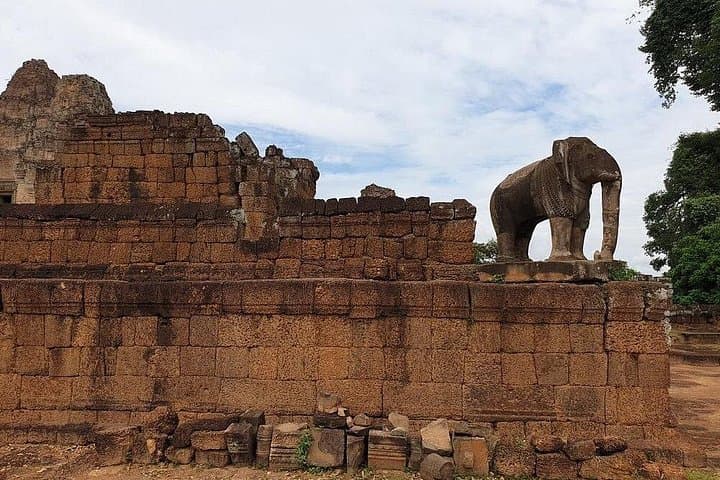
The itinerary threads two days of Khmer history with natural high points: Angkor Wat and Angkor Thom’s Bayon on day one, a Tonle Sap floating‑village boat ride, then Phnom Kulen, Banteay Srei and the jungle‑claimed Beng Mealea on day two. Angkor’s temples date primarily to the 9th–12th centuries, with Angkor Wat built by Suryavarman II and Phnom Kulen long regarded as a ceremonial birthplace of the Khmer state. Geology here is lowland sandstone atop an alluvial plain; the monsoon swells and shrinks Tonle Sap seasonally, giving life to its floating communities.
Practical notes: buy your Angkor pass early in the morning at the ticket center, plan for long days on uneven stone and packed dirt, and dress respectfully (shoulders and knees covered). Bring sun protection, a reusable water bottle, and small bills for market purchases and tips. Start temples at dawn to avoid crowds and heat; save Beng Mealea for the afternoon when shafts of light cut through its fallen galleries.
This two‑day circuit balances cultural immersion with manageable logistics—expect long walking periods, easy vehicle transfers, and a rewarding mix of archaeology and living river life.
moderate.
2 days (approx. 10–12 hours per day).
Suitable for travelers with reasonable mobility—expect hours on foot over uneven stone, steps, and sandy tracks.
Yes—this tour requires an Angkor pass; guides typically arrange purchase at the start of day one so you can enter Angkor Wat and other sites.
Most temple complexes have uneven paths and steps; accessibility is limited—contact the operator in advance for vehicle drop‑offs and adapted routes where possible.
Tipping is customary for good service; bring small USD bills and tip guides and drivers separately at the end of each day.
Photography is allowed at most sites, but be respectful at active shrines and avoid flash inside dark sanctuaries or where signage requests otherwise.
Angkor’s core monuments were constructed between the 9th and 12th centuries, with Angkor Wat built under Suryavarman II; Phnom Kulen is historically significant as an early royal ceremonial site.
Tonle Sap is a UNESCO Biosphere Reserve—visit with respect, avoid single‑use plastics, and follow local guidance to minimize impact on wildlife and communities.
Hok Cambodia Journeys operates guided outdoor trips and adventures with an emphasis on safety, stewardship, and memorable experiences.
Morning light strips across sandstone terraces as your guide steers an air‑conditioned van out of Siem Reap toward the stone forest of Angkor. You step into a city of carved faces and root‑wrapped galleries where time seems to push and pull on the stones—Bayon’s smiling towers watch the horizon while Angkor Wat’s westward gaze holds the day’s heat.
Morning light strips across sandstone terraces as your guide steers an air‑conditioned van out of Siem Reap toward the stone forest of Angkor. You step into a city of carved faces and root‑wrapped galleries where time seems to push and pull on the stones—Bayon’s smiling towers watch the horizon while Angkor Wat’s westward gaze holds the day’s heat.
The itinerary threads two days of Khmer history with natural high points: Angkor Wat and Angkor Thom’s Bayon on day one, a Tonle Sap floating‑village boat ride, then Phnom Kulen, Banteay Srei and the jungle‑claimed Beng Mealea on day two. Angkor’s temples date primarily to the 9th–12th centuries, with Angkor Wat built by Suryavarman II and Phnom Kulen long regarded as a ceremonial birthplace of the Khmer state. Geology here is lowland sandstone atop an alluvial plain; the monsoon swells and shrinks Tonle Sap seasonally, giving life to its floating communities.
Practical notes: buy your Angkor pass early in the morning at the ticket center, plan for long days on uneven stone and packed dirt, and dress respectfully (shoulders and knees covered). Bring sun protection, a reusable water bottle, and small bills for market purchases and tips. Start temples at dawn to avoid crowds and heat; save Beng Mealea for the afternoon when shafts of light cut through its fallen galleries.
This two‑day circuit balances cultural immersion with manageable logistics—expect long walking periods, easy vehicle transfers, and a rewarding mix of archaeology and living river life.