THE ADVENTURE COLLECTIVE® · Independent discovery and booking for outdoor travel

Explore Angkor’s greatest temples over two full days: Bayon’s faces, Ta Prohm’s strangling roots, the pink carvings of Banteay Srei, and a Phnom Bakheng sunset. This guide covers what to expect, how to prepare, and practical tips for a smooth visit.
Explore Angkor’s greatest temples over two full days: Bayon’s faces, Ta Prohm’s strangling roots, the pink carvings of Banteay Srei, and a Phnom Bakheng sunset. This guide covers what to expect, how to prepare, and practical tips for a smooth visit.
You step from a shaded tuk‑tuk into a courtyard where stone faces watch the morning light. Roots have wrapped themselves around Ta Prohm like a hands-off reminder of time, and the broad causeways of Angkor Thom carry the hush of centuries. Over two days you move through sandstone chambers, climb temple-mountains, and stand where rivers of pilgrims once flowed.
Verified experiences and guided adventures in the surrounding area.
Operated by Sharing tour Cambodia · Siem Reap, Siem Reap Province
You step from a shaded tuk‑tuk into a courtyard where stone faces watch the morning light. Roots have wrapped themselves around Ta Prohm like a hands-off reminder of time, and the broad causeways of Angkor Thom carry the hush of centuries. Over two days you move through sandstone chambers, climb temple-mountains, and stand where rivers of pilgrims once flowed.
The Angkor complex grew under the Khmer Empire (9th–15th centuries). Angkor Wat, begun under Suryavarman II in the early 12th century, is carved from sandstone and aligned to celestial patterns; nearby Bayon’s smiling towers are Jayavarman VII’s fusion of piety and power. Banteay Srei, set farther out, is built of pink sandstone and showcases some of the most intricate bas‑reliefs in the region. The geology—soft sandstone over laterite—gives the ruins their layered look and also makes them vulnerable to erosion, which is why many conservation projects shape the visitor experience.
Practicalities are straightforward: tours typically run long days with lots of walking on uneven stone, exposed staircases, and dusty tracks between sites. Buy your Angkor Archaeological Park pass at the official center before arrival (not always included), wear breathable clothing that covers shoulders and knees for temple entry, and carry ample water and sun protection. Aim for early starts to avoid heat and the biggest crowds; Phnom Bakheng is a common sunset viewpoint but fills fast. Respect signs, don’t touch carvings, and try local meals between temple visits—khmer cuisine refuels better than you’d expect. With basic planning—good shoes, respectful dress, and a slow pace—the two‑day circuit delivers history, scale, and moments of quiet wonder.
easy.
2 days (approx. 9–10 hours/day).
Suitable for basic fitness—requires prolonged walking and climbing short flights of stairs; not strenuous hiking.
Most independent tours require you to purchase the Angkor Park pass separately at the official ticket center in Siem Reap; confirm with your operator before arrival.
Expect several hours of walking on uneven stone, plus short climbs up temple-mountains; days often run 8–10 hours with lunch and short rest stops.
Some tours include bottled water and a lunch at a local restaurant, but always confirm inclusions; carry extra water for hot days.
Sunrise at Angkor Wat and sunset at Phnom Bakheng are popular but crowded; if prioritized, plan early starts and arrive well before the peak time.
The Angkor complex was the heart of the Khmer Empire; temples shifted from Hindu to Buddhist use over centuries, reflected in mixed iconography and later restorations.
High visitor numbers and soft sandstone make conservation essential—stay on marked paths, avoid touching carvings, and support local guides and conservation fees when possible.
Sharing tour Cambodia operates guided outdoor trips and adventures with an emphasis on safety, stewardship, and memorable experiences.


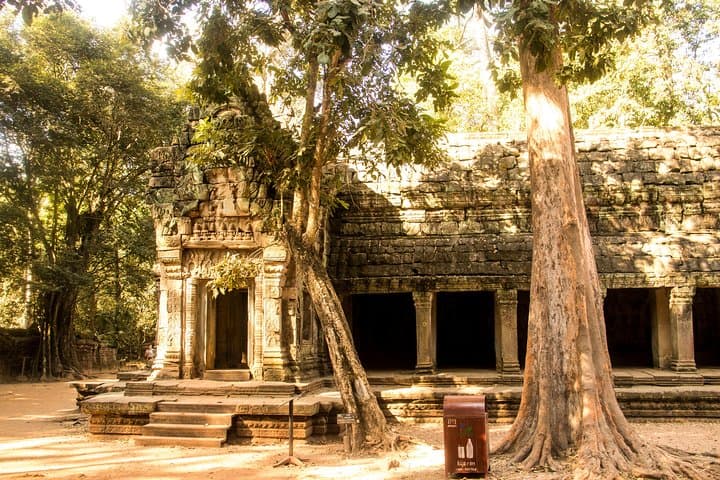

You step from a shaded tuk‑tuk into a courtyard where stone faces watch the morning light. Roots have wrapped themselves around Ta Prohm like a hands-off reminder of time, and the broad causeways of Angkor Thom carry the hush of centuries. Over two days you move through sandstone chambers, climb temple-mountains, and stand where rivers of pilgrims once flowed.
You step from a shaded tuk‑tuk into a courtyard where stone faces watch the morning light. Roots have wrapped themselves around Ta Prohm like a hands-off reminder of time, and the broad causeways of Angkor Thom carry the hush of centuries. Over two days you move through sandstone chambers, climb temple-mountains, and stand where rivers of pilgrims once flowed.
The Angkor complex grew under the Khmer Empire (9th–15th centuries). Angkor Wat, begun under Suryavarman II in the early 12th century, is carved from sandstone and aligned to celestial patterns; nearby Bayon’s smiling towers are Jayavarman VII’s fusion of piety and power. Banteay Srei, set farther out, is built of pink sandstone and showcases some of the most intricate bas‑reliefs in the region. The geology—soft sandstone over laterite—gives the ruins their layered look and also makes them vulnerable to erosion, which is why many conservation projects shape the visitor experience.
Practicalities are straightforward: tours typically run long days with lots of walking on uneven stone, exposed staircases, and dusty tracks between sites. Buy your Angkor Archaeological Park pass at the official center before arrival (not always included), wear breathable clothing that covers shoulders and knees for temple entry, and carry ample water and sun protection. Aim for early starts to avoid heat and the biggest crowds; Phnom Bakheng is a common sunset viewpoint but fills fast. Respect signs, don’t touch carvings, and try local meals between temple visits—khmer cuisine refuels better than you’d expect. With basic planning—good shoes, respectful dress, and a slow pace—the two‑day circuit delivers history, scale, and moments of quiet wonder.