THE ADVENTURE COLLECTIVE® · Independent discovery and booking for outdoor travel

Watch Angkor Wat awake at sunrise and chase golden light to a Phnom Bakheng sunset on this focused two‑day guided tour. Expect long corridors, jungle‑entwined ruins, and practical tips to navigate crowds and the heat.
Watch Angkor Wat awake at sunrise and chase golden light to a Phnom Bakheng sunset on this focused two‑day guided tour. Expect long corridors, jungle‑entwined ruins, and practical tips to navigate crowds and the heat.
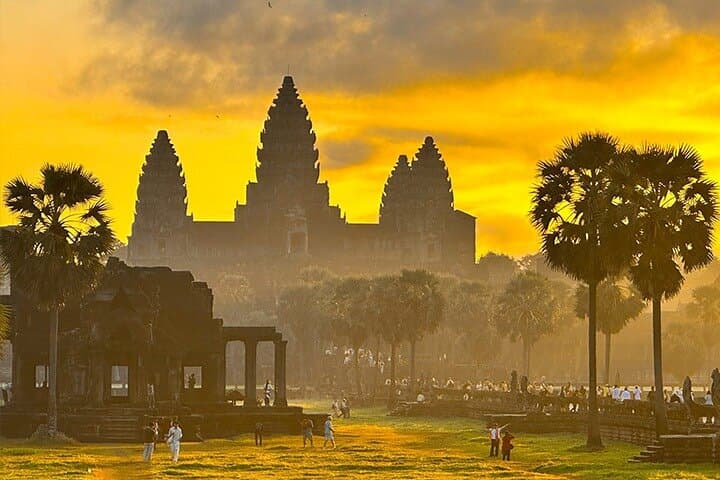
Pre-dawn mist lifts from the moat and the first shafts of light slip across Angkor Wat’s stone faces. You stand at the eastern causeway as the temple wakes: pigeons scatter, mossed bas-reliefs take shape, and the jungle beyond seems to inhale. That quiet hour frames two days of deliberate exploration—sunrise at the great temple, a jungle-clad afternoon at Ta Prohm, and a sunset ascent on Phnom Bakheng.
Verified experiences and guided adventures in the surrounding area.
Operated by Pitt Angkor Tour · Siem Reap, Siem Reap
Pre-dawn mist lifts from the moat and the first shafts of light slip across Angkor Wat’s stone faces. You stand at the eastern causeway as the temple wakes: pigeons scatter, mossed bas-reliefs take shape, and the jungle beyond seems to inhale. That quiet hour frames two days of deliberate exploration—sunrise at the great temple, a jungle-clad afternoon at Ta Prohm, and a sunset ascent on Phnom Bakheng.
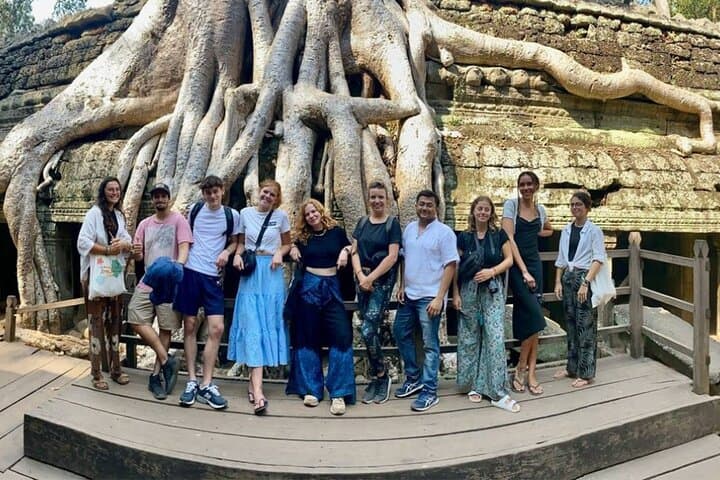
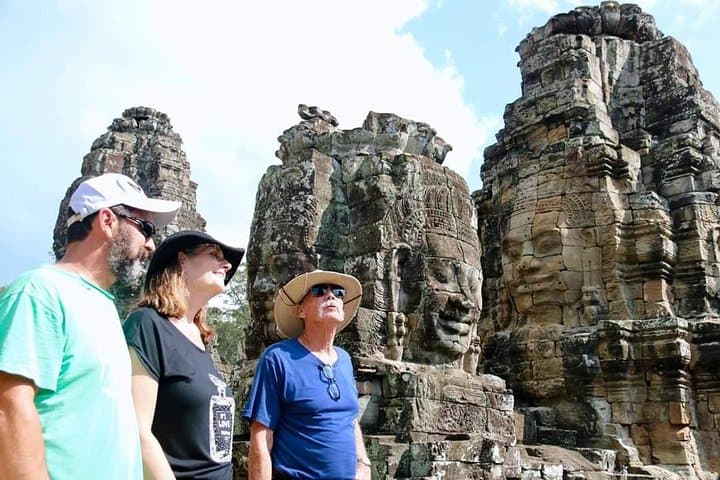
These monuments trace the arc of the Khmer Empire: Angkor Wat’s 12th‑century grandeur, the 10th‑century finesse of Banteay Srei, and Angkor Thom’s Bayon with its carved faces. Geologically the site sits on flat alluvial plains; many temples were raised on laterite foundations with sandstone superstructures, now softened by lichen and tree roots that literally reclaim masonry.
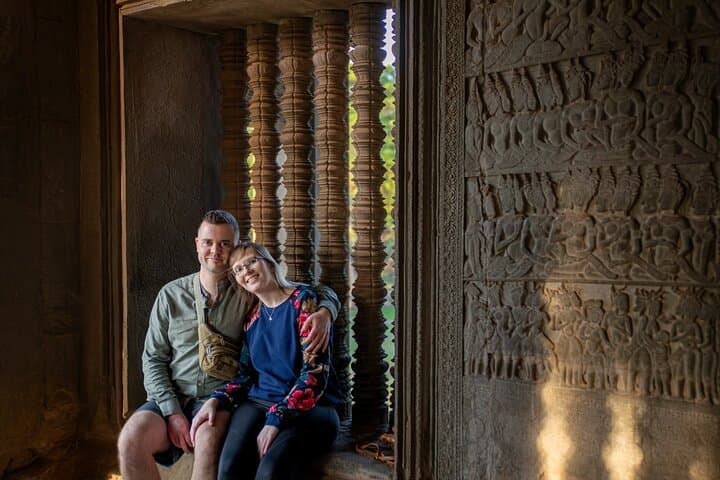
Culture here is tactile—offerings at small shrines, local guides recounting myths, and tuk‑tuk drivers forming the day’s rhythm. Expect long corridors of bas‑relief, steep temple steps, and sections cordoned for conservation.
Practical guidance: start before dawn to beat heat and crowds; bring a headlamp or torch for entry before sunrise. Wear sturdy shoes with grip for slippery stones and roots. Hydrate frequently—Siem Reap’s heat can be sudden—and carry small change for temple donations and restroom stops. Plan for two full days of walking and short drives by tuk‑tuk or minivan; your guide times visits to avoid the heaviest crowds at Angkor Wat and Bayon. Leave no trace: avoid leaning on bas‑reliefs and follow marked routes to help preserve these living ruins.
easy.
2 days (pre-dawn start to sunset each day).
Comfortable walking fitness for several hours a day; must manage uneven steps and short climbs.
Yes—Angkor Park tickets are required and sold at the official ticket center near Siem Reap; purchase before your guided visits to avoid delays.
Access varies—main approaches at Angkor Wat and some sites have level sections, but many temples have steep steps and uneven ground; check with the operator for specific accessibility options.
You may spot long‑tailed macaques around temple grounds and water buffalo in nearby rice fields, especially in quieter hours or on less-visited temple walks.
Tipping is customary; consider a modest tip per person for guides and drivers if service was good—small local currency notes are convenient.
Angkor’s core monuments were built by the Khmer Empire between the 9th and 13th centuries—Angkor Wat dates to the early 12th century while Banteay Srei is a 10th‑century jewel known for delicate carvings.
High visitor numbers stress ancient masonry; follow marked routes, avoid touching bas‑reliefs, and support local conservation efforts and heritage fees.
Pitt Angkor Tour operates guided outdoor trips and adventures with an emphasis on safety, stewardship, and memorable experiences.
Pre-dawn mist lifts from the moat and the first shafts of light slip across Angkor Wat’s stone faces. You stand at the eastern causeway as the temple wakes: pigeons scatter, mossed bas-reliefs take shape, and the jungle beyond seems to inhale. That quiet hour frames two days of deliberate exploration—sunrise at the great temple, a jungle-clad afternoon at Ta Prohm, and a sunset ascent on Phnom Bakheng.
Pre-dawn mist lifts from the moat and the first shafts of light slip across Angkor Wat’s stone faces. You stand at the eastern causeway as the temple wakes: pigeons scatter, mossed bas-reliefs take shape, and the jungle beyond seems to inhale. That quiet hour frames two days of deliberate exploration—sunrise at the great temple, a jungle-clad afternoon at Ta Prohm, and a sunset ascent on Phnom Bakheng.
These monuments trace the arc of the Khmer Empire: Angkor Wat’s 12th‑century grandeur, the 10th‑century finesse of Banteay Srei, and Angkor Thom’s Bayon with its carved faces. Geologically the site sits on flat alluvial plains; many temples were raised on laterite foundations with sandstone superstructures, now softened by lichen and tree roots that literally reclaim masonry.
Culture here is tactile—offerings at small shrines, local guides recounting myths, and tuk‑tuk drivers forming the day’s rhythm. Expect long corridors of bas‑relief, steep temple steps, and sections cordoned for conservation.
Practical guidance: start before dawn to beat heat and crowds; bring a headlamp or torch for entry before sunrise. Wear sturdy shoes with grip for slippery stones and roots. Hydrate frequently—Siem Reap’s heat can be sudden—and carry small change for temple donations and restroom stops. Plan for two full days of walking and short drives by tuk‑tuk or minivan; your guide times visits to avoid the heaviest crowds at Angkor Wat and Bayon. Leave no trace: avoid leaning on bas‑reliefs and follow marked routes to help preserve these living ruins.