THE ADVENTURE COLLECTIVE® · Independent discovery and booking for outdoor travel

A compact private 2-day circuit linking Angkor Wat at sunrise with Phnom Kulen’s waterfalls and a boat ride on Tonle Sap. Expect temple terraces, carved rivers, and stilt villages — all with local transport and a guide.
A compact private 2-day circuit linking Angkor Wat at sunrise with Phnom Kulen’s waterfalls and a boat ride on Tonle Sap. Expect temple terraces, carved rivers, and stilt villages — all with local transport and a guide.
The day begins before dawn: headlamp dim, humidity clinging, pale light spilling across the moat as Angkor Wat’s silhouette grows teeth-sharp against the sky.
Verified experiences and guided adventures in the surrounding area.
Operated by Sightseeing Cambodia · Siem Reap, Siem Reap Province
The day begins before dawn: headlamp dim, humidity clinging, pale light spilling across the moat as Angkor Wat’s silhouette grows teeth-sharp against the sky.
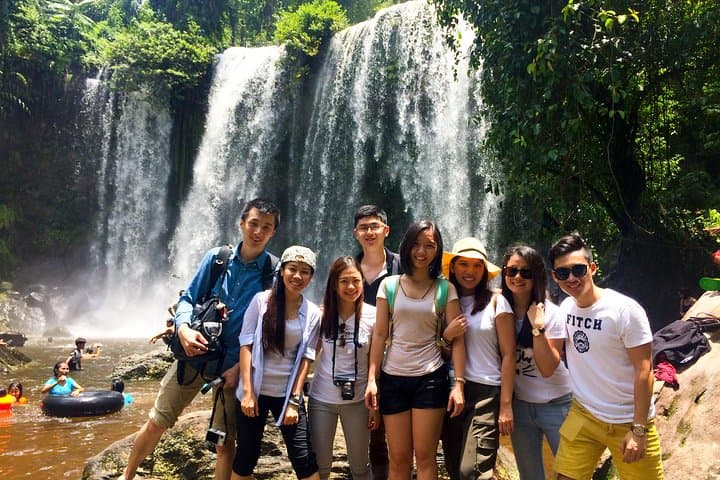
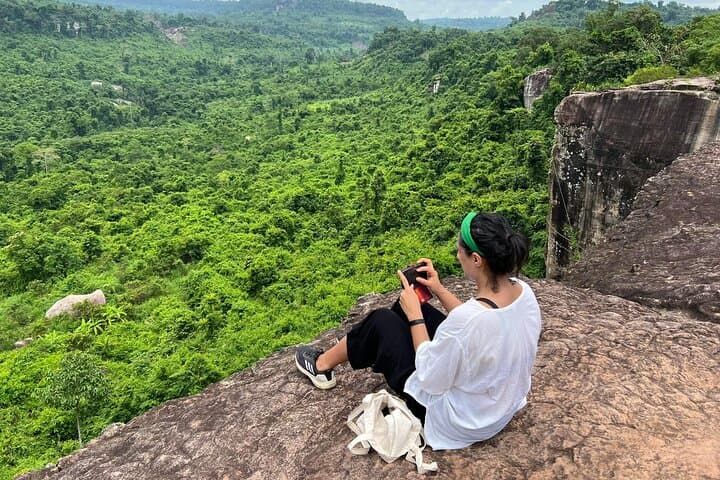
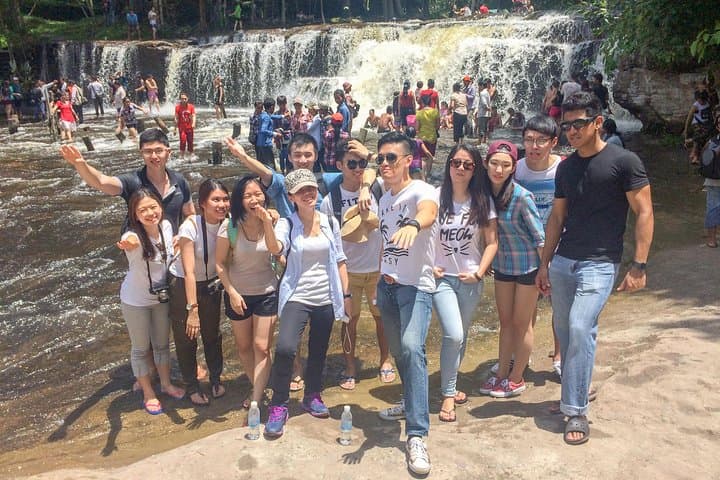
Over two full days this private tour stitches high-drama temple ruins with the raw edges of Cambodian nature — sunrise at Angkor Wat, the carved faces of the Bayon, and Ta Prohm’s roots threading through galleries — then drives north to Phnom Kulen’s sandstone plateau where waterfalls pour off jungle rims and the River of 1000 Lingas cuts shallow, carved bas-reliefs into bedrock.
History is everywhere: Angkor was the Khmer heartland from the 9th–15th centuries; Jayavarman VII’s Bayon still wears the faces of a king who built a capital of stone and water. Geology shapes the route — soft sandstone blocks hewn into temples, harder Kulen flows that feed Tonle Sap, Southeast Asia’s largest freshwater lake and an engine of seasonal life.
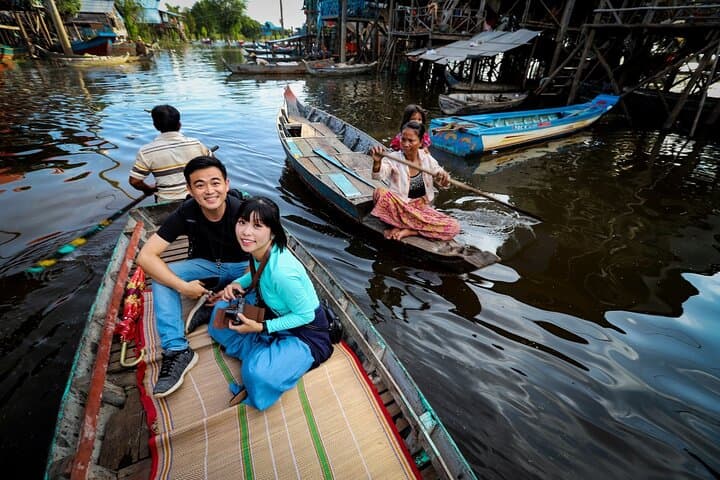
Culture and livelihoods appear in human scale: monks at a hilltop Reclining Buddha, fishing platforms rising and falling with Tonle Sap’s floodplain, and stilted homes at Kampong Phluk where mangroves and waterbirds claim the channels.
Practical edge: buy your Angkor pass early, expect lots of stair climbing and tight corridors, and plan for heat and sudden rain. Wear modest clothing that breathes, bring cash for entrance fees and local vendors, keep a refillable bottle, and time your boat cruise on Tonle Sap for low-traffic light. With an experienced driver and guide included, the itinerary balances brisk sightseeing and pockets of quiet — waterfalls that dare you to stay longer, temples that demand attention.
moderate.
2 days (approx. 8–10 hours sightseeing per day).
Good mobility for stairs and uneven stone; comfortable walking for several hours each day.
No; the Angkor pass is purchased separately at the ticket center, but the guide can stop there first to help you buy it.
Expect several hours of walking each day over uneven stone, stairs and short jungle paths; most sections are short distances between sites but require good balance.
Yes; waterbirds, migratory species and local aquatic life are common, and you may spot crab‑eating macaques near Kulen and birds along the lake channels.
Lunch is usually at a local restaurant near Angkor; free cool water and towels are provided on the tour, but other meals and snacks are extra.
Angkor was the political and religious center of the Khmer Empire; many sites date from the 9th–13th centuries, with Jayavarman VII’s 12th‑century works prominent at Bayon and Angkor Thom.
Tonle Sap’s floodplain is ecologically vital but sensitive—avoid disturbing nesting areas, minimize plastic waste, and support local guides who practice low‑impact tours.
Sightseeing Cambodia operates guided outdoor trips and adventures with an emphasis on safety, stewardship, and memorable experiences.
The day begins before dawn: headlamp dim, humidity clinging, pale light spilling across the moat as Angkor Wat’s silhouette grows teeth-sharp against the sky.
The day begins before dawn: headlamp dim, humidity clinging, pale light spilling across the moat as Angkor Wat’s silhouette grows teeth-sharp against the sky.
Over two full days this private tour stitches high-drama temple ruins with the raw edges of Cambodian nature — sunrise at Angkor Wat, the carved faces of the Bayon, and Ta Prohm’s roots threading through galleries — then drives north to Phnom Kulen’s sandstone plateau where waterfalls pour off jungle rims and the River of 1000 Lingas cuts shallow, carved bas-reliefs into bedrock.
History is everywhere: Angkor was the Khmer heartland from the 9th–15th centuries; Jayavarman VII’s Bayon still wears the faces of a king who built a capital of stone and water. Geology shapes the route — soft sandstone blocks hewn into temples, harder Kulen flows that feed Tonle Sap, Southeast Asia’s largest freshwater lake and an engine of seasonal life.
Culture and livelihoods appear in human scale: monks at a hilltop Reclining Buddha, fishing platforms rising and falling with Tonle Sap’s floodplain, and stilted homes at Kampong Phluk where mangroves and waterbirds claim the channels.
Practical edge: buy your Angkor pass early, expect lots of stair climbing and tight corridors, and plan for heat and sudden rain. Wear modest clothing that breathes, bring cash for entrance fees and local vendors, keep a refillable bottle, and time your boat cruise on Tonle Sap for low-traffic light. With an experienced driver and guide included, the itinerary balances brisk sightseeing and pockets of quiet — waterfalls that dare you to stay longer, temples that demand attention.