THE ADVENTURE COLLECTIVE® · Independent discovery and booking for outdoor travel

Spend two days moving through the monuments of the Khmer empire—from Angkor Wat’s sunrise reflection pools to Bayon’s carved faces and Ta Prohm’s jungle-wrapped ruins. Practical tips and cultural context help you get more from every temple stop.
Spend two days moving through the monuments of the Khmer empire—from Angkor Wat’s sunrise reflection pools to Bayon’s carved faces and Ta Prohm’s jungle-wrapped ruins. Practical tips and cultural context help you get more from every temple stop.
You step from the minivan into a wide, quiet sunrise that slowly paints the temple spires gold. Damp earth and carved sandstone hold the cool of night as your guide points out bas-reliefs coming alive in the first light; the air smells faintly of incense and wet leaves.
Verified experiences and guided adventures in the surrounding area.
Operated by Sightseeing Cambodia · Siem Reap, Siem Reap Province
You step from the minivan into a wide, quiet sunrise that slowly paints the temple spires gold. Damp earth and carved sandstone hold the cool of night as your guide points out bas-reliefs coming alive in the first light; the air smells faintly of incense and wet leaves.
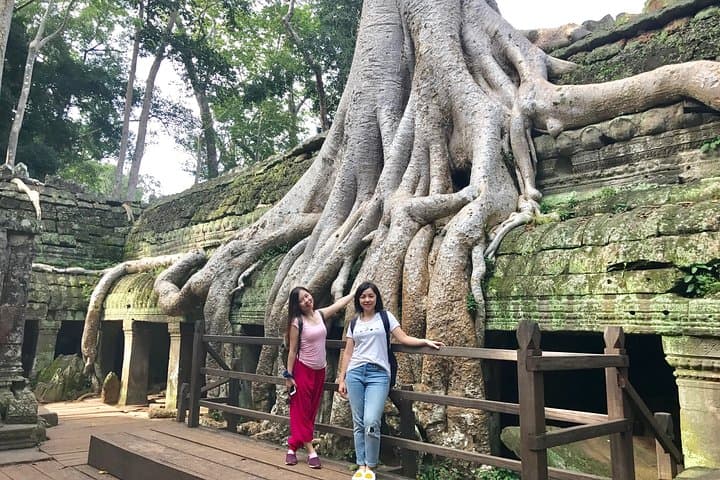
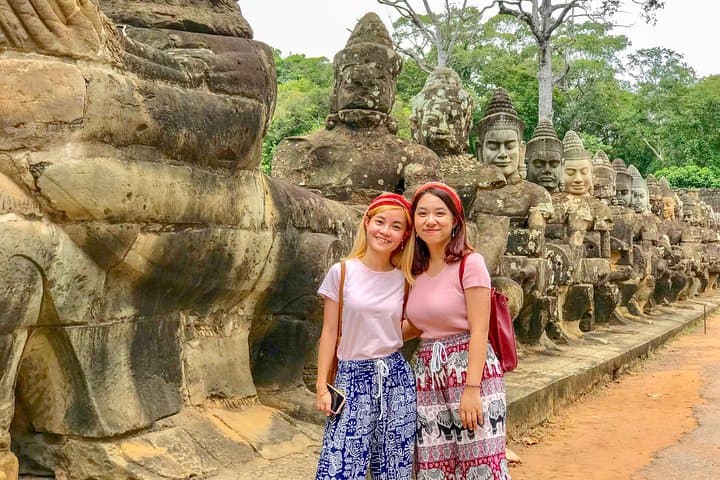
The next forty-eight hours move between eras: 12th-century Angkor Wat’s broad causeways and galleries, the enigmatic stone faces of Bayon in Angkor Thom, and Ta Prohm’s roots-wrapped doorways that feel reclaimed by the forest. Geologically, the low-lying Siem Reap plain is flat alluvium—temples rise from worked sandstone blocks laid atop compacted laterite—so you’ll walk mostly level ground with intermittent stone stairs and uneven temple plinths.
Culturally, the itinerary traces Khmer state religion’s shift from Hindu kingship to Mahayana and Theravada Buddhism; local guides explain iconography, ritual continuity, and the modern revival of Angkor as Cambodia’s cultural core.
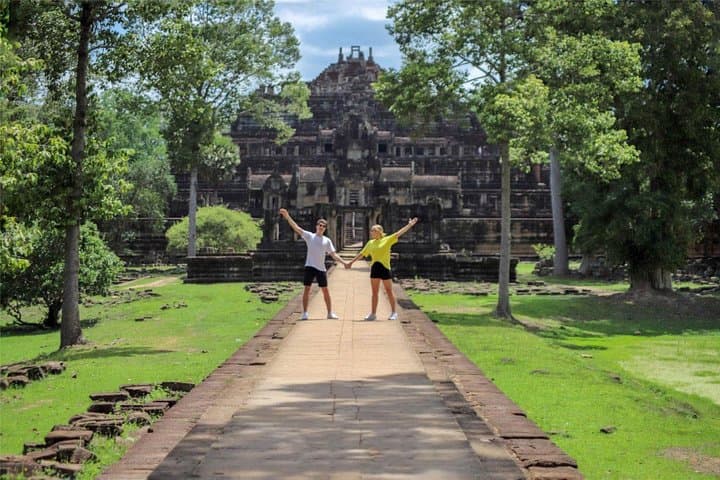
Practical guidance: plan two early starts (one before dawn at Angkor Wat) and two moderate walking days—expect 2–5 km of walking per day on packed earth, flagstones, and temple steps. Phnom Bakheng offers a popular sunset viewpoint but requires a short, sometimes crowded climb; arrive early to secure a spot. Dress respectfully—shoulders and knees covered in temple precincts—and carry a refillable water bottle and sun protection. Wear sturdy, breathable shoes with good tread for wet steps if rains have arrived.
With a licensed guide, the tour balances orientation and depth—ideal for travelers who want paced cultural immersion without strenuous hiking.
easy.
2 days.
Suitable for most travelers able to walk 2–5 km per day on uneven ground and climb short flights of steps.
Yes—visitors must purchase an Angkor Archaeological Park pass (1-, 3-, or 7-day options) before entry; guides or operators typically advise where to obtain it on arrival.
No; sunrise depends on weather and cloud cover. The guide times departures to maximize chances, but be prepared for early wake-up even if the sky is overcast.
Expect roughly 2–5 km of walking per day across mostly flat paths, temple terraces, and some short stair climbs; pacing is relaxed with breaks for shade and lunch.
Most temple sites have uneven steps and narrow passages; accessibility is limited—contact the operator ahead to arrange specific assistance or modified routes.
Angkor was the heart of the Khmer Empire (9th–15th centuries); Angkor Wat was built in the early 12th century and later became a Buddhist site, reflecting religious transition in Cambodian history.
Conservation focuses on balancing visitation with preservation—follow guide instructions, avoid climbing fragile bas-reliefs, and use marked paths to reduce erosion and wear.
Sightseeing Cambodia operates guided outdoor trips and adventures with an emphasis on safety, stewardship, and memorable experiences.
You step from the minivan into a wide, quiet sunrise that slowly paints the temple spires gold. Damp earth and carved sandstone hold the cool of night as your guide points out bas-reliefs coming alive in the first light; the air smells faintly of incense and wet leaves.
You step from the minivan into a wide, quiet sunrise that slowly paints the temple spires gold. Damp earth and carved sandstone hold the cool of night as your guide points out bas-reliefs coming alive in the first light; the air smells faintly of incense and wet leaves.
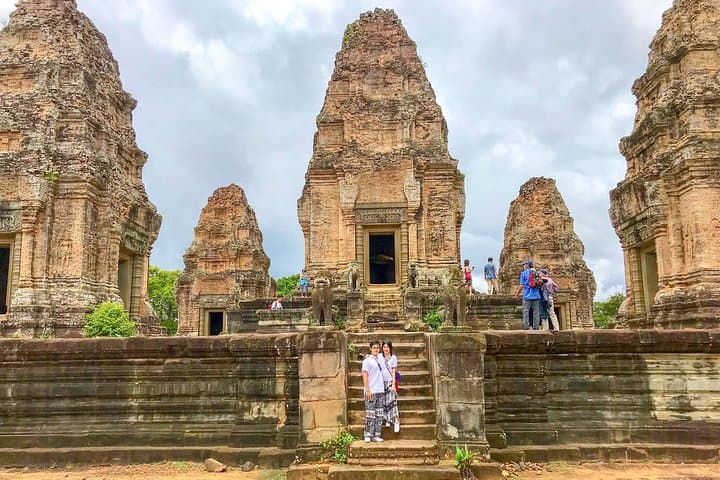
The next forty-eight hours move between eras: 12th-century Angkor Wat’s broad causeways and galleries, the enigmatic stone faces of Bayon in Angkor Thom, and Ta Prohm’s roots-wrapped doorways that feel reclaimed by the forest. Geologically, the low-lying Siem Reap plain is flat alluvium—temples rise from worked sandstone blocks laid atop compacted laterite—so you’ll walk mostly level ground with intermittent stone stairs and uneven temple plinths.
Culturally, the itinerary traces Khmer state religion’s shift from Hindu kingship to Mahayana and Theravada Buddhism; local guides explain iconography, ritual continuity, and the modern revival of Angkor as Cambodia’s cultural core.
Practical guidance: plan two early starts (one before dawn at Angkor Wat) and two moderate walking days—expect 2–5 km of walking per day on packed earth, flagstones, and temple steps. Phnom Bakheng offers a popular sunset viewpoint but requires a short, sometimes crowded climb; arrive early to secure a spot. Dress respectfully—shoulders and knees covered in temple precincts—and carry a refillable water bottle and sun protection. Wear sturdy, breathable shoes with good tread for wet steps if rains have arrived.
With a licensed guide, the tour balances orientation and depth—ideal for travelers who want paced cultural immersion without strenuous hiking.