THE ADVENTURE COLLECTIVE® · Independent discovery and booking for outdoor travel

Two days of striking desert geology and living history: Nabataean tombs at Al‑Hijr, inscriptions at Dadan, the mirrored Maraya, and sunset at Elephant Rock. This private tour blends short hikes with comfortable transfers—ideal for travelers who want depth without strenuous trekking.
Two days of striking desert geology and living history: Nabataean tombs at Al‑Hijr, inscriptions at Dadan, the mirrored Maraya, and sunset at Elephant Rock. This private tour blends short hikes with comfortable transfers—ideal for travelers who want depth without strenuous trekking.
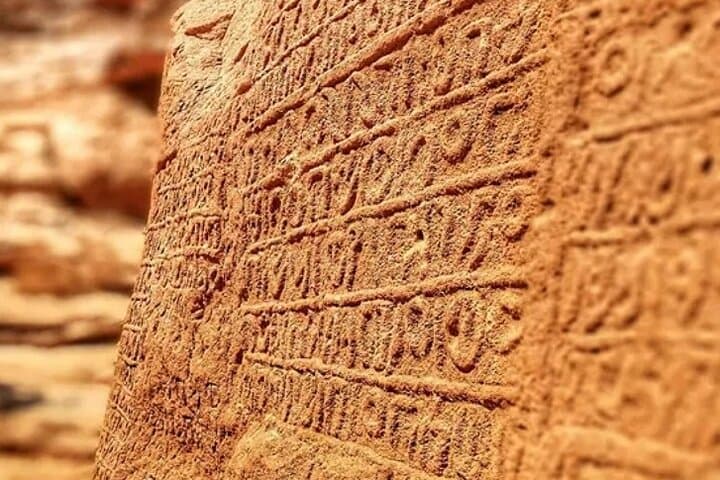
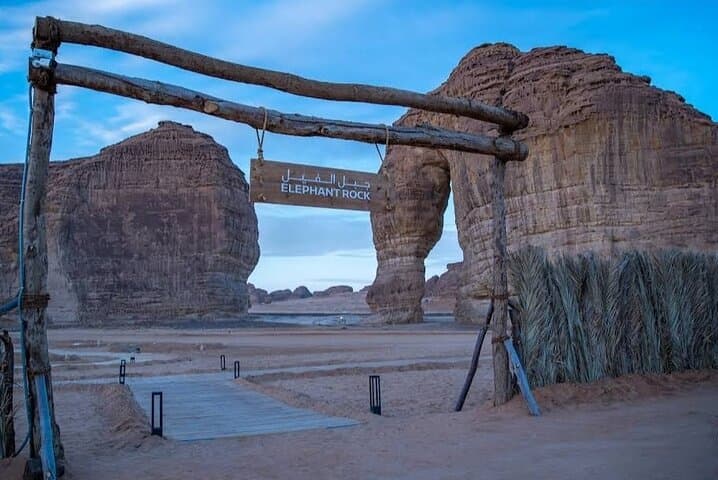
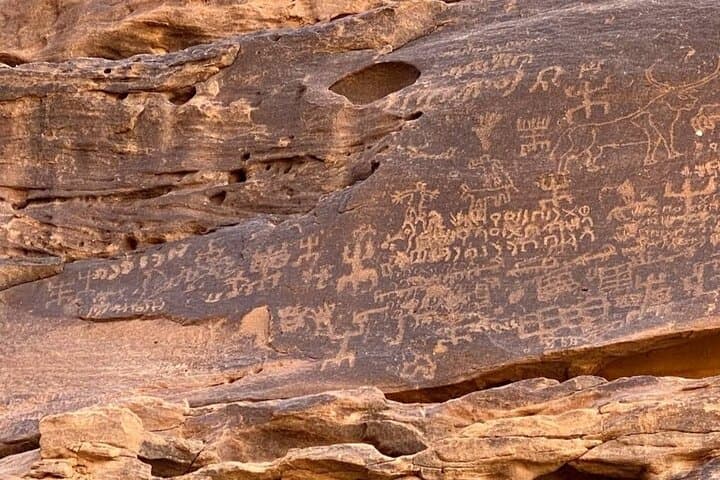
A low sun warms the ochre walls as your air‑conditioned vehicle eases away from the hotel and the desert opens into a landscape of stacked sandstone and carved tomb facades. On Day 1 you step from car to rock at Dadan and Jebel Ikmah—inscriptions and cliffside ruins that make the stone feel like a public archive—then press deeper into the Sharaan reserve where soaring fins and natural amphitheaters frame short walks and wildlife sightings. Elephant Rock holds court at sunset, its silhouette a weathered landmark for photographers.
Verified experiences and guided adventures in the surrounding area.
Operated by ADEL · AlUla, Al Madinah Region
A low sun warms the ochre walls as your air‑conditioned vehicle eases away from the hotel and the desert opens into a landscape of stacked sandstone and carved tomb facades. On Day 1 you step from car to rock at Dadan and Jebel Ikmah—inscriptions and cliffside ruins that make the stone feel like a public archive—then press deeper into the Sharaan reserve where soaring fins and natural amphitheaters frame short walks and wildlife sightings. Elephant Rock holds court at sunset, its silhouette a weathered landmark for photographers.
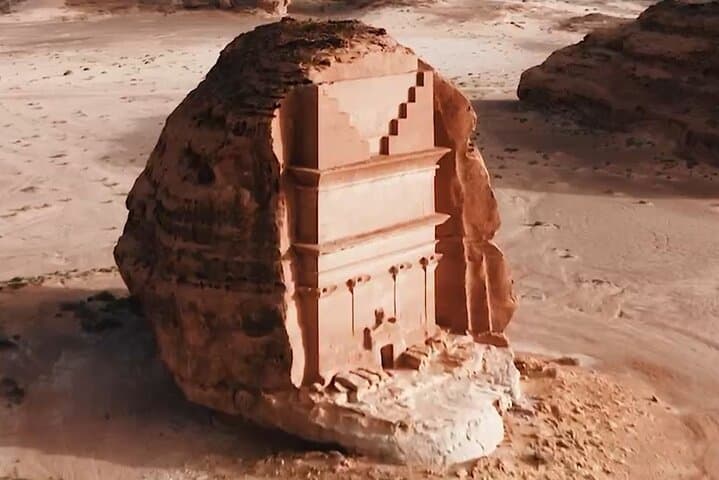
By the second day the itinerary turns to Al‑Hijr (Hegra), Saudi Arabia’s first UNESCO World Heritage site: over a hundred Nabataean tombs cut into crimson cliffs, fine reliefs that reveal trade routes and funerary practice. Modern Maraya, the mirrored concert hall, reflects that same desert geometry in glass while Daimumah Oasis shows the agricultural side of AlUla’s life. Old Town alleyways and a traditional dinner complete the cultural loop.
Expect mostly short, guided walks (typically 30–90 minutes at each stop), stable sandy or rocky terrain with low elevation change, and vehicle transfers between sites. Bring sun protection and 1.5–2 liters of water per person per day, wear closed‑toe shoes with good grip, and plan for early starts and golden‑hour photography. Guides handle tickets and logistics; respect fragile archaeological sites by staying on marked paths and following directions at all times.
easy.
2 days.
Suitable for most fitness levels; requires standing and short walks up to 90 minutes with frequent vehicle transfers
Yes—admission to Dadan, Jebel Ikmah, Sharaan Safari and Al‑Hijr (Hegra) is included as part of the tour package.
Walks are short to moderate—mostly 30–90 minutes per site over uneven ground with minimal elevation gain; suitable for most travelers.
Yes—the tour includes private, air‑conditioned transportation and hotel pickup details are confirmed at booking.
Lunches and snacks/coffee/tea/water are provided as specified; a traditional dinner is included on the second day.
AlUla sits at the crossroads of ancient caravan routes; Dadan and later Lihyanite centers predate Nabataean Hegra, leaving layers of epigraphic and architectural evidence.
Many sites enforce strict paths and visitor limits to protect fragile rock art and tomb facades—follow guides and avoid off‑trail wandering to minimize impact.
ADEL operates guided outdoor trips and adventures with an emphasis on safety, stewardship, and memorable experiences.
A low sun warms the ochre walls as your air‑conditioned vehicle eases away from the hotel and the desert opens into a landscape of stacked sandstone and carved tomb facades. On Day 1 you step from car to rock at Dadan and Jebel Ikmah—inscriptions and cliffside ruins that make the stone feel like a public archive—then press deeper into the Sharaan reserve where soaring fins and natural amphitheaters frame short walks and wildlife sightings. Elephant Rock holds court at sunset, its silhouette a weathered landmark for photographers.
A low sun warms the ochre walls as your air‑conditioned vehicle eases away from the hotel and the desert opens into a landscape of stacked sandstone and carved tomb facades. On Day 1 you step from car to rock at Dadan and Jebel Ikmah—inscriptions and cliffside ruins that make the stone feel like a public archive—then press deeper into the Sharaan reserve where soaring fins and natural amphitheaters frame short walks and wildlife sightings. Elephant Rock holds court at sunset, its silhouette a weathered landmark for photographers.
By the second day the itinerary turns to Al‑Hijr (Hegra), Saudi Arabia’s first UNESCO World Heritage site: over a hundred Nabataean tombs cut into crimson cliffs, fine reliefs that reveal trade routes and funerary practice. Modern Maraya, the mirrored concert hall, reflects that same desert geometry in glass while Daimumah Oasis shows the agricultural side of AlUla’s life. Old Town alleyways and a traditional dinner complete the cultural loop.
Expect mostly short, guided walks (typically 30–90 minutes at each stop), stable sandy or rocky terrain with low elevation change, and vehicle transfers between sites. Bring sun protection and 1.5–2 liters of water per person per day, wear closed‑toe shoes with good grip, and plan for early starts and golden‑hour photography. Guides handle tickets and logistics; respect fragile archaeological sites by staying on marked paths and following directions at all times.