THE ADVENTURE COLLECTIVE® · Independent discovery and booking for outdoor travel

A compact, two-day private tour that pairs Mount Emei’s cloud-swept Golden Summit with the ancient Leshan Giant Buddha. Includes transport, accommodation at the mountain base, entrance fees, cable car, and meals—ideal for travelers who want a turn-key cultural and natural experience.
A compact, two-day private tour that pairs Mount Emei’s cloud-swept Golden Summit with the ancient Leshan Giant Buddha. Includes transport, accommodation at the mountain base, entrance fees, cable car, and meals—ideal for travelers who want a turn-key cultural and natural experience.
You arrive from Chengdu on a fast train, the countryside slipping past in rice-terraced green as the guide outlines the next two days. By afternoon you’re breathing mountain air below Mount Emei, the trailhead and temples rising like living history from the mist. The next morning the Golden Summit sits above the clouds at 3,099 m; the Puxian Bodhisattva’s gold-plated form stares down through a ring of ancient palaces while wind and prayer flags move you forward.
Verified experiences and guided adventures in the surrounding area.
Operated by ChengDu WestChinaGo Travel Service · Chengdu, Sichuan
You arrive from Chengdu on a fast train, the countryside slipping past in rice-terraced green as the guide outlines the next two days. By afternoon you’re breathing mountain air below Mount Emei, the trailhead and temples rising like living history from the mist. The next morning the Golden Summit sits above the clouds at 3,099 m; the Puxian Bodhisattva’s gold-plated form stares down through a ring of ancient palaces while wind and prayer flags move you forward.
Both sites are Buddhist keystones: Mount Emei is one of China’s Four Sacred Buddhist Mountains, its stone steps and cliffside temples built and rebuilt over a thousand years, while the Leshan Giant Buddha — carved into a riverside cliff beginning in 713 CE — watches the confluence of three rivers below.
Geology here is dramatic: steep, forested slopes of metamorphic and granite outcrops funnel mist and water downhill, creating pockets of subtropical forest and mossy stone stairways. Local culture centers on temple rituals, vegetarian mountain cuisine, and small-town Leshan markets serving spicy Sichuan fare.
Practical guide: bring comfortable walking shoes for short hikes and steep staircases (the Leshan route includes ~333 steps option), layers for summit temperatures below freezing in winter, and your passport for train-ticket booking. Cable cars and sightseeing buses shorten climbs, but expect 30–90 minutes of uphill walking at Emei and variable weather. Plan early starts to avoid crowds and use your guide’s expertise for fast-track logistics: entrance fees, bus transfers, and a private English-speaking guide are included in this packaged, hassle-free two-day itinerary.
easy.
2 days.
Suitable for most fitness levels; should be comfortable walking short uphill stretches and staircases.
You can take a cable car and sightseeing bus to shorten the climb; a short 30-minute walk may still be required depending on parking lot location.
Two options: climb ~333 steps to Lingyun Hill for an elevated view and temple visits, or take a short river cruise for a panoramic riverside perspective.
The tour runs in most weather; Golden Summit can be below freezing in winter and foggy in shoulder seasons—dress for changing conditions.
Partial accessibility via cable cars and buses reduces walking, but many temple areas, steps, and viewing points involve stairs and uneven surfaces.
Mount Emei has been a Buddhist pilgrimage site for more than a millennium; the Leshan Giant Buddha was carved during the Tang Dynasty (construction began in 713 CE).
High visitor numbers put pressure on trails and temples—stick to paved paths, avoid feeding wildlife, and carry out waste to minimize impact.
ChengDu WestChinaGo Travel Service operates guided outdoor trips and adventures with an emphasis on safety, stewardship, and memorable experiences.


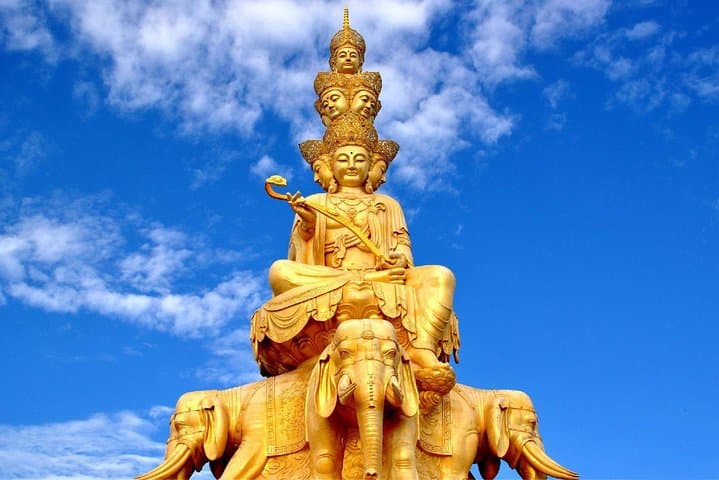
You arrive from Chengdu on a fast train, the countryside slipping past in rice-terraced green as the guide outlines the next two days. By afternoon you’re breathing mountain air below Mount Emei, the trailhead and temples rising like living history from the mist. The next morning the Golden Summit sits above the clouds at 3,099 m; the Puxian Bodhisattva’s gold-plated form stares down through a ring of ancient palaces while wind and prayer flags move you forward.
You arrive from Chengdu on a fast train, the countryside slipping past in rice-terraced green as the guide outlines the next two days. By afternoon you’re breathing mountain air below Mount Emei, the trailhead and temples rising like living history from the mist. The next morning the Golden Summit sits above the clouds at 3,099 m; the Puxian Bodhisattva’s gold-plated form stares down through a ring of ancient palaces while wind and prayer flags move you forward.
Both sites are Buddhist keystones: Mount Emei is one of China’s Four Sacred Buddhist Mountains, its stone steps and cliffside temples built and rebuilt over a thousand years, while the Leshan Giant Buddha — carved into a riverside cliff beginning in 713 CE — watches the confluence of three rivers below.
Geology here is dramatic: steep, forested slopes of metamorphic and granite outcrops funnel mist and water downhill, creating pockets of subtropical forest and mossy stone stairways. Local culture centers on temple rituals, vegetarian mountain cuisine, and small-town Leshan markets serving spicy Sichuan fare.
Practical guide: bring comfortable walking shoes for short hikes and steep staircases (the Leshan route includes ~333 steps option), layers for summit temperatures below freezing in winter, and your passport for train-ticket booking. Cable cars and sightseeing buses shorten climbs, but expect 30–90 minutes of uphill walking at Emei and variable weather. Plan early starts to avoid crowds and use your guide’s expertise for fast-track logistics: entrance fees, bus transfers, and a private English-speaking guide are included in this packaged, hassle-free two-day itinerary.