THE ADVENTURE COLLECTIVE® · Independent discovery and booking for outdoor travel

An 18‑day private trek that loops the Annapurna massif, crossing Thorang La (5,416 m) and visiting Muktinath and Manang. Expect tea‑house nights, dramatic geological shifts, and culturally distinct villages along the way.
An 18‑day private trek that loops the Annapurna massif, crossing Thorang La (5,416 m) and visiting Muktinath and Manang. Expect tea‑house nights, dramatic geological shifts, and culturally distinct villages along the way.
You step out of Kathmandu’s clamor into a thinner, colder air and the trail immediately begins to climb — stair-stepped villages give way to rhododendron forests and rivers that seem to push you onward toward the high, dry ring of peaks.
Verified experiences and guided adventures in the surrounding area.
Operated by Overland Trek Nepal · Kathmandu, Bagmati Province
You step out of Kathmandu’s clamor into a thinner, colder air and the trail immediately begins to climb — stair-stepped villages give way to rhododendron forests and rivers that seem to push you onward toward the high, dry ring of peaks.
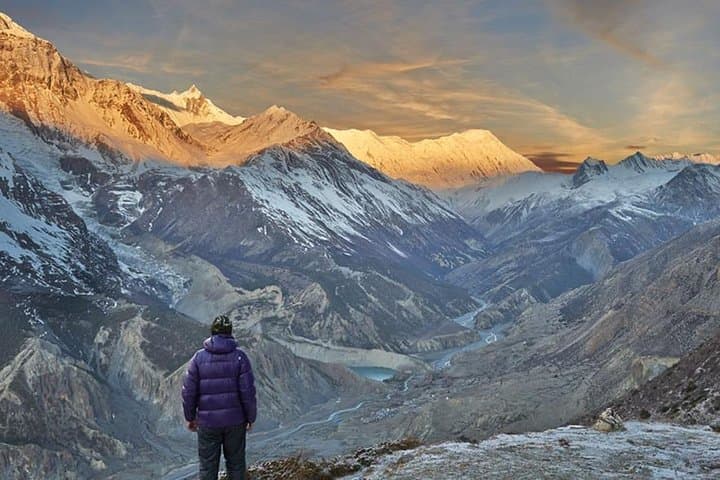
The Annapurna Circuit threads through four districts — Lamjung, Manang, Mustang and Myagdi — and follows old trade routes that once linked Nepal to Tibet. Geologically the route traces uplifted Himalayan strata, with deep gorges carved by glacial melt and rivers, and the high pass of Thorang La (5,416 m) is the watershed that separates sub-tropical lower valleys from the rain-shadowed Tibetan plateau.
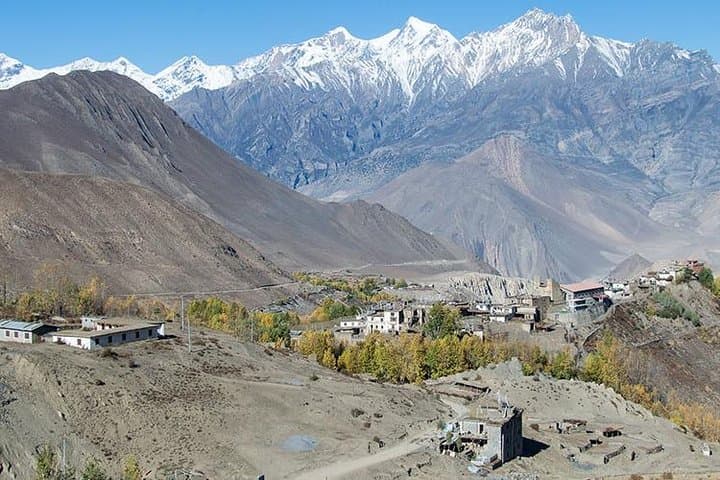
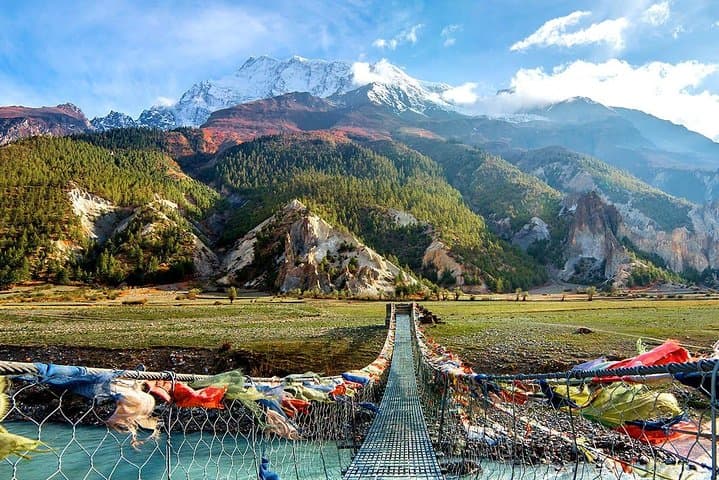
Culture here changes with elevation: Hindu terraces and village stupas in lower Lamjung, Tibetan-influenced mani walls and prayer flags near Muktinath, and stone-built settlements in Manang where yak caravans still matter. Stop at Muktinath’s temple for a ritual wash, or take the quieter lane through Ghyaru for rooftop views of Annapurna II.
Practical guidance: this itinerary runs 18 days, covers roughly 160–230 km depending on side trips, and tops at 5,416 m. Expect a mix of stone steps, dirt tracks and occasional jeep roads; tea-house accommodation each night; and at least one scheduled acclimatization day in Manang. Bring layered insulation for cold nights, carry a water-treatment option, and plan for moderate-to-high fitness—a steady pace and attention to altitude are more important than technical skill. Permits (ACAP, TIMS), a trained guide, and travel insurance that covers high-altitude evacuation are essential to complete the circuit safely.
challenging.
18 days.
Suitable for hikers with good cardiovascular fitness and multi‑day trekking experience; ability to walk 5–7 hours/day with loaded daypack.
Yes — an Annapurna Conservation Area Permit (ACAP) and a TIMS card are required; guides usually handle these before the trek.
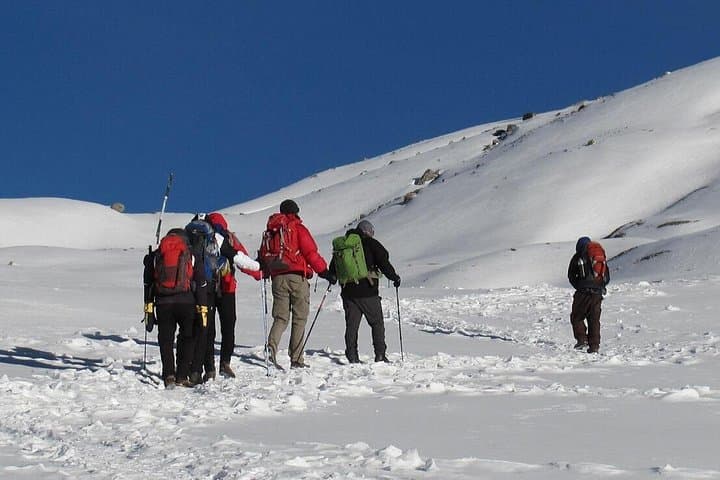
Thorang La tops at 5,416 m; the pass is non‑technical but demanding due to altitude and weather—appropriate acclimatization and pacing are vital.
Tea‑house lodges provide simple twin rooms, blankets and communal dinners (dal bhat is common); snacks and hot drinks are available but pricier at higher elevations.
Spring (Mar–May) and fall (Sep–Nov) offer the most stable weather and best visibility; monsoon brings heavy rain and winter brings deep snow on the pass.
The circuit follows historic trans‑Himalayan trade routes; settlements like Muktinath grew as spiritual and caravan stops linking Nepal and Tibet.
The Annapurna Conservation Area Project (ACAP) manages permits and promotes low‑impact tourism—stick to trails, minimize single‑use plastics, and respect local water and wood resources.
Overland Trek Nepal operates guided outdoor trips and adventures with an emphasis on safety, stewardship, and memorable experiences.
You step out of Kathmandu’s clamor into a thinner, colder air and the trail immediately begins to climb — stair-stepped villages give way to rhododendron forests and rivers that seem to push you onward toward the high, dry ring of peaks.
You step out of Kathmandu’s clamor into a thinner, colder air and the trail immediately begins to climb — stair-stepped villages give way to rhododendron forests and rivers that seem to push you onward toward the high, dry ring of peaks.
The Annapurna Circuit threads through four districts — Lamjung, Manang, Mustang and Myagdi — and follows old trade routes that once linked Nepal to Tibet. Geologically the route traces uplifted Himalayan strata, with deep gorges carved by glacial melt and rivers, and the high pass of Thorang La (5,416 m) is the watershed that separates sub-tropical lower valleys from the rain-shadowed Tibetan plateau.
Culture here changes with elevation: Hindu terraces and village stupas in lower Lamjung, Tibetan-influenced mani walls and prayer flags near Muktinath, and stone-built settlements in Manang where yak caravans still matter. Stop at Muktinath’s temple for a ritual wash, or take the quieter lane through Ghyaru for rooftop views of Annapurna II.
Practical guidance: this itinerary runs 18 days, covers roughly 160–230 km depending on side trips, and tops at 5,416 m. Expect a mix of stone steps, dirt tracks and occasional jeep roads; tea-house accommodation each night; and at least one scheduled acclimatization day in Manang. Bring layered insulation for cold nights, carry a water-treatment option, and plan for moderate-to-high fitness—a steady pace and attention to altitude are more important than technical skill. Permits (ACAP, TIMS), a trained guide, and travel insurance that covers high-altitude evacuation are essential to complete the circuit safely.