THE ADVENTURE COLLECTIVE® · Independent discovery and booking for outdoor travel

Leap from 18,000ft above Abel Tasman and freefall over golden bays and granite headlands. This Motueka tandem jump combines a short, high-adrenaline experience with sweeping coastal views—plan for weight limits, weather windows, and optional pro photography.
Leap from 18,000ft above Abel Tasman and freefall over golden bays and granite headlands. This Motueka tandem jump combines a short, high-adrenaline experience with sweeping coastal views—plan for weight limits, weather windows, and optional pro photography.
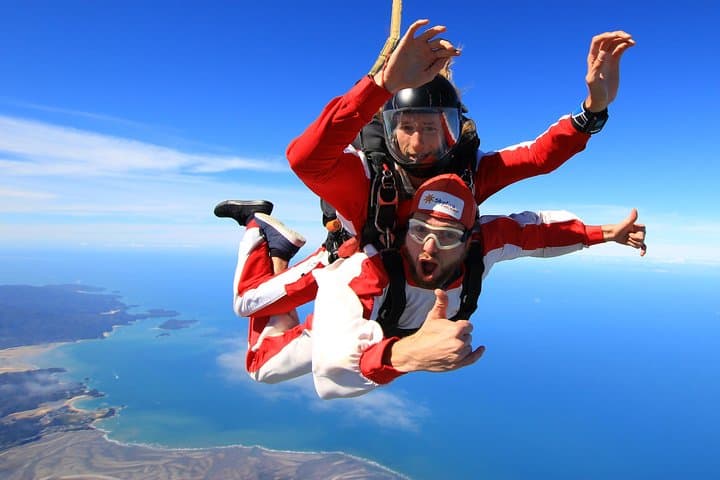
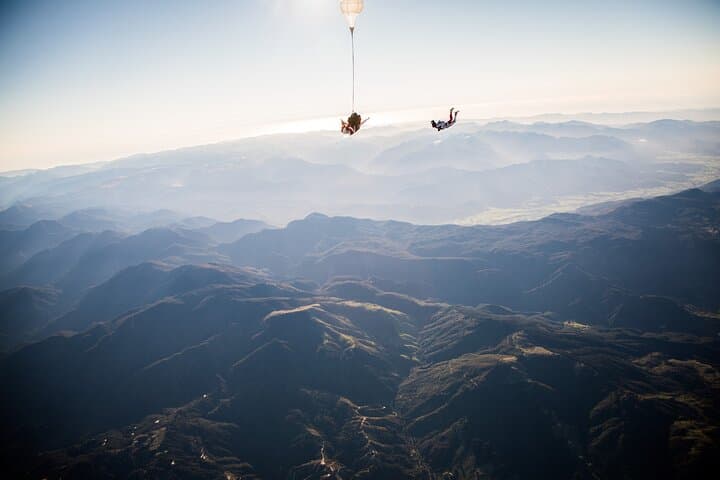
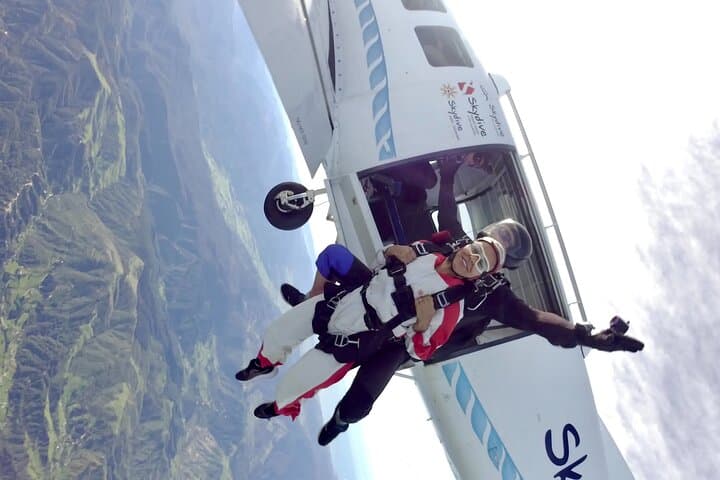
The plane thins the air as you climb out over golden coastline; below, the Abel Tasman coast spreads like a stitched map of bays, granite headlands and ribbon beaches. At altitude the door opens, the wind becomes a physical presence, and the first seconds of freefall push everything into a raw, immediate focus—the sea dares you, the coastline pulls wider.
Verified experiences and guided adventures in the surrounding area.
Operated by Skydive Abel Tasman · Motueka, Tasman
The plane thins the air as you climb out over golden coastline; below, the Abel Tasman coast spreads like a stitched map of bays, granite headlands and ribbon beaches. At altitude the door opens, the wind becomes a physical presence, and the first seconds of freefall push everything into a raw, immediate focus—the sea dares you, the coastline pulls wider.
This drop zone operates from Motueka on the edge of Tasman Bay, where the land was mapped by Dutch explorer Abel Tasman in 1642 and later protected as Abel Tasman National Park in the mid-20th century. Geology here is coastal granite and sedimentary ridges shaped by tides and sea-sculpted cliffs; Māori history and small coastal settlements lend a quiet human scale to the view beneath you.
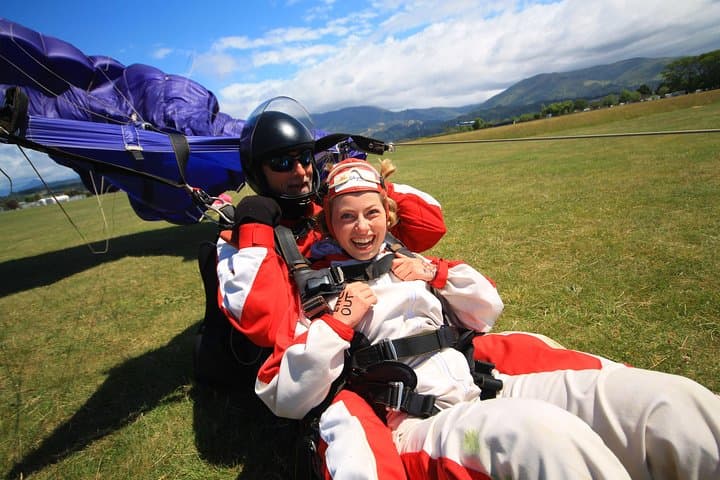
Expect about 15 minutes of flight time per jump with longer overall waits depending on manifest and weather. Operators in Motueka emphasize safety and tandem procedure—your instructor handles canopy control while you take in views that can include both islands on a clear day. Book morning slots for calmer winds and clearer light; bring a photo package if you want professional footage—personal cameras are typically not recommended during the jump. Weight limits apply (max 100 kg/220 lb) and all passengers must declare weight at booking.
Practical tips: wear closed-toe shoes and a windproof layer, hydrate before you go, and arrive early for briefing. The thrill is short and intense; the planning matters more than the fall—check cancellations for weather and confirm pick-up options from nearby Motueka.
moderate.
15–60 minutes.
No special fitness required; be able to climb into the aircraft, follow instructor signals, and perform a short run on exit if requested.
Minimum age is typically 16–18 depending on the operator and local rules—young jumpers usually need parental consent; check the operator’s policy when booking.
Yes—this operator requires all passenger weights at booking and enforces a maximum of 100 kg (220 lb).
Jumps are cancelled or rescheduled for unsafe weather; operators will refund or rebook according to their cancellation policy—confirm details when you reserve.
No prior skydiving experience required—this is a tandem jump where the instructor manages technical aspects, but you should be comfortable following instructions and brief running on exit.
Abel Tasman was the first European to sight this coast in 1642; part of the area was set aside as Abel Tasman National Park in 1942 to protect its coastal landscapes.
Operators follow aviation and conservation guidelines to minimize disturbance to marine and coastal reserves—respect no-landing zones and local wildlife habitats.
Skydive Abel Tasman operates guided outdoor trips and adventures with an emphasis on safety, stewardship, and memorable experiences.
The plane thins the air as you climb out over golden coastline; below, the Abel Tasman coast spreads like a stitched map of bays, granite headlands and ribbon beaches. At altitude the door opens, the wind becomes a physical presence, and the first seconds of freefall push everything into a raw, immediate focus—the sea dares you, the coastline pulls wider.
The plane thins the air as you climb out over golden coastline; below, the Abel Tasman coast spreads like a stitched map of bays, granite headlands and ribbon beaches. At altitude the door opens, the wind becomes a physical presence, and the first seconds of freefall push everything into a raw, immediate focus—the sea dares you, the coastline pulls wider.
This drop zone operates from Motueka on the edge of Tasman Bay, where the land was mapped by Dutch explorer Abel Tasman in 1642 and later protected as Abel Tasman National Park in the mid-20th century. Geology here is coastal granite and sedimentary ridges shaped by tides and sea-sculpted cliffs; Māori history and small coastal settlements lend a quiet human scale to the view beneath you.
Expect about 15 minutes of flight time per jump with longer overall waits depending on manifest and weather. Operators in Motueka emphasize safety and tandem procedure—your instructor handles canopy control while you take in views that can include both islands on a clear day. Book morning slots for calmer winds and clearer light; bring a photo package if you want professional footage—personal cameras are typically not recommended during the jump. Weight limits apply (max 100 kg/220 lb) and all passengers must declare weight at booking.
Practical tips: wear closed-toe shoes and a windproof layer, hydrate before you go, and arrive early for briefing. The thrill is short and intense; the planning matters more than the fall—check cancellations for weather and confirm pick-up options from nearby Motueka.